Humanism
The Moon Dweller: When Imagination Becomes a Disorder
30 March 2026





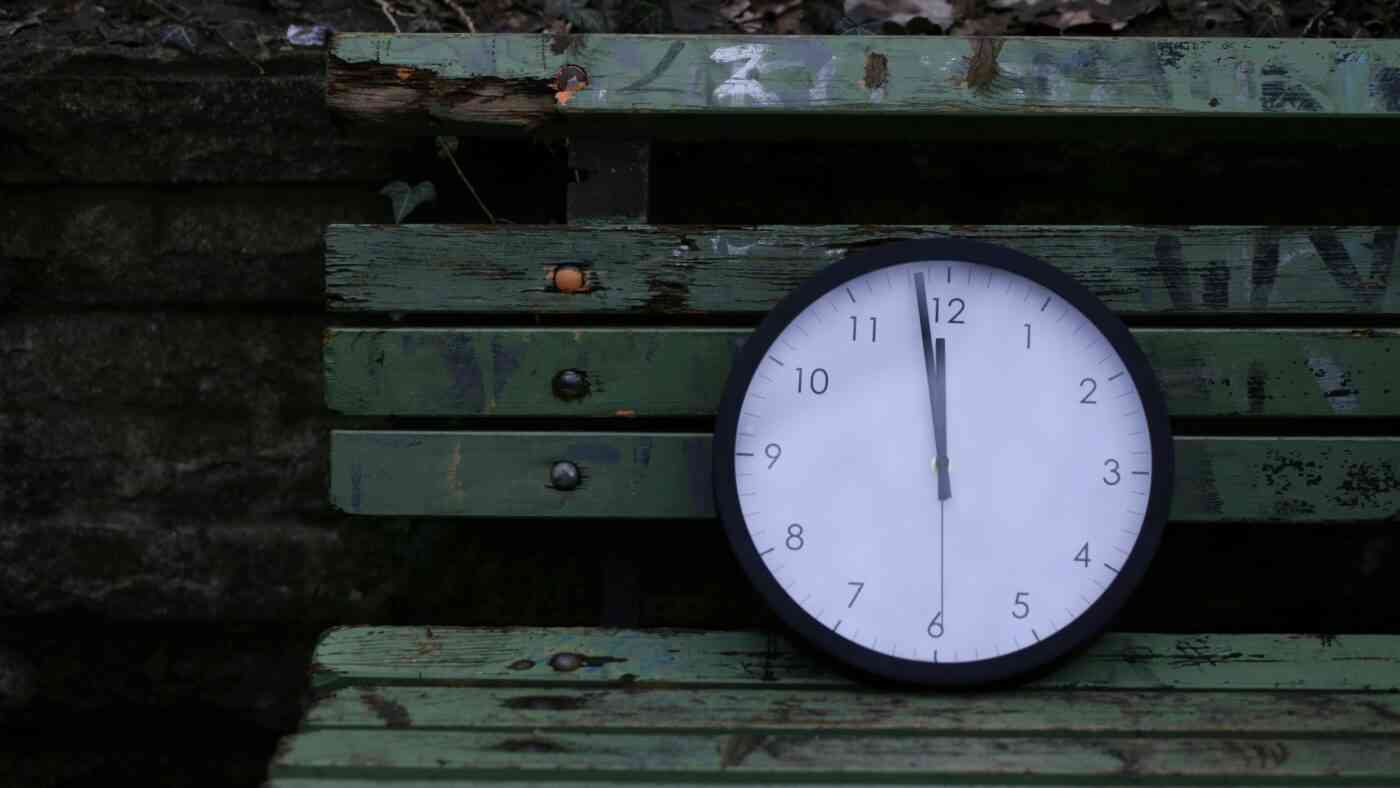
The hands of the 2026 Doomsday Clock have shifted to 85 seconds to midnight—the closest humanity has ever stood to the brink of self-destruction. The Bulletin of the Atomic Scientists warns that escalating wars, renewed nuclear brinkmanship, climate breakdown, and fast-moving AI risks are converging into a single dangerous moment.
The Doomsday Clock serves as a symbolic pulse check for our planet, indicating how close—in the eyes of the scientific community—we are to a man-made global catastrophe. Midnight represents the moment of extinction, and the clock’s hands move in response to shifting global perils. Interestingly, we stood safest in 1991, following the end of the Cold War, when the clock remained a comfortable 17 minutes from the end of days. Today, that margin has withered to a mere 85 seconds.
Created in 1947 by Manhattan Project scientists—including Albert Einstein and J. Robert Oppenheimer—and the editors of the Bulletin of the Atomic Scientists, the clock originally measured the risk of nuclear annihilation. Over time, the Science and Security Board expanded the scope to include the climate crisis and disruptive technologies like bioweapons and AI.
It is a metaphor, a reminder of the perils we must address to survive on this planet,
– the Bulletin explains.
Early on, the Bulletin’s editors determined the clock setting after consulting scientists and policy experts. Today, that responsibility lies with the Bulletin’s Science and Security Board, which includes researchers across disciplines and consults a wider network of specialists.
There is no secret mathematical formula. The setting is a synthesized judgment based on the state of nuclear risk, international stability, climate impacts, biological threats, and the pace and governance of emerging technologies. The board has repeatedly emphasized the same point: moving the hands is not a prophecy. It is a deliberately stark alarm designed to motivate action.
In 2023, the world moved to 90 seconds to midnight amid the war in Ukraine and heightened nuclear rhetoric. In the years that followed, the board judged that progress on existential risks remained insufficient. By 2026, the hands ticked even closer: 85 seconds to midnight.
The Doomsday Clock reflects an accumulation of overlapping dangers, including:
The board’s message is blunt: these are solvable problems, but only if major powers and institutions treat them as urgent and interconnected.
History shows the hands can move away from midnight. However, reversing the trend behind the Doomsday Clock would require coordinated policy at scale—especially among nuclear states and major emitters—and stronger international norms for emerging tech.
Experts generally point to several high-impact routes:
The latest report from the Bulletin of the Atomic Scientists carries far-reaching consequences. Beyond merely symbolizing our proximity to disaster, it serves as a catalyst for public awareness and a desperate call for global mobilization. If world leaders take this signal seriously, it could reshape political landscapes, forcing governments back to the negotiating table to salvage crumbling disarmament treaties. Furthermore, it could provide the necessary spark for a rigorous, global debate on the regulation of artificial intelligence and other emerging technologies.
However, should we ignore these warnings, the fallout will be catastrophic. Escalating conflicts, irreversible climate shifts, and uncontained pandemics represent only a fraction of the potential aftermath.
The Doomsday Clock is not an oracle of inevitable doom; it is a barometer measuring the scientific community’s urgent assessment of global peril. It functions as a piercing alarm, reminding us that our window for action is rapidly closing. As we inch closer to that symbolic midnight, we must face a chilling question: are we still capable of taking these warnings seriously?
The Doomsday Clock is not an oracle. It is a barometer of how severe leading experts judge the global risk environment to be. To understand how we reached 85 seconds, here is a clear record of key settings in the 21st century:
Ultimately, the most important takeaway is not the exact number of seconds, but what it represents: a global system under compounding stress. Moreover, if the Doomsday Clock is a warning, it is also a reminder that human decisions move the hands—one way or the other.
Read this article in Polish: Najgorszy wynik w historii. Zegar Zagłady pokazuje 85 sekund do północy

A Journalism and Social Communication graduate with 15 years of experience in the media industry. He has worked for titles such as "Dziennik Łódzki," "Super Express," and "Eska" radio. In parallel, he has collaborated with advertising agencies and worked as a film translator. A passionate fan of good cinema, fantasy literature, and sports. He credits his physical and mental well-being to his Samoyed, Jaskier.



Zmień tryb na ciemny