Education
What Does It Take to Keep a Child Curious?
28 September 2026





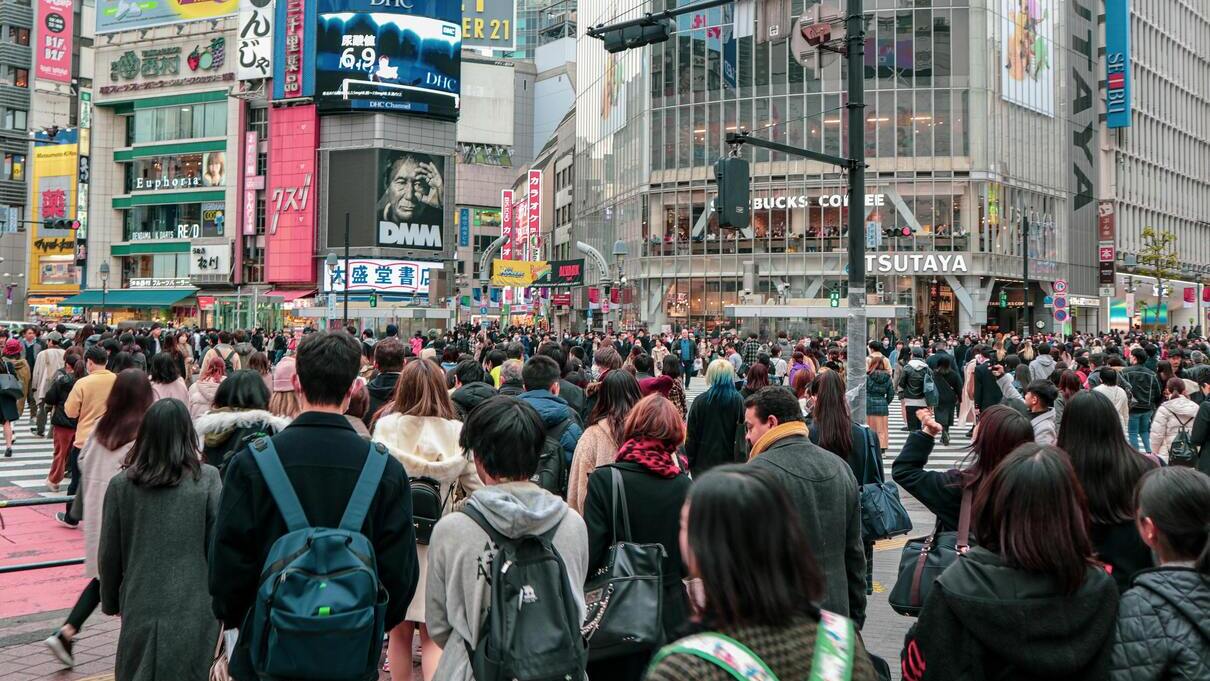
Our daily existence in the city exhausts us more than we care to admit. It’s not just about the rush or the traffic jams. A hidden mechanism is at play that our bodies perceive as something far more serious—and they react as if they were living in a state of perpetual threat.
You leave the office after a demanding day. Exhausting meetings and a difficult conversation with your boss have drained you. You get into your car; the route home is a traffic jam; two cars nearby honk angrily at each other. Screaming advertising billboards line the road. The stress doesn’t end there—you argued with your spouse before work, and a difficult conversation awaits you at home. Is the human body truly capable of living amidst such chaos and unremitting urban stress?
According to anthropologist Colin Shaw from the University of Zurich, the answer is no. Our evolution has simply not adapted us to this kind of life. To explain this, the researcher draws on the example of a lion. “Our ancestors were well-adapted to dealing with acute stress to avoid or confront predators,” Shaw explains. “The lion appeared occasionally, and you had to be ready to defend yourself or flee. Crucially, the lion eventually left.”
Shaw argues that today’s “lion”—stressful situations at work or in relationships, city noise, aggressive advertising, traffic jams, etc.—never leaves. Our bodies are constantly primed for stressful stimuli. Prehistoric humans met dangerous predators only occasionally, and they dealt with the associated stress effectively. Unfortunately, modern humans cannot. Shaw aimed to prove this with research recently published in Biological Reviews.
Colin Shaw, along with Daniel Longman from Loughborough University, presents a review of studies that prove humans are not evolutionarily adapted to the modern world. The scientists acknowledge that humanity has achieved much in the last 200 years, and industrialization is an incredible feat. However, it comes at a price.
The last two centuries saw incredibly rapid technological development—from primitive steam engines to computers and the internet. Human evolution, however, proceeds at a much slower pace. Biological adaptation takes tens, if not hundreds, of thousands of years. Our bodies simply cannot keep up with this rapid progress, leading to heightened urban stress levels.
Shaw and Longman cite the global decline in fertility, the rise in autoimmune diseases, and impaired cognitive function in city environments as examples. The anthropologists point out, for instance, that since the 1950s, the sperm count and motility in men have significantly decreased. The reason is likely the wider use of pesticides and the presence of microplastics in food.
If these changes had occurred more slowly, our species would probably have evolved a resistance to them. Shaw suggests that the chronic stress reactions we observe might be a form of adaptation—if people die as a result of chronic stress exposure, theoretically, only those best equipped to cope will survive.
The anthropologist stresses that adopting such a philosophy is not a good idea. This type of natural selection would take thousands of years to show results, and “we cannot simply allow people to die from stress” during this time. So, what can we do to better cope with a world that has outpaced our bodies?
Shaw and Longman note that about half of the world’s population currently lives in urban agglomerations. By 2050, this is projected to be two-thirds of humanity. The urban stress stemming from noise, clamor, and constant stimuli does not affect us positively. Shaw believes that a return to nature is essential.
The anthropologist conducted an experiment in which 160 participants spent three hours in coniferous and deciduous forests, and three hours in Zurich’s Hardbrücke district—a typical urbanized area. The results? In the forest, people exhibited lower blood pressure, a better immune response, and improved psychological well-being. In the city? Higher blood pressure and intense stress reactions.
Shaw and Longman cite many other studies in their text that prove the harmful effect of urbanized space on the human body and psyche, as well as the beneficial effect of green spaces. The researchers recommend a fundamental change in our approach to nature: treating it as a key health factor. We cannot accelerate our evolution, but we can make our living conditions more similar to those of our ancestors. Nature is precisely that refuge where the stress-inducing “lion” does not accompany us at every turn, offering an escape from pervasive city stress.
Read this article in Polish: W mieście czujemy się coraz gorzej. Antropolodzy znają powód

A journalist and a graduate of Jagiellonian University. He gained experience in radio and online media. He has dozens of publications on new technologies and space exploration. He is interested in modern energy. A lover of Italian cuisine, especially pasta in every form.
Zmień tryb na ciemny