Culture
A Life Spent Becoming Someone Else’s Ideal
12 October 2026





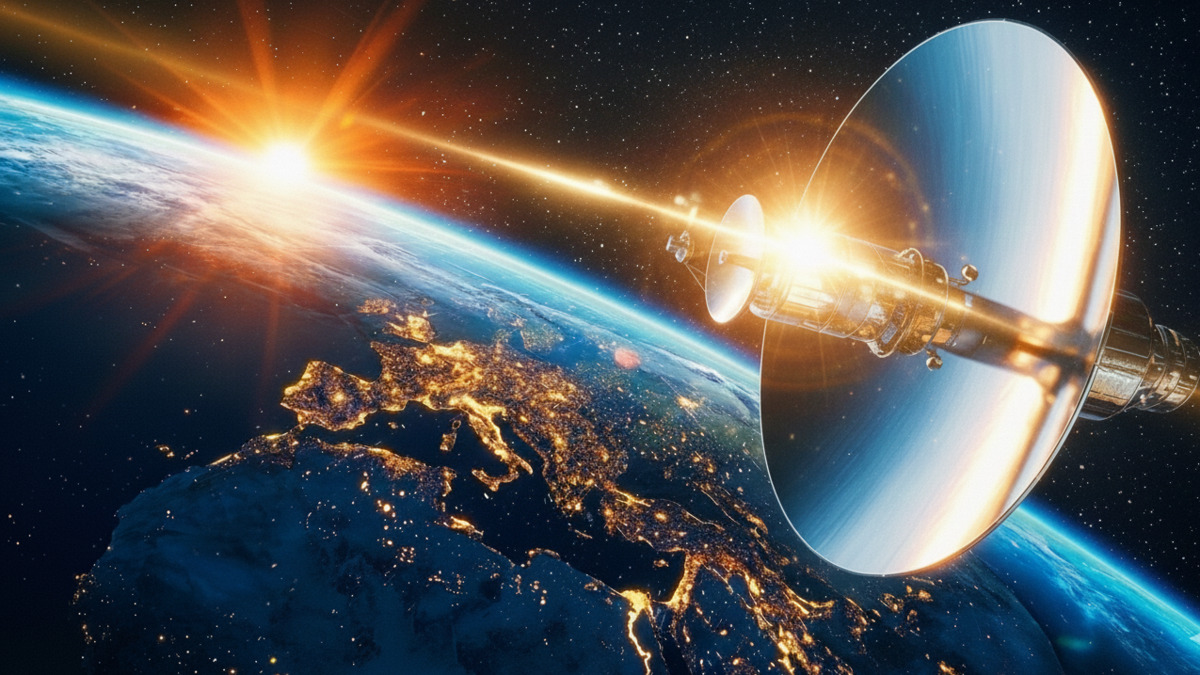
As early as 2026, 4,000 space mirrors reflecting artificial light from space are set to enter orbit, capable of brightening selected areas almost like daytime. While the project sounds spectacular, scientists warn that such intense illumination could seriously disrupt natural darkness, sky observations, and the circadian rhythms of animals and humans.
The company Reflect Orbital plans to send as many as 4,000 satellites equipped with giant mirrors into orbit. These mirrors will reflect sunlight back onto Earth. Each mirror measures 18 by 18 meters and is intended to illuminate an area with a 5 km diameter. Impressive? That is true, but experts see an immense threat in this plan.
Admittedly, this solution might bring significant benefits. According to the company, their project will provide tangible advantages, including:
However, experts warn that the benefits of creating these mirrors do not outweigh the threats posed by their operation.
Astronomers and ecologists warn that the consequences could be much more severe than initially assumed. The orbital mirrors are expected to reflect light up to four times brighter than a full moon, with each pass lasting several minutes. During this time, the beam of light could illuminate a total area with a radius of up to 100 kilometers—affecting animals, plants, and nocturnal ecosystems, which are exceptionally sensitive to such disturbances.
Specialists emphasize that such intense light will not only make observing the night sky impossible but will also interfere with the operation of telescopes, which require ideal darkness for precise measurements. This constitutes a serious blow to astronomy—but the list of threats does not end there.
Such powerful, unnatural light can harm not only land animals but also marine organisms. Experts explain that the reflected rays will disrupt the circadian rhythms of insects, migratory birds, and darkness-dependent species. The sudden, pulsating flashes—completely alien to these ecosystems—cause stress in animals, hindering foraging, migration, and even reproductive signaling.
Institutions responsible for granting satellite operating permits—including the Federal Communications Commission (FCC) and NASA—are also aware of this. The problem is, this offers little comfort to astronomers and ecologists. Why? Because both institutions primarily focus on technical issues and the operational safety of the satellites, not on the real-world effects of their light on the environment and science.
Nevertheless, licensing bodies focus on entirely different aspects. Some analyze mainly the risk of collision and radio interference, while others look primarily at whether the satellites will be properly disposed of after their mission ends. In practice, this means one thing: the actual impact of the reflected artificial light from space on the environment and astronomy is not a key element of current procedures.
Theoretically, safer ideas exist—from mirrors placed in geostationary orbits, to stratospheric balloons, to ground-based solar energy focusing installations. The issue is that none of these technologies offer the spectacular and immediate “artificial day” effect provided by light-reflecting orbital mirrors.
If Reflect Orbital’s test satellite, EARENDIL-1, successfully completes its mission, the company is ready to allocate several billion dollars to build the full, four-thousand-strong constellation. The first demonstrator is set to launch in April 2026.
However, the project highlights a well-known conflict: should human convenience be the priority, or the protection of ecosystems and astronomy? Proponents emphasize that the reflected light could extend activity time in cities or support energy production.
Critics counter that the price may be too high. Such a strong intervention in the nocturnal environment could lead to permanent, global ecosystem disturbances. Therefore, scientists are appealing to first conduct a full assessment of the technology’s environmental impact—and only then decide whether the project should receive a green light from American regulators.
Read this article in Polish: Noc zamieni się w dzień? 4000 kosmicznych luster rozświetli Ziemię


A graduate of journalism and social communication at the University of Rzeszów. She has been working in the media since 2019. She has collaborated with newsrooms and copywriting agencies. She has a strong background in psychology, especially cognitive psychology. She is also interested in social issues. She specializes in scientific discoveries and research that have a direct impact on human life.


Zmień tryb na ciemny