Culture
A Life Spent Becoming Someone Else’s Ideal
12 October 2026





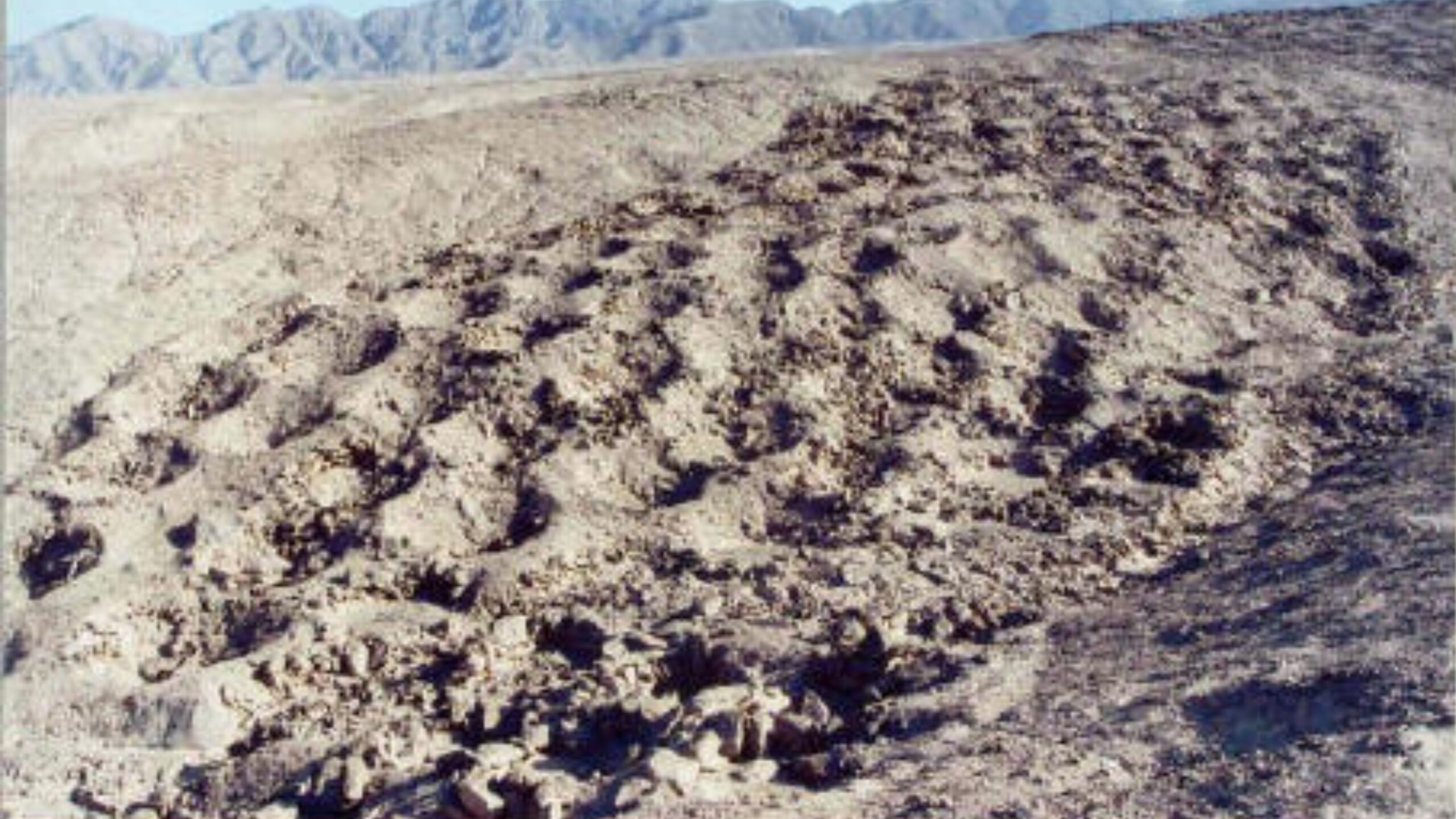
Thousands of perfectly uniform holes were carved into the desert slopes of southern Peru. For nearly a century, archaeologists debated whether they were traces of rituals, astronomy, or a completely unknown technology. Only recently has the mystery of their origin and purpose been solved, finally explaining the nature of these mysterious holes in Peru. The truth turned out to be more surprising than anyone imagined.
In the Pisco Valley, at Monte Sierpe in southern Peru, lies a phenomenon known for many years as the “Band of Holes” or “Snake Mountain.” This is one of the greatest archaeological puzzles of the Andes. Approximately five thousand carefully aligned, circular depressions carved into the desert hills have been discovered there. For a long time, the true purpose of these mysterious holes in Peru remained unknown.
It was only after many years that archaeologists came across a major lead that offered hope for solving this mystery. A team of scientists, including researchers from Harvard University, analyzed the depressions one by one and discovered something that sheds new light on this extraordinary place.
Monte Sierpe is located in southern Peru, in the Pisco Valley. The structure stretches for about 1.5 kilometers. Researchers first discovered it in 1933, when early aerial photographs revealed approximately five thousand regular depressions. Each of them is between one and two meters wide and half a meter to one meter deep. The holes run in neat rows, clearly divided into distinct sections.
For decades, however, researchers lacked unambiguous evidence to explain why the ancient inhabitants of the region created these structures.
In the valleys of Snake Mountain, researchers noticed clear numerical patterns in the arrangement of the depressions. This was tangible proof that these mysterious holes in Peru are not the work of nature, but the result of human activity. Their placement, depth, and form indicate carefully planned manual labor. There is no question of chance.
When archaeologists began examining the soil itself, they found further clues that allowed them to determine what had been inside these holes many years ago.
The analysis results were conclusive. Traces of corn—one of the most important crops in the Andes—were found in the depressions on Snake Mountain. Alongside them, remains of reeds, traditionally used for weaving baskets, appeared. These findings, described in the scientific journal Antiquity, point to the solution of the long-standing mystery and reveal surprising similarities between ancient practices and organizational methods known to modern societies.
The scientists involved in the study began to consider a more complex purpose for this site, suggesting several possible interpretations.
“Perhaps it was a pre-Inca marketplace, something like a flea market. We know that the pre-Hispanic population in this region numbered around 100,000 people. It’s possible that mobile traders—sailors and llama caravans—as well as specialized groups like farmers or fishermen, came here to exchange local goods, including corn and cotton. In fact, I view these depressions as a form of social technology that fostered human integration and, over time, became the basis for a large-scale accounting system in the Inca Empire,”
– said Dr. Jacob L. Bongers, one of the scientists involved in the study, as quoted by The Independent.
Since researchers were unable to definitively explain the purpose of these mysterious holes in Peru for so many years, the question arises: why has the answer only emerged now?
For many years, archaeologists lacked the material evidence needed to move the research forward. The small number of artifacts and the terrain’s topography, further complicated by coastal fog, effectively hindered work carried out from the ground. Since it was impossible to accurately survey the area from the land, it became necessary to look from a different perspective.
This possibility was brought about by the use of drones. Researchers used them for precise observations and taking samples from a low altitude. This approach opened a new stage in archaeological analysis and demonstrated how essential technologies for exploring the landscape from the air have become today, alongside traditional field methods.
Although these discoveries constitute a significant breakthrough in the archaeological research of the Andes, they do not conclude the work being conducted at Monte Sierpe. Scientists plan further analyses, focusing on the origin and distribution of plants, primarily species with medicinal properties. Only after these are completed will a fuller understanding of how this extraordinary area and the mysterious holes in Peru functioned in the past be possible.
Read this article in Polish: Tysiące tajemniczych otworów w Andach. Wreszcie rozwiązano ich zagadkę


A graduate of journalism and social communication at the University of Rzeszów. She has been working in the media since 2019. She has collaborated with newsrooms and copywriting agencies. She has a strong background in psychology, especially cognitive psychology. She is also interested in social issues. She specializes in scientific discoveries and research that have a direct impact on human life.



Zmień tryb na ciemny