Science
Before There Are Planets, There Is Dust
16 October 2026





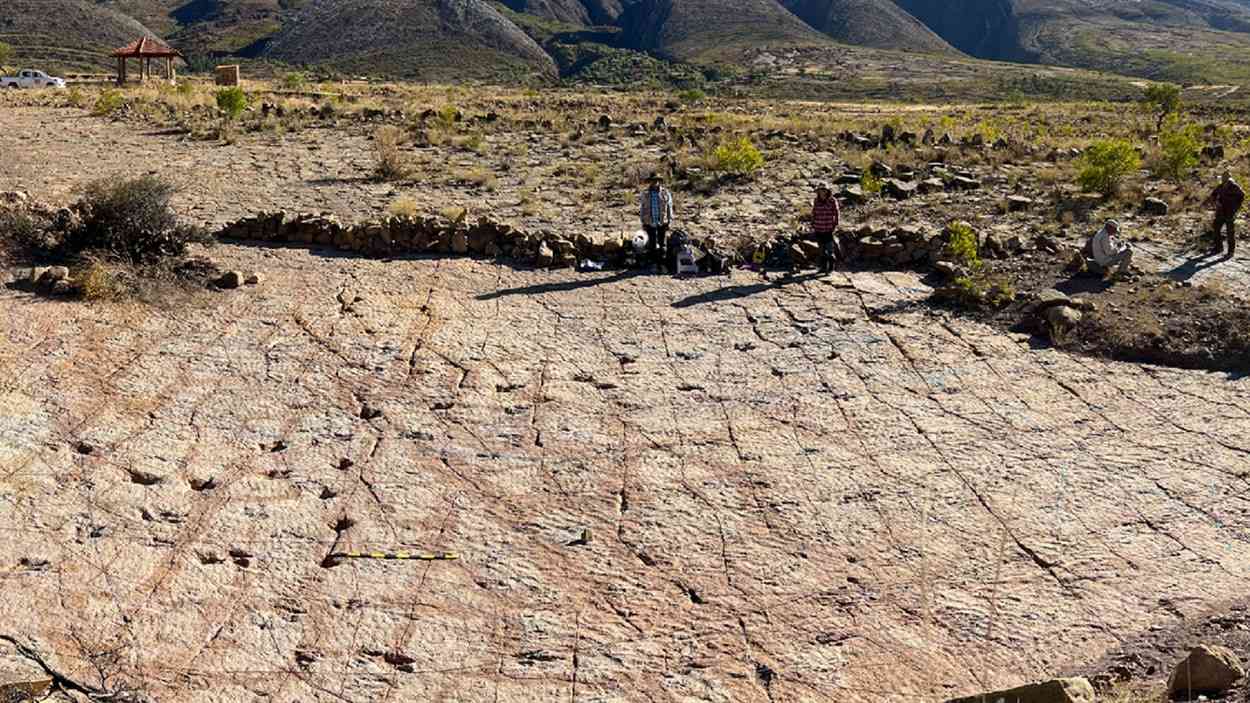
Hundreds of meters of rock covered in tracks, as if dinosaurs passed through just yesterday. This groundbreaking discovery of dinosaur footprints in Bolivia has revealed the world's largest concentration of these ancient imprints, offering scientists an unprecedented look into the daily lives and behaviors of these prehistoric giants.
The discovery in Bolivia, announced in early December 2025, has captivated paleontologists globally. At the Carreras Pampa site within Torotoro National Park, researchers uncovered 16,600 dinosaur footprints in Bolivia. These tracks are concentrated within an area of 7,485 square meters. In addition to footprints, teams found over 1,300 swim tracks and tail drag marks.
“Everywhere you look at the rock layer in this place, there are dinosaur tracks,”
– says study co-author Dr. Jeremy McLarty, associate professor of biology and director of the Dinosaur Science Museum and Research Center at Southwestern Adventist University, as quoted by CNN.
The prints date back to the Late Cretaceous period (101–66 million years ago) and primarily belong to theropods—two-legged carnivores like the Tyrannosaurus.
“It’s an extraordinary window into the life and behavior of dinosaurs at the end of the Cretaceous,”
– adds Dr. Richard Butler, a paleontologist at the University of Birmingham, quoted by AP News.
What makes Carreras Pampa unique is not just the sheer volume of tracks—which surpasses all other known sites—but their incredible diversity. Compared to other locations worldwide, these dinosaur footprints in Bolivia stand out due to their density and the preservation of environmental details, such as ripples in the ancient mud.
The revealed tracks show various behaviors: from casual walks to high-speed sprints and even swimming in shallow water. There are also clear signs of migrating herds. The sizes of the prints range from 10 cm to over 30 cm. Dr. McLarty compared the site to a prehistoric “dinosaur highway” used by reptiles traveling along a lakeshore.
“There is no place in the world with such a high abundance of (theropod) footprints,” Roberto Biaggi, co-author from Loma Linda University, told AP News. “We have all the world records at this specific site.”
The discovery at Carreras Pampa is crucial because, unlike bones—which reveal anatomy—footprints show the daily reality of dinosaurs. Through these tracks, scientists can calculate the speed at which the animals moved, their posture, and their social interactions.
“A skeleton shows what an animal could do; trackways show what it actually did, moment by moment,”
– explains Dr. Anthony Romilio from the University of Queensland.
This data helps researchers reconstruct lost ecosystems and understand the migrations of prehistoric reptiles, which in turn leads to a better understanding of evolution and the climatic changes of the Cretaceous period.
Bolivia is a paradise for paleontologists, and the entire region is famous for its wealth of dinosaur traces. Until now, Cal Orck’o near Sucre, where 12,000 tracks were found on a vertical limestone wall, was considered the premier site. However, Carreras Pampa exceeds Cal Orck’o in both scale and variety.
Torotoro National Park is located on the eastern slopes of the Andes, at altitudes ranging from 1,600 to 3,600 meters. Spanning approximately 165 km², the reserve hides numerous paleontological sites from the Cretaceous period (145–66 million years ago), including traces of both ancient birds and theropods.
Read this article in Polish: Takiego miejsca świat jeszcze nie widział.16 tys. śladów dinozaurów


A Journalism and Social Communication graduate with 15 years of experience in the media industry. He has worked for titles such as "Dziennik Łódzki," "Super Express," and "Eska" radio. In parallel, he has collaborated with advertising agencies and worked as a film translator. A passionate fan of good cinema, fantasy literature, and sports. He credits his physical and mental well-being to his Samoyed, Jaskier.



Zmień tryb na ciemny