Culture
A Life Spent Becoming Someone Else’s Ideal
12 October 2026





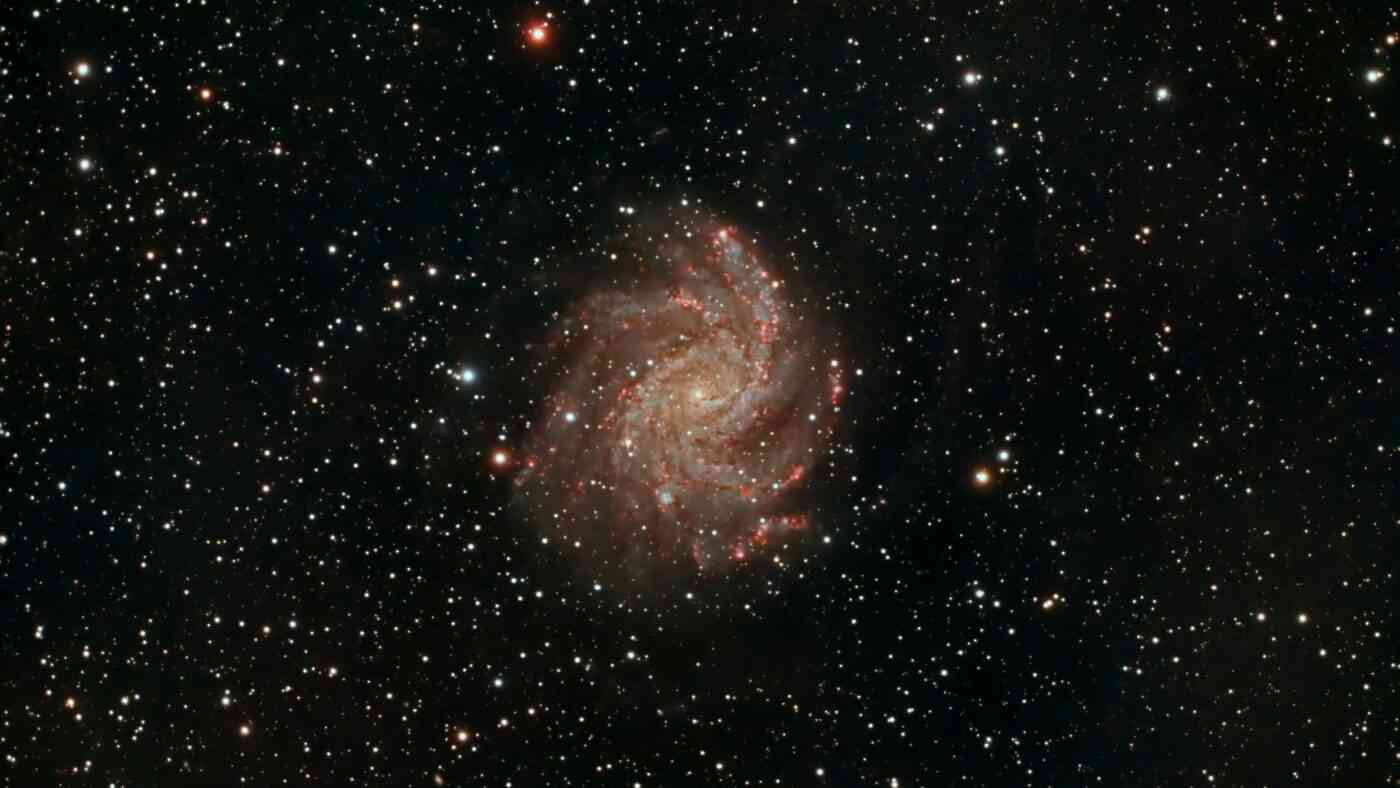
They didn't explode. They didn't leave supernovas behind. They simply collapsed into black holes. Today, scientists know that this could have been one of the very first stories of the Universe. Understanding this process provides the missing link in the origin of black holes and the evolution of the first galaxies.
It was one of the cosmos’s greatest mysteries. Supermassive black holes existed before the Universe even had time to “grow up.” Ordinary stars couldn’t have created them. Now, scientists have finally found the missing piece of this puzzle.
An international team of scientists from the USA and Australia turned to data from the James Webb Space Telescope. This data provided the first clear clue. It turned out that a chemical trail exists in space left by so-called “stellar monsters”—objects with masses 1,000 to 10,000 times greater than that of the Sun. At this stage, the researchers knew they were dealing with something extraordinary, but the true breakthrough came later.
The James Webb Space Telescope has confirmed the existence of the first runaway supermassive black hole (RBH-1). It has a mass of millions of Suns and is racing through space at a speed exceeding 3 million km/h.
Ahead of it, a powerful shock wave forms, while behind it stretches a trail of newly formed stars over 200,000 light-years long. Scientists believe it was ejected after a collision of black holes in a galaxy known as the “Cosmic Owl.”
The chemical signatures in the distant galaxy GS 3073 proved to be key. The analysis results were unequivocal. The nitrogen-to-oxygen ratio was found to be extremely high, clearly deviating from anything known types of stars can produce. This chemical imbalance was so significant that it could not be explained by any existing star-formation scenario.
These cosmic giants can be compared to dinosaurs. They were powerful and shone incredibly brightly, but their lives were short—lasting about 250 million years, which is a mere blink of an eye on a cosmic scale. After this time, they collapsed, creating massive black holes. While they can no longer be seen directly, a trace remains written in galactic chemistry, detectable even after billions of years.
The key to solving the mystery was measuring the nitrogen-to-oxygen ratio in galaxy GS 3073. This value reached as high as 0.46. Such a high level of nitrogen cannot be the result of any known star type or stellar explosion. This was the moment researchers became certain they were dealing with a completely different kind of object.
“Chemical abundances act like a cosmic fingerprint, and the pattern in GS 3073 is unlike anything ordinary stars can produce. Its extreme nitrogen content matches only one source we know—primordial stars with masses thousands of times that of the Sun. This tells us that the first generation of stars included truly supermassive objects that helped shape early galaxies and may have sparked the origin of black holes we see today,”
– explains Devesh Nandal from the Harvard Center for Astrophysics.
Astronomers have discovered a supermassive black hole with a mass of one billion Suns that is growing at a rate far exceeding existing theories.
Each year, it consumes an amount of matter equal to the mass of 300–3000 Suns, glowing so intensely in X-rays that it is the brightest object of its kind from the Universe’s first billion years.
The discovery suggests that cosmic giants may have begun as small black holes formed after stellar explosions, rather than emerging as massive objects from the start.
Scientists created simulations showing how stars with masses between 1,000 and 10,000 times the Sun’s mass evolved and what elements they were capable of producing. In doing so, they discovered a specific mechanism responsible for the production of vast amounts of nitrogen.
The process looked like this: giant stars burned helium, producing carbon. This carbon seeped into the surrounding shell, where hydrogen burning occurred. The carbon combined with hydrogen, and the result of this process was nitrogen. This created a characteristic cycle: Carbon – Nitrogen – Oxygen (CNO).
Convection currents distributed the nitrogen throughout the star. Ultimately, material rich in this element was ejected into space, enriching the surrounding gas. Although the entire process took millions of years, its effect was distinct enough to be observed even today.
The simulation also predicted what happens when these stellar monsters die. As noted in the article published in The Astrophysical Journal Letters, they do not explode at all. Instead, they collapse directly into massive black holes with masses reaching thousands of times that of the Sun.
An active black hole is currently located in the center of galaxy GS 3073, intensely consuming matter from its surroundings. Scientists suspect it may be a remnant of one of these supermassive primordial stars. If confirmed, the discovery will simultaneously solve two mysteries: the source of excess nitrogen and the origin of black holes in the early Universe.
Read this article in Polish: 20 lat szukali odpowiedzi. Wiadomo, skąd wzięły się czarne dziury


A graduate of journalism and social communication at the University of Rzeszów. She has been working in the media since 2019. She has collaborated with newsrooms and copywriting agencies. She has a strong background in psychology, especially cognitive psychology. She is also interested in social issues. She specializes in scientific discoveries and research that have a direct impact on human life.


Zmień tryb na ciemny