Culture
A Life Spent Becoming Someone Else’s Ideal
12 October 2026





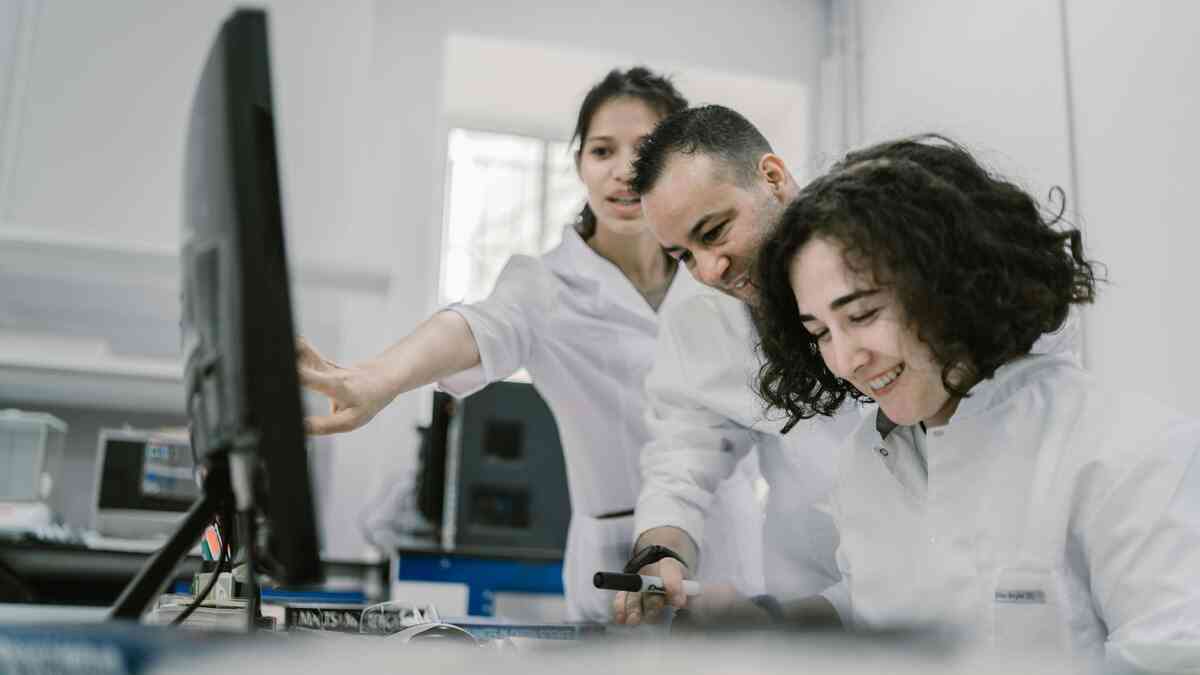
Science has finally intercepted one of the most private conversations in the human body. Researchers have engineered a specialized protein that effectively “wiretaps” neurons, allowing scientists to record the brain's neural language — the subtle chemical signals that guide every decision a cell makes before it fires an impulse.
A groundbreaking protein called iGluSnFR4, developed by research teams at the Allen Institute and the Janelia Research Campus, functions as a molecular listening device. As reported by Science Daily, citing the original study published in Nature Methods, this tool allows scientists to observe neurons in real time — not only what they “say,” but what they “hear” from neighboring cells.
Until now, neuroscience focused primarily on the final electrical spike of a neuron, missing the complex decision-making process that precedes it. This discovery opens access to that hidden phase of neural communication.
At the heart of this breakthrough lies glutamate, the brain’s primary excitatory neurotransmitter. Glutamate drives most neural activity, yet for decades researchers could only infer its role indirectly.
Traditional tools tracked action potentials — the moment a neuron fires — but that flash represents only the conclusion of a far more intricate exchange. The brain’s neural language is shaped long before that point, through countless incoming chemical signals that determine whether a neuron will respond at all.
Each neuron continuously monitors incoming glutamate signals at its synapses. These signals form a constantly shifting chemical landscape that reflects the activity of surrounding cells. Only specific patterns of input prompt a neuron to generate its own response.
Understanding this process is essential to understanding how thoughts, memories, and decisions emerge.
In reality, every neuron listens to thousands of chemical “whispers” from other cells. It integrates this information moment by moment, translating noisy, overlapping inputs into a clear biological decision.
This translation — turning chemical chaos into coherent neural output — forms the foundation of learning, memory formation, and adaptive behavior.
The iGluSnFR4 protein captures these fleeting glutamate signals precisely where they occur: at the synapse. By visualizing incoming communication rather than just outgoing signals, researchers can now observe neural conversations in their entirety.
Dr. Kaspar Podgorski, lead author of the study in Nature Methods in his compares previous neuroscience methods to reading a book with scrambled words. With this new molecular tool, those words finally align into a meaningful narrative.
This discovery extends far beyond basic research. Many neurological and psychiatric disorders stem from disruptions in cellular communication rather than outright neuron loss.
Using iGluSnFR4, scientists can now observe how glutamate signaling changes in conditions such as Alzheimer’s disease, schizophrenia, autism, and epilepsy. Tracking these signals in real time helps identify precisely when and where neural pathways begin to malfunction.
This represents a critical early step toward understanding disease mechanisms that may inform future therapies, rather than directly producing treatments themselves.
Importantly, iGluSnFR4 is already available worldwide through the non-profit repository Addgene. By sharing the tool openly, the research teams have enabled hundreds of laboratories to adopt the technology immediately.
This open-access approach could significantly accelerate progress in neurobiology over the coming decade.
We are entering a new era in brain research. For the first time, scientists can truly listen to the most intimate conversations happening inside the human brain.
By decoding the brain’s neural language, neuroscience moves beyond describing how neurons fire and toward understanding why they do — and why that communication sometimes breaks down. This insight brings researchers closer than ever to unraveling the mysteries of the human mind and the disorders that affect it.
Read this article in Polish: Mózg zdradza tajemnice. Naukowcy podsłuchali mowę neuronów


A graduate of Journalism and Social Communication at the University of Warsaw (UW), specializing in culture, literature, and education. Professionally, they work with words: reading, writing, translating, and editing. Occasionally, they also speak publicly. Personally, they are a family man/woman (head of the family). They have professional experience working in media, public administration, PR, and communication, where their focus included educational and cultural projects. In their free time, they enjoy good literature and loud music (strong sounds).



Zmień tryb na ciemny