Education
What Does It Take to Keep a Child Curious?
28 September 2026





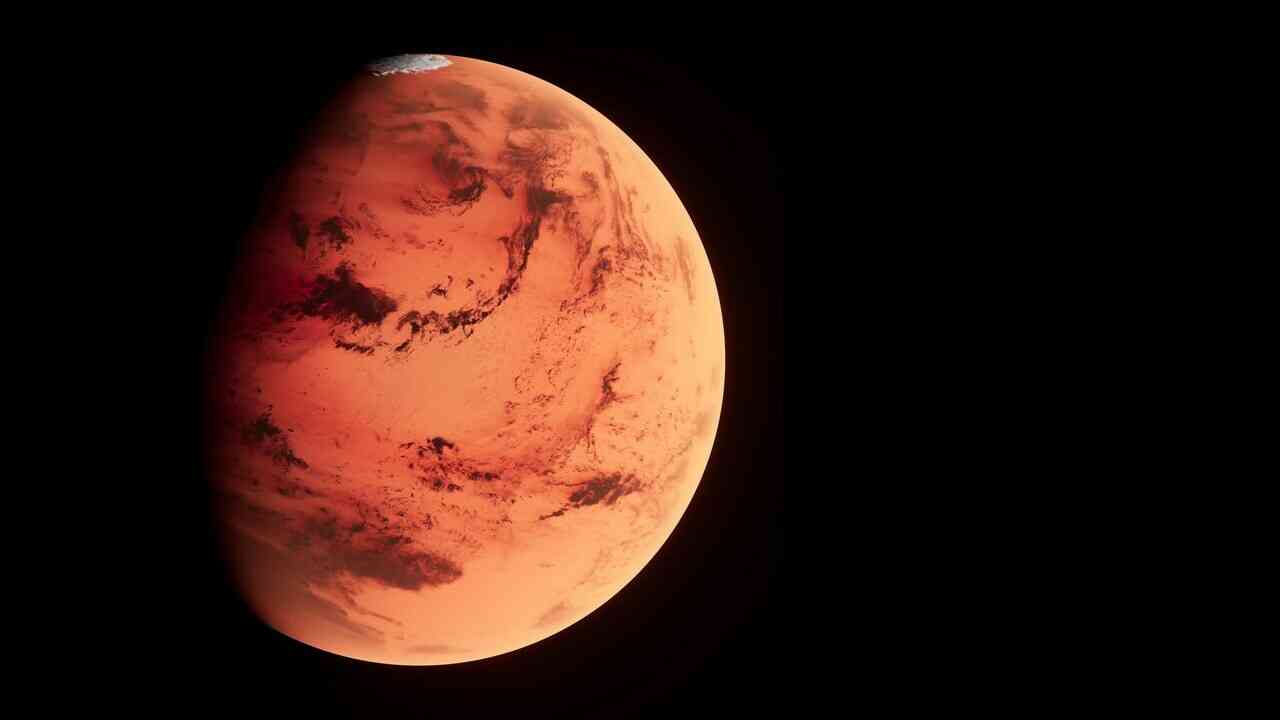
Mars, which today resembles a barren wasteland, once thrived as a blue planet. A groundbreaking study reveals that approximately 3 billion years ago, a massive body of water—at least as large as Earth’s Arctic Ocean—covered its northern hemisphere. For the first time, researchers have reconstructed the coastline of this ancient Martian ocean with unprecedented precision.
New research published on January 12, 2026, in the journal npj Space Exploration, offers a startlingly different perspective on Mars. It turns out that our neighbor was once a “blue world” where a vast sea dominated the northern landscapes.
This breakthrough resulted from a collaboration between the University of Bern and Italy’s INAF – Osservatorio Astronomico di Padova. By analyzing high-resolution images from Mars orbiters, the team identified geological structures nearly identical to river deltas found on Earth.
While mapping Martian landscapes, I recognized mountains and valleys reminiscent of Earth’s rugged terrain. However, the deltas I discovered at the edge of a mountain range were particularly striking.
– says Ignatius Argadestya, a doctoral student at the University of Bern.
Scientists emphasize that on Earth, such formations only appear where rivers empty into larger bodies of water. According to the study’s authors, these features confirm that an ancient Martian ocean existed about 3 billion years ago.
Although wind-sculpted dunes now cover these ancient delta structures, their original forms remain clearly recognizable. Using these markers, the team reconstructed the former coastline and estimated the basin’s size with high accuracy. The data shows that this Martian sea was at least as large as Earth’s Arctic Ocean, stretching across the planet’s northern hemisphere.
We aren’t the first to suggest the existence of a northern ocean. However, previous claims relied on less precise data or indirect arguments. Our sea-level reconstruction rests on clear evidence of a shoreline, made possible by high-resolution imaging.
– explains Fritz Schlunegger, Professor of Exogenic Geology at the University of Bern.
The presence of a massive ocean suggests that Mars once possessed the necessary conditions for life to emerge. It also serves as a somber reminder of how planets change over eons.
We know Mars as a dry, red planet. Yet our results show it was once a blue world, much like Earth. This discovery also highlights how precious water is—and how it can eventually vanish.
– Argadestya notes.
Finding traces of an ancient Martian ocean provides a roadmap for future space missions. Delta deposits, rich in fine-grained material transported by rivers, are prime targets for rovers searching for biosignatures. Just as terrestrial deltas preserve traces of past ecosystems, scientists expect Martian rocks within these structures to hold the secrets of the planet’s biological history.
Read this article in Polish: Mars nie zawsze był czerwony. Naukowcy odkryli ślady oceanu


A Journalism and Social Communication graduate with 15 years of experience in the media industry. He has worked for titles such as "Dziennik Łódzki," "Super Express," and "Eska" radio. In parallel, he has collaborated with advertising agencies and worked as a film translator. A passionate fan of good cinema, fantasy literature, and sports. He credits his physical and mental well-being to his Samoyed, Jaskier.



Zmień tryb na ciemny