Truth & Goodness
Modern Warfare, Old Words: Why We Misread Today’s Conflicts
03 October 2026





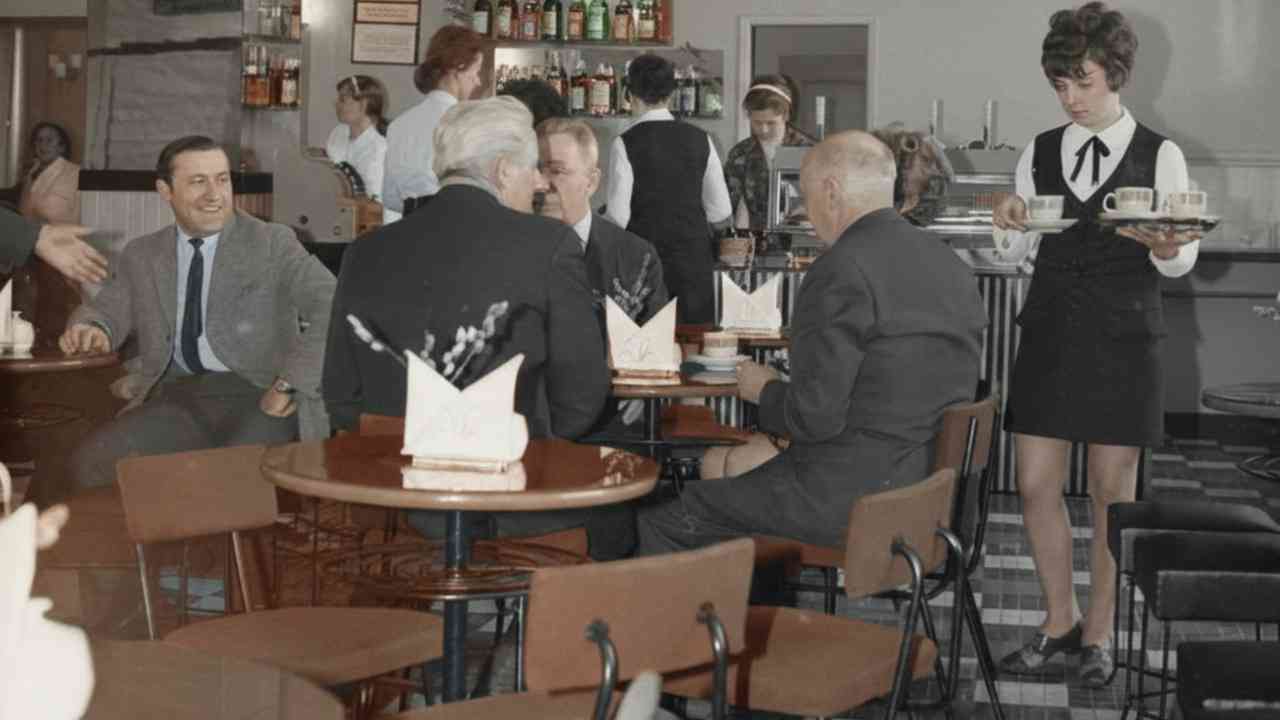
Just 30 to 40 years ago, cigarette smoke served as a natural backdrop to daily life—in workplaces, on trains, and inside restaurants. Smoking was not merely an addiction; it was a cornerstone of social custom. Jacek Piekara revisits the daily life in the former Eastern Bloc and the 1990s—a world that has since vanished along with the smoke.
If we were to send today’s teenager or student on a journey into the past—not even a distant one, but just 30 to 40 years back—they would experience an undeniable technological shock. The inability to use mobile phones or the absence of the apps we rely on constantly every day could cause such an irreversible mental trauma that it might require years of therapy!
But let’s step away from technology; let’s leave politics and the economy alone. Instead, let’s focus on a certain phenomenon of everyday life, a particular custom that was perhaps the most characteristic element of daily life in the former Eastern Bloc and the years that followed. That custom and phenomenon was the ubiquitous smoking of cigarettes.
Poland was drowning in cigarette smoke. People smoked everywhere: in hospitals, schools, universities, cafes, restaurants, and pubs. They smoked in workplaces, on trains, planes, and in taxis. They even smoked around children. Society paid no mind to non-smokers; it treated their annoyance at the stifling smoke like an irritating caprice, the grumblings of someone who simply didn’t fit in.
Cigarettes were also pervasive in mass culture. Films from those decades constantly show people lighting up. These weren’t just characters from some ‘bad’ or pathological environment; they represented the political, cultural, or financial elite.
I remember from my university days that the ladies in the dean’s office always smoked like chimneys. Whenever I had to enter the teachers’ lounge in my high school during a break, the room was literally thick and dark with smoke. Of course, it never even crossed anyone’s mind that people could be forbidden from smoking on the streets or at bus and tram stops.
Thick clouds of tobacco smoke perpetually choked cafes, restaurants, and later pubs and nightclubs. I even recall a scene from the film Jak to się robi (How its done), where a character smokes right in a holiday resort canteen in the middle of a meal.
What is astonishing today is not just that he didn’t care about the people around him, but the way he smoked: he was eating soup while simultaneously taking drags from a cigarette. A spoonful of soup, then a puff… a spoonful of soup, then another puff. I must admit, even during the time when I was a heavy smoker myself (and I smoked a lot for a long time), I could never understand that style of smoking.
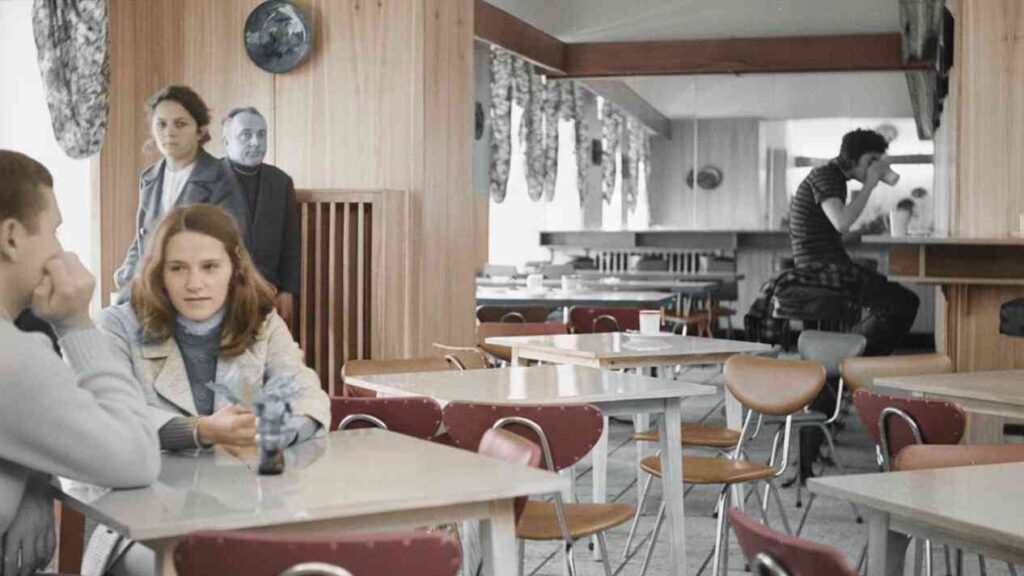
During a monumental political event like the Round Table talks of 1989, nearly every participant in the negotiations smoked cigarettes, and ashtrays were stuffed to the brim with butts. I remember vividly—and you can still find this on YouTube—how the most prominent politicians of that era would give television interviews while smoking.
Can you imagine that today? A minister discussing new legislation, taking a drag every second sentence and blowing a cloud of smoke toward the camera? In the 1990s, no one found it particularly surprising.
Professional athletes also smoked like chimneys. Today, as everyone observes and admires the healthy lifestyle of Robert Lewandowski, it seems extraordinary that there were years when Polish footballers spent their national team training camps mainly drinking vodka, playing cards, and smoking so habitually that, according to eyewitnesses, the rooms were dark and dense with smoke.
I also remember times when smoking was permitted on airplanes, completely normal and common on trains, and practically expected in taxis. Today, it’s hard to find a driver who allows smoking in their car, mostly for practical reasons: the smoke seeps into the upholstery and leaves a lingering stench that subsequent non-smoking customers might dislike.
I remember that society looked upon non-smoking taxi drivers as total oddities. Some customers would walk away from the car; others, driven by nicotine withdrawal or drunken stubbornness, would ignite a cigarette against the driver’s explicit orders, making an ugly scene inevitable.
Today, I can’t imagine how we could travel in winter with four people in a car (whether private or a taxi) and everyone, including the driver, would be smoking with the windows closed. A horror!
In Poland, cigarette and nicotine product advertisements were officially banned from “television, radio, the press, and billboards” in 1995, but before that, such ads appeared frequently. For instance, Bogusław Linda, the biggest Polish film star of the 90s, advertised West cigarettes. You can still watch that ad on YouTube today; it leaves a truly strange impression, though one cannot deny its originality.
But in Poland, cigarette ads never conquered the media market to the extent they did in the USA. In the United States, major tobacco campaigns featured actual doctors (yes!) praising the taste and “lightness” of cigarettes, claiming they cleared the throat and freshened the breath. Brands were even recommended to pregnant women!
One can still find cigarette posters and magazine clippings online, now mere curiosities from the past. They remind us of a time similar to the era of legal heroin, when companies openly marketed narcotics as everyday products.
In my collection, I have Blu-ray discs of the remastered American series The Twilight Zone, originally aired in the US between 1959 and 1964. Each episode begins with an introduction by the narrator, Rod Serling. And what did the narrator do besides inviting the viewers to the show? He smoked a cigarette, praised it, and advertised the brand. Can you imagine something like that on television today?
I must admit that despite my tolerance for smoking and smokers—and my tendency to sympathize with them rather than with contemporary oppressive laws—I cannot imagine such a far-reaching acceptance of omnipresent cigarette smoke in public spaces today. In that era, people rarely cared about the presence of children (even infants) and smoked in their company, treating it as entirely natural behavior.
Today, I find it truly repulsive to think of going to a smoke-filled restaurant for dinner or sitting for several hours in a train compartment with people smoking. Therefore, I fully support many of the smoking restrictions, especially in situations where smoke would cause discomfort to non-smokers.
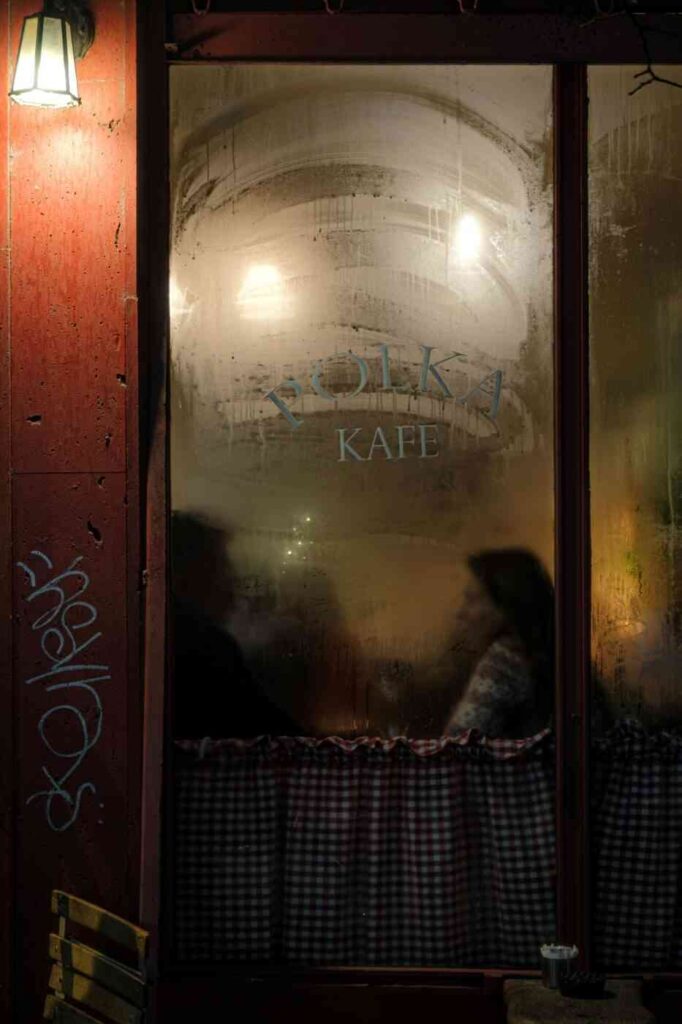
Contemporary studies indicate that today in Poland, only 9 percent of young men and a mere 1 percent of young women smoke habitually, while as many as 60 percent of Poles declare they have NEVER reached for a cigarette.
In the days of my youth, it looked completely different. In my circle of friends, everyone smoked: some frequently, others sporadically, but everyone reached for a cigarette at least once in a while, for example, at a party with alcohol. I haven’t smoked for many years now (I might light up once or twice a year), but I am not a typical “neophyte.”
I believe that the current smoking ban has gone decidedly too far. Of course, the right of non-smokers to breathe fresh air must be respected. That is beyond discussion. Therefore, in workplaces, public transport, and public utility buildings, the bans are understandable.
But why was smoking also banned in all catering establishments? After all, no one forces non-smokers to visit a specific restaurant or pub. Nothing would stop non-smokers from frequenting smoke-free venues, leaving smokers to their own dedicated haunts where they could ‘puff away’ as much as they pleased.
Many people today do not know or remember that smoking was not merely a simple addiction, but also a cultural custom and social behavior—a way to make acquaintances, forge stronger bonds, or defuse a conflict.
When you started a new job, the best and fastest connections were made in the smoking room. That was where you learned everything important about how the company functioned. And how many of my great acquaintances in clubs or pubs began with someone asking me for a light or a cigarette, or me offering one to someone else!
Finally, I would like to recommend two short stories by the master of horror, Stephen King, dedicated to smokers. One is The Ten O’Clock People, and the other is Quitters, Inc.—a brilliant text about the effective struggle against nicotine addiction.
Read the original article in Polish: Przeminęło z dymem. Jacek Piekara o zapomnianym obyczaju


Jacek Piekara: One of Poland's most popular fantasy writers, a journalist, and a columnist. He is the author of the widely acclaimed "Inquisitor Series" (Cykl Inkwizytorski), dozens of books, and numerous short stories. Piekara has also contributed to specialized and popular press, including the magazines Click! and Gambler. In addition to literature, he writes scenarios for computer games and works as a publicist.



Zmień tryb na ciemny