Truth & Goodness
Circadian Rhythm and the Quiet Order of the Day
04 September 2026





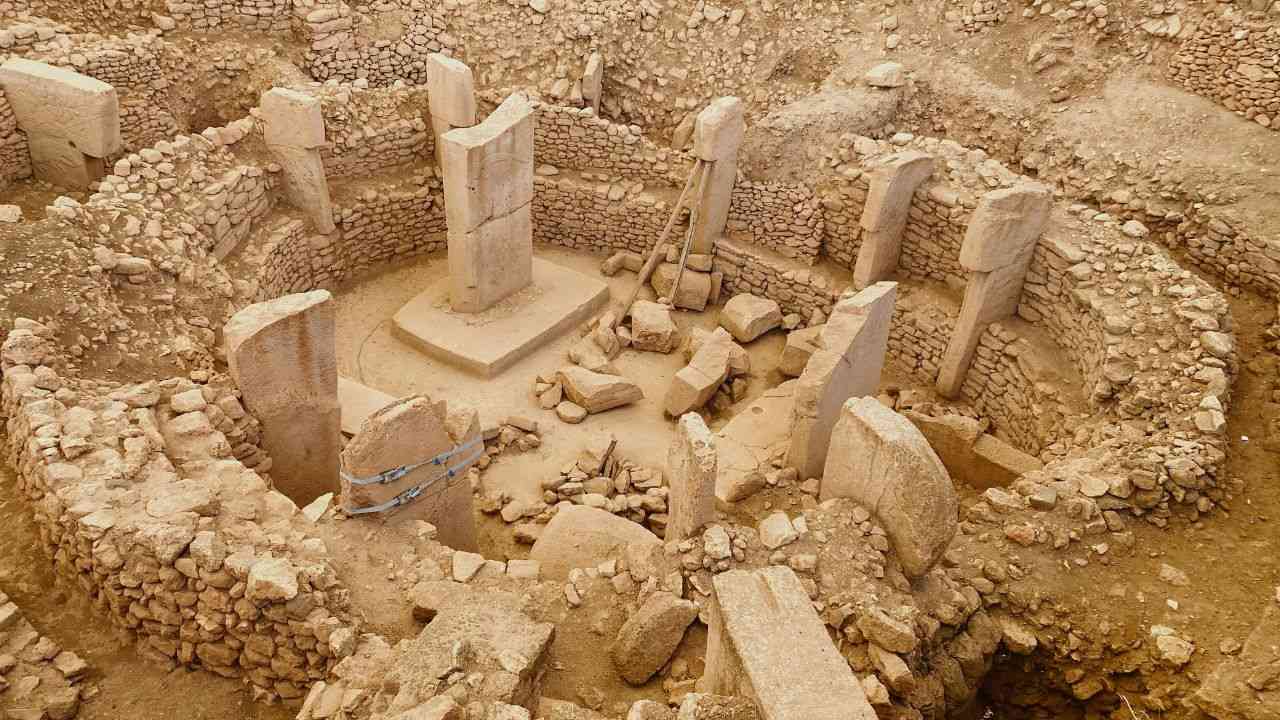
Recent excavations in Erfurt, Germany, have led to the location of a large-scale burial site containing victims of the Black Death. Using a combination of geophysical surveys and historical analysis, researchers have uncovered a site that confirms medieval accounts of one of history’s most devastating pandemics.
For centuries, the urban landscape of Erfurt concealed a significant medieval site: a mass grave of plague victims. Only recently, through advanced non-invasive techniques, have scientists been able to confirm the location of this historical burial ground, providing new insights into how medieval societies handled mass-casualty events.
The plague, known as the Black Death, remains one of the greatest epidemiological catastrophes in human history. Although it ravaged Europe for a mere four years (1347–1351), it claimed between 10 and 25 million lives. In the hardest-hit regions, the epidemic killed every second inhabitant, permanently altering the social and economic landscape of the continent.
The disease returned in subsequent waves that sparked fear for centuries. In Poland, the last outbreaks were recorded as late as 1920. Paradoxically, despite the scale of this hecatomb, confirmed burial sites for victims of the Black Death are among the rarest archaeological finds in Europe. To date, only a small number of such locations have been scientifically verified.
In the eleven best-documented mass graves across the continent, approximately 12,000 people lie at rest—a tiny fraction of the millions lost to the pandemic. Consequently, every new discovery carries immense historical value.
This is why the discovery in Erfurt, Germany, is so significant. Nearly 700 years after the pestilence, researchers have finally located another of these forgotten resting places, providing a rare opportunity to study the impact of the plague on a specific urban population.
A team of archaeologists—including researchers from Leipzig University—uncovered the burial site using a combination of modern technology and historical analysis. The structure is exceptionally large, measuring approximately 10 by 15 meters and reaching a depth of 3.5 meters.
Inside, researchers found mixed layers of sediment and fragments of human remains, indicating a burial conducted in great haste to keep up with the rising death toll. Laboratory analyses provided the crucial evidence: radiocarbon dating confirmed that the remains date back to the 14th century, the exact period of the Great Plague.
Our results strongly suggest that we have located one of the mass graves of plague victims described in the Erfurt chronicles. However, final confirmation will only be possible after the planned archaeological excavations,
– explained Dr. Michael Hein, lead author of the study and a geographer, as quoted by Phys.org.
According to the study published in the journal PLOS ONE, the choice of the burial site was not random. Medieval residents possessed a practical understanding of where to inter those who died of the contagion.
They primarily avoided damp floodplains, knowing that bodies decomposed more slowly in such conditions. Furthermore, the prevailing medical theory of “miasma” suggested that “bad air” rising from decomposition could further spread the disease. This intuitive public health measure led them to select specific locations.
The mass grave was established based on these criteria:
Until recently, experts relied primarily on traditional excavation, which often involved high costs and a large margin of error. This discovery represents a shift in methodology. The findings in Erfurt were made possible by a pioneering combination of historical archives, geophysical measurements, and sediment core drilling.
By reconstructing a medieval map of the terrain, scientists could pinpoint the subterranean structure before ever breaking ground. This integrated approach will likely serve as a blueprint for locating other forgotten victims of the Black Death, helping to restore the lost stories of those who lived through the world’s darkest hour.
Read this article in Polish: Czarna śmierć wraca z przeszłości. Wstrząsające odkrycie archeologów


A graduate of journalism and social communication at the University of Rzeszów. She has been working in the media since 2019. She has collaborated with newsrooms and copywriting agencies. She has a strong background in psychology, especially cognitive psychology. She is also interested in social issues. She specializes in scientific discoveries and research that have a direct impact on human life.


Zmień tryb na ciemny