Education
What Children Learn When They Count on an Abacus
25 September 2026





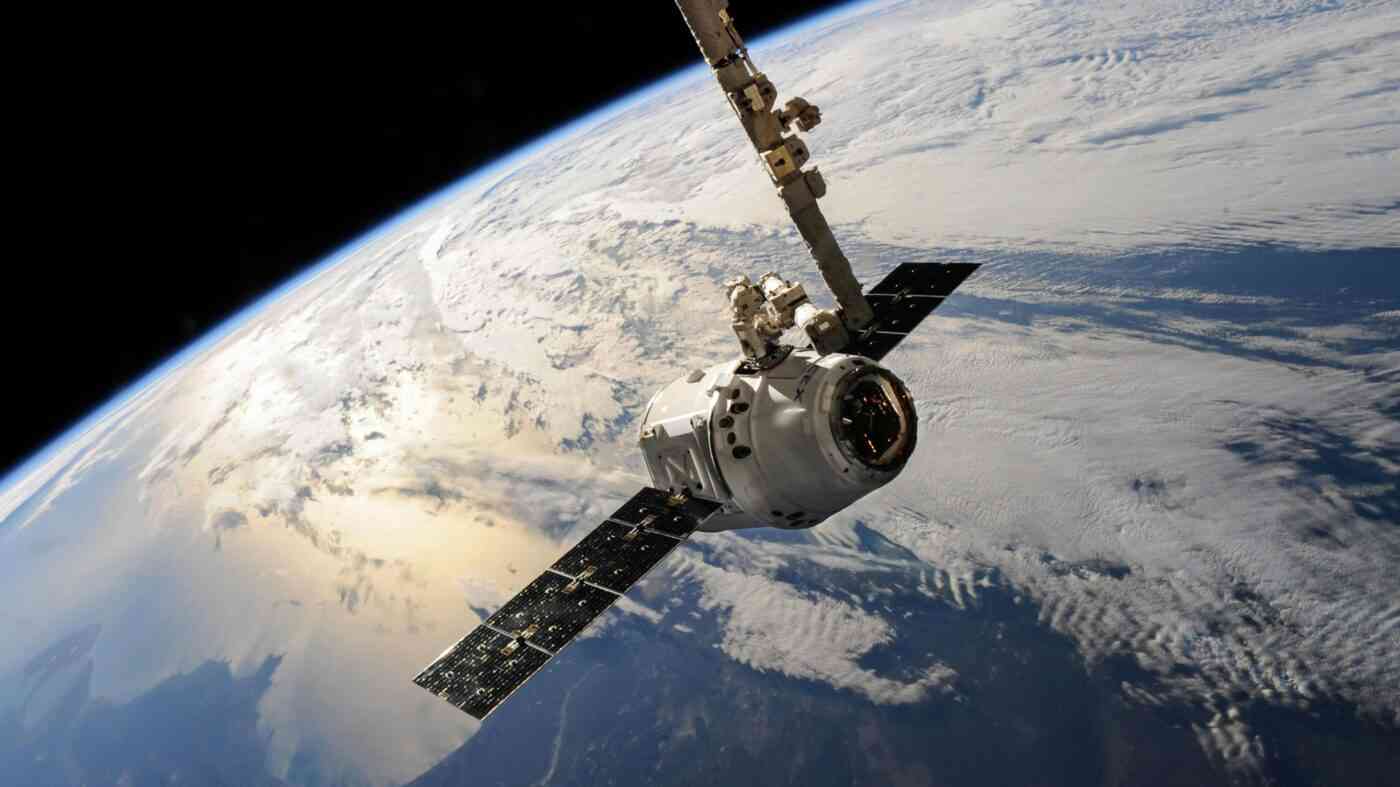
The same instruments used to monitor earthquakes can now identify waste falling from orbit. Researchers have developed an innovative method that ensures seismographs detect space debris as it re-enters the Earth's atmosphere.
A study published in January 2026 in the journal Science demonstrates that seismic sensors are capable of recording tremors caused by hypersonic shockwaves. These waves are generated by orbital remains falling at immense speeds.
Researchers tested this technique using the orbital module of the Chinese Shenzhou-15 spacecraft, which re-entered the atmosphere over Southern California in April 2024. The object traveled at several times the speed of sound, creating a series of shockwaves. These waves reached the Earth’s surface, causing brief but measurable ground vibrations. This event proved that seismographs detect space debris by capturing the energy transferred through the atmosphere to the ground.
Data from over 120 seismic stations allowed scientists to reconstruct the object’s path, velocity, altitude, and descent angle. Furthermore, the analysis revealed specific details of the module’s fragmentation.
When a spacecraft begins to break up and tracking becomes chaotic, the ground still ‘hears’ it. Seismic networks allow us to reconstruct fragmentation sequences lasting less than a second—events we usually only model but rarely observe directly,
– emphasizes Emile Charalambous of Imperial College London.
This method holds significant practical potential, particularly for tracking uncontrolled debris that is difficult to monitor via radar or optical sensors due to weather or range constraints. Because seismographs detect space debris in near-real-time, data can be available within seconds of shockwave detection. This allows for rapid warnings to aviation and ground services.
The study’s authors note that seismic data can complement radar by tracking an object after it enters the dense layers of the atmosphere. In practice, integration with existing networks could create a global monitoring system. Such a system is crucial when there is an urgent need to secure potentially toxic materials or protect infrastructure.
If you want to help, it is vital to quickly determine where the debris landed—for example, in 100 seconds rather than 100 days,
– says the study’s lead author, Benjamin Fernando of Johns Hopkins University.
The threat from orbital waste is growing alongside the increasing number of satellites. The study’s authors highlight that the number of spacecraft re-entering the atmosphere has increased nearly exponentially over the last five years. While most objects burn up, some fragments reach the surface, posing a risk to human life and ground infrastructure. Falling debris also presents a serious hazard to aircraft in flight.
Researchers stress that this method offers a more affordable alternative to expensive radar systems. Its primary advantage is that it utilizes the dense, existing global seismic infrastructure. If a large object begins an uncontrolled descent, the fact that seismographs detect space debris globally will allow authorities to pinpoint within minutes which regions require warnings and where to locate the impact site.
Read this article in Polish: Sejsmografy usłyszały kosmiczne śmieci. Nowy system ostrzegania


A Journalism and Social Communication graduate with 15 years of experience in the media industry. He has worked for titles such as "Dziennik Łódzki," "Super Express," and "Eska" radio. In parallel, he has collaborated with advertising agencies and worked as a film translator. A passionate fan of good cinema, fantasy literature, and sports. He credits his physical and mental well-being to his Samoyed, Jaskier.



Zmień tryb na ciemny