Education
What Children Learn When They Count on an Abacus
25 September 2026





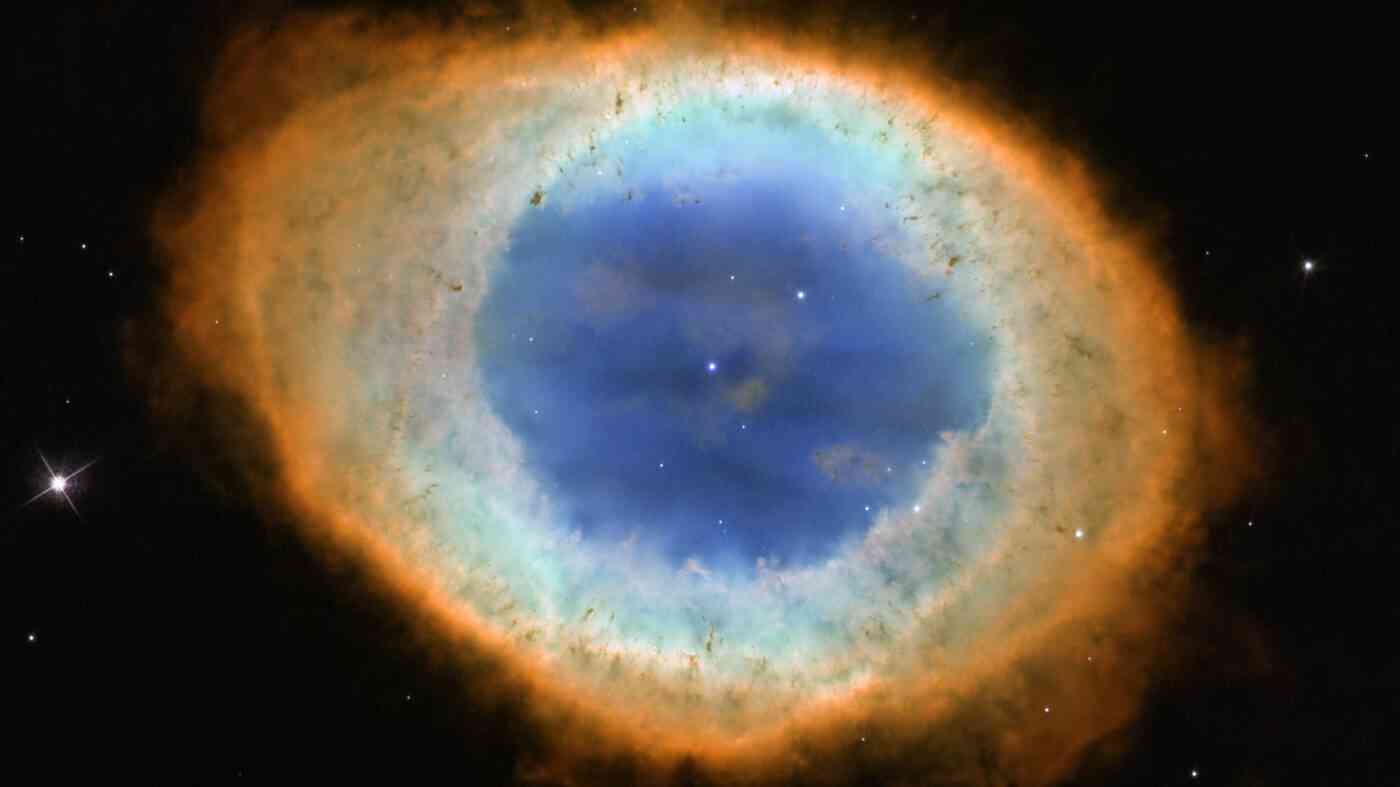
At the heart of the iconic Ring Nebula, scientists have detected something that eluded observers for centuries: a massive iron feature now dubbed the Ring Nebula bar, with a mass comparable to Mars. What exactly is this mysterious structure, and how did it stay hidden for so long?
The Ring Nebula, also known as Messier 57, is one of the most recognizable planetary nebulae in our galaxy. Located in the constellation Lyra, about 2,500 light-years from Earth, it formed when a dying Sun-like star shed its outer layers, creating a glowing, elliptical ring of gas. First discovered in 1779 by French astronomer Charles Messier, the nebula has been a staple of astronomical study for nearly 250 years.
Despite decades of scrutiny, the Ring Nebula recently revealed a hidden feature. A European research team led by astronomers from University College London and Cardiff University discovered a “bar” of iron stretching across the nebula’s interior. First described in January 2026 in the journal Monthly Notices of the Royal Astronomical Society, the structure is a cloud of ionized iron atoms. It spans a distance about 500 times greater than Pluto’s orbit around the Sun, yet its total mass is roughly equivalent to that of Mars.
This discovery was made possible by the WEAVE (WHT Enhanced Area Velocity Explorer) instrument on the 4.2-meter William Herschel Telescope in La Palma. WEAVE allowed researchers to capture a continuous spectrum across the entire nebula for the first time, mapping its chemical composition with unprecedented detail.
When we processed the data and looked at the images, one thing jumped out at us like nothing else—a previously unknown Ring Nebula bar of ionized iron atoms, sitting right in the center of the iconic ring,
– says team leader Dr. Roger Wesson of University College London and Cardiff University.
The finding raises immediate questions. How did a structure this large remain unnoticed despite intense observation? Is the iron feature unique to the Ring Nebula, or do similar structures exist in other planetary nebulae?
We definitely need to find out more—especially whether other chemical elements coexist with this newly detected iron, as that would likely point us to the right class of models to apply. Currently, we are missing that vital piece of the puzzle.
– emphasizes co-author Professor Janet Drew of University College London.
Based on the data so far, scientists have outlined 2 main hypotheses for the origin of the iron structure:
1) A new phase of stellar death
The bar may reveal an overlooked aspect of how a parent star ejects its layers as the nebula forms—potentially adding a new wrinkle to models of late-stage stellar evolution.
2) The remains of a planet
A more intriguing possibility is that the iron represents the “ghost” of a rocky planet that evaporated as the dying star expanded into a red giant, leaving behind a signature that can still be detected.
It would be very surprising if the iron bar in the Ring was unique. We hope that by observing and analyzing other nebulae formed in the same way, we will find more examples of this phenomenon, helping us understand exactly where the iron comes from.
– adds Dr. Wesson.
Researchers hope follow-up observations will show whether the Ring Nebula bar is a one-off oddity—or a common, previously overlooked feature in planetary nebulae across the galaxy.
Read this article in Polish: Tajemniczy obiekt w Mgławicy Pierścień. Wcześniej go nie widziano


A Journalism and Social Communication graduate with 15 years of experience in the media industry. He has worked for titles such as "Dziennik Łódzki," "Super Express," and "Eska" radio. In parallel, he has collaborated with advertising agencies and worked as a film translator. A passionate fan of good cinema, fantasy literature, and sports. He credits his physical and mental well-being to his Samoyed, Jaskier.



Zmień tryb na ciemny