Humanism
The Answer Machine and the Vanishing Art of Doubt
08 July 2026





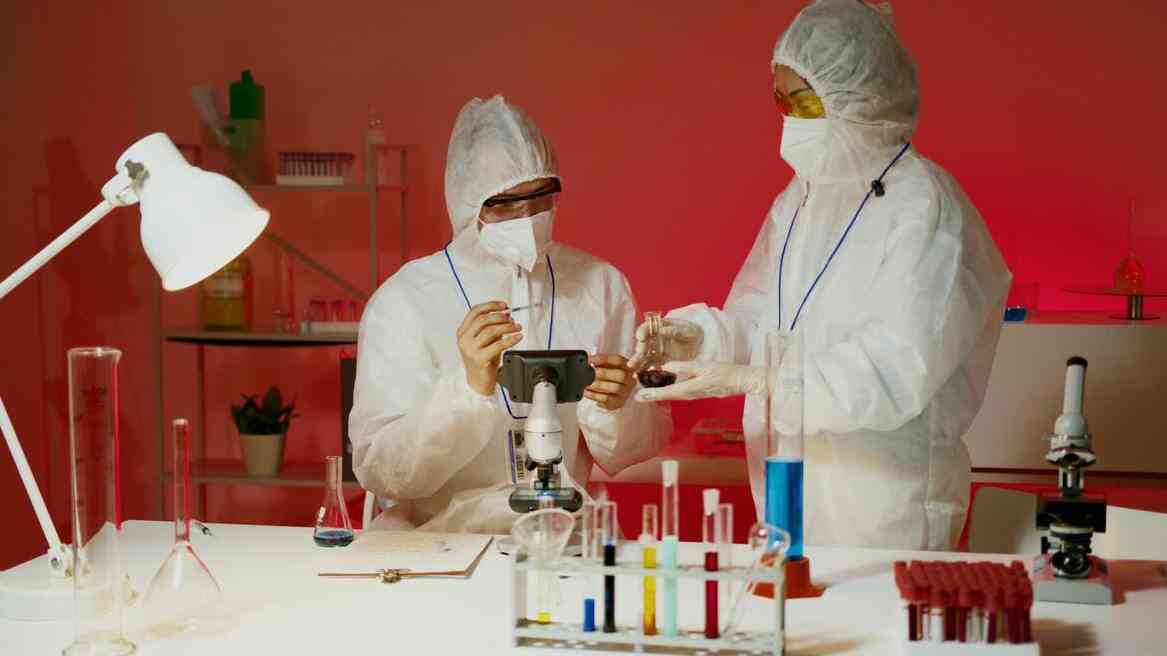
Artificial intelligence has achieved in weeks what takes nature millions of years: designing a fully functional virus from the ground up. While this AI-designed virus is built to hunt deadly bacteria, the technology behind it opens a Pandora’s box of possibilities—including powerful new medical tools and serious biosecurity questions.
Natural evolution is a slow process of trial and error. But a specialized AI model called Evo2 aims to show that silicon can outpace biology. Developed by researchers at Stanford University and the biotech firm Genyro, Evo2 was trained on trillions of DNA base pairs. The result is Evo-Φ2147: a synthetic bacteriophage with a genetic sequence that, according to the researchers, does not exist in the natural world.
The system didn’t just get lucky once. It generated 285 entirely new viral variants, 16 of which were capable of infecting and killing E. coli bacteria. The top performer, Evo-Φ2147, eliminated bacteria about 25 percent faster than its natural counterparts.
Its structure is strikingly compact: 11 genes packed into roughly 5,400 DNA base pairs. For perspective, the human genome contains about 3.2 billion base pairs—making this a small but powerful demonstration of biological efficiency.
The primary mission for Evo-Φ2147 is the fight against antibiotic resistance—one of modern medicine’s most daunting “silent pandemics,” linked to hundreds of thousands of deaths each year.
Bacteria quickly adapt to traditional antibiotics, rendering treatments useless. We wanted to see if we could design phage therapies that are effectively ‘evolution-proof’ against bacterial defenses.
– explain co-creators Dr. Samuel King and Dr. Brian Hie.
Unlike broad-spectrum antibiotics that can wipe out much of a patient’s microbiome, bacteriophages can act more like guided tools—targeting specific bacterial strains. If the approach holds up beyond early demonstrations, it could help open a new chapter of precision treatment for infections that current drugs struggle to control.
The implications go beyond the pharmacy. Some researchers argue that the same toolkit—AI sequence design paired with genome assembly—could eventually help reconstruct or reintroduce specific genetic functions based on partial, ancient DNA evidence.
Projects already exist that attempt to rebuild ancient genes and proteins from fragmentary records. In principle, engineered viral delivery systems could someday serve as one way to move carefully selected genetic instructions into living cells—though the scientific, ethical, and ecological hurdles remain enormous.
Still, the broader capability is “dual-use” by nature: tools that can design helpful biological systems can also be misused. That is why many scientists and policy experts argue for strict ethical oversight, tighter monitoring of DNA synthesis and screening practices, and faster development of defensive capabilities—systems that can detect, respond to, and contain synthetic biological threats.
For 4 billion years, life evolved through Darwinian trial and error, devoid of foresight. Natural evolution now has a co-author: AI-driven genome design.
– Dr. Adrian Woolfson told the Daily Mail.
The uncomfortable truth is that the barrier to designing novel biology is falling—and as AI-designed virus research accelerates, oversight will matter as much as the breakthrough itself.
Read this article in Polish: AI stworzyła wirusa. Szansa na wskrzeszenie wymarłych gatunków?


A Journalism and Social Communication graduate with 15 years of experience in the media industry. He has worked for titles such as "Dziennik Łódzki," "Super Express," and "Eska" radio. In parallel, he has collaborated with advertising agencies and worked as a film translator. A passionate fan of good cinema, fantasy literature, and sports. He credits his physical and mental well-being to his Samoyed, Jaskier.


Zmień tryb na ciemny