Education
What Children Learn When They Count on an Abacus
25 September 2026





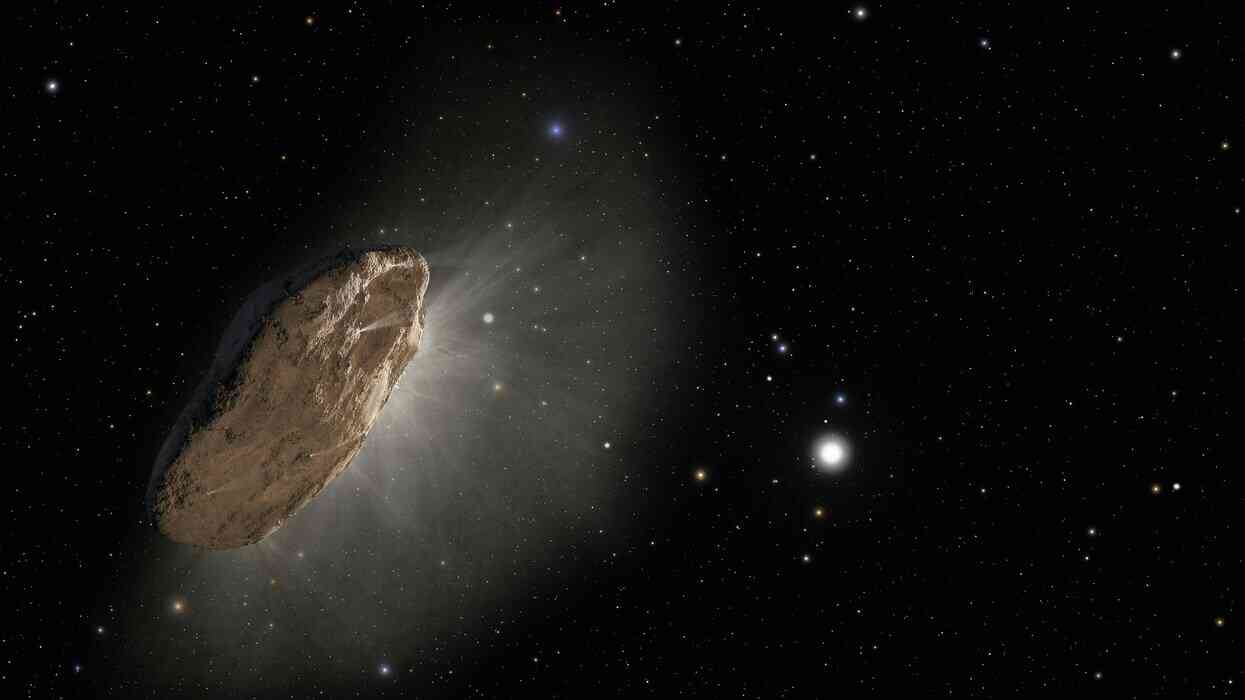
A newly discovered object — now recognized as the fastest spinning asteroid wider than 500 meters — completes a full rotation in about 1.88 minutes (roughly 113 seconds). That speed isn’t just a curiosity: it’s evidence the asteroid is far stronger than most of its peers, and it offers a rare clue to the Solar System’s violent past.
Astronomers analyzing early data from the NSF–DOE Vera C. Rubin Observatory in Chile have identified a record-breaking main-belt asteroid: 2025 MN45. At about 710 meters in diameter, it is the fastest-spinning asteroid of its size class ever found, completing one spin every 1.88 minutes.
That matters because large asteroids typically can’t rotate anywhere near that fast unless they have substantial internal strength. In the main asteroid belt, a common “spin barrier” is about 2.2 hours — faster than that, loosely bound “rubble pile” asteroids should start to break apart.
The simplest explanation is also the most striking: 2025 MN45 is not a rubble pile. Instead, it likely has strong internal cohesion — closer to solid rock than a gravity-held pile of debris. As astronomer Sarah Greenstreet put it:
Clearly, this asteroid must be made of material that has very high strength in order to keep it in one piece.
At a January 7, 2026 news conference at an American Astronomical Society meeting, Greenstreet emphasized how unusual the discovery is:
It’s unlike anything we’ve been able to see before.
An asteroid’s spin rate is more than trivia — it’s a window into its structure and history. A rotation this extreme suggests 2025 MN45 may be a fragment from a catastrophic collision long ago, potentially chipped from the denser interior of a larger parent body.
If that’s right, this single “super-spinner” becomes evidence of the kinds of high-energy impacts that shaped the early Solar System — and a hint that we may be missing an entire class of unusually strong asteroids simply because they’ve been hard to detect until now.
The record emerged from Rubin’s early commissioning observations in April and May 2025, collected over roughly 10 hours across 7 nights. In that dataset, scientists confirmed about 1,900 never-before-seen asteroids.
From the same observations, the team reported 76 asteroids with reliable rotation periods and identified 19 super- and ultra-fast rotators — including 2025 MN45.
Researchers expect this is only the start: as Rubin begins its full survey, it should steadily uncover more extreme rotators in the belt between Mars and Jupiter. Finding and comparing more objects like this fastest spinning asteroid will help scientists map how common “super-strong” asteroids really are — and refine what we think the asteroid belt is made of.
Read this article in Polish: Niezwykła skała z głębi kosmosu. Asteroida łamie kosmiczne prawa fizyki


A graduate of journalism and social communication at the University of Rzeszów. She has been working in the media since 2019. She has collaborated with newsrooms and copywriting agencies. She has a strong background in psychology, especially cognitive psychology. She is also interested in social issues. She specializes in scientific discoveries and research that have a direct impact on human life.



Zmień tryb na ciemny