Education
What Does It Take to Keep a Child Curious?
28 September 2026





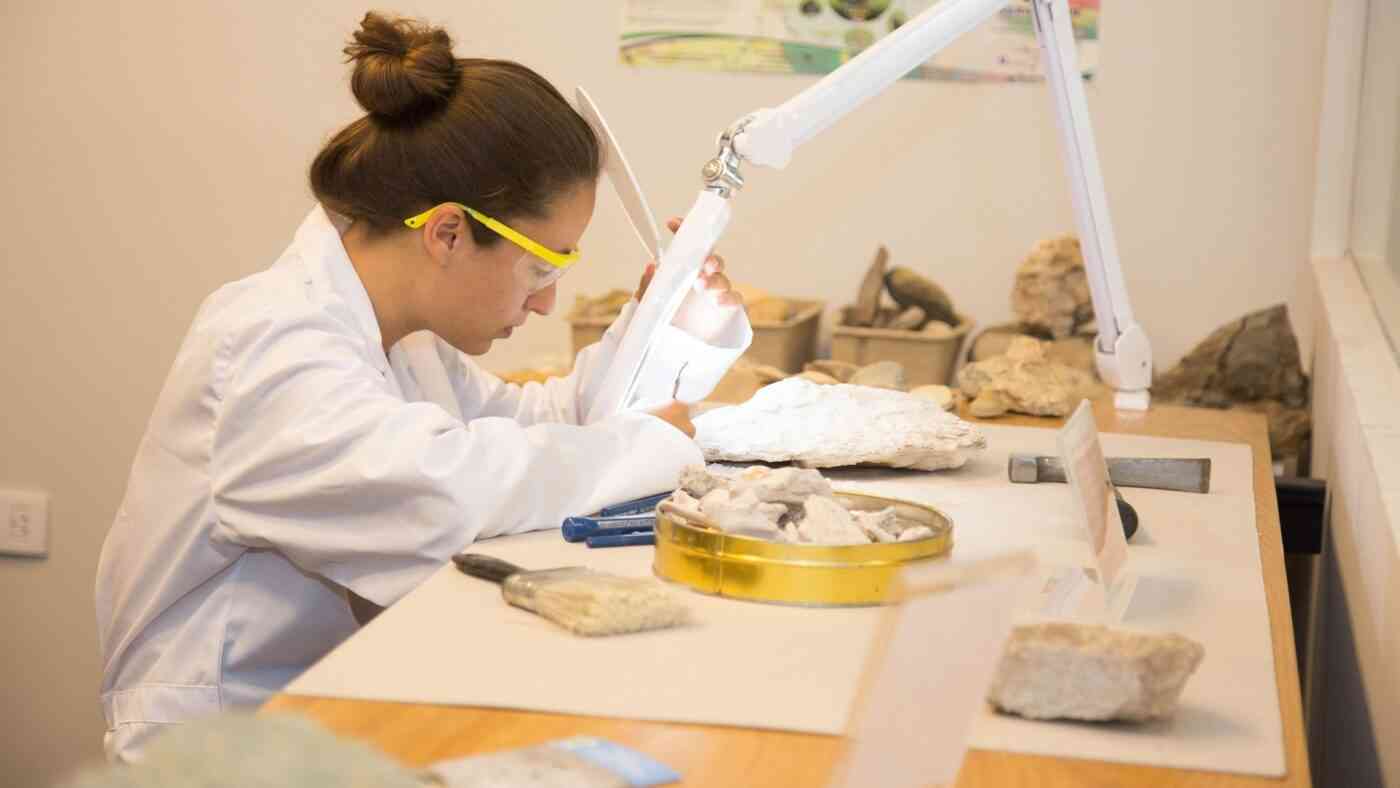
Giant "trunks" from 410 million years ago have turned out to be even stranger than scientists imagined. Prototaxites was neither a fungus nor a plant, but a representative of a completely extinct branch of life, unlike anything living on Earth today.
Prototaxites were fossilized organisms from the Early Devonian period, dating back roughly 410 million years. These pillar-like structures reached heights of 8 meters and diameters of over a meter. They easily dominated land ecosystems, towering over the plants and animals of the time.
First discovered in the 19th century at sites like Rhynie Chert in Scotland, these strange columns sparked a century-long debate. Scientists argued whether they were giant algae, bizarre plants, or enormous fungi. New research now offers a much more surprising answer.
A research team from the University of Edinburgh and the National Museum of Scotland analyzed exceptionally well-preserved specimens of Prototaxites taiti. Using 3D microscopy, advanced spectroscopy, and chemical analysis, they discovered that the internal structure of Prototaxites is far more complex than that of any fungus. The organism consists of a network of at least three types of tubes with dense “nodes” that branch and reconnect—a far cry from the simple hyphae found in modern or fossil fungi.
Furthermore, the organic composition of Prototaxites differs significantly from known fungi. Researchers found no typical fungal biomarkers, such as perylene, nor any traces of chitin—the characteristic sugar that builds fungal cell walls.
Using AI tools, researchers compared the chemical “fingerprint” of Prototaxites with databases of modern organisms. They found no match. Prototaxites did not fit with fungi, plants, or any other known group of multicellular organisms.
The study authors suggest that we must recognize Prototaxites as a representative of a previously undescribed, independent, and extinct branch of life within complex multicellular eukaryotes.
These findings suggest that the Devonian “tree of life” had more branches than previously thought. Alongside the lineages leading to today’s plants, fungi, and animals, at least one other major branch of complex organisms existed. This lineage vanished about 360 million years ago, leaving no living descendants.
Prototaxites, therefore, represents an independent experiment that life made in building large, complex organisms. We only know about this through these exceptionally preserved fossils,
– emphasizes study co-author Laura Cooper of the University of Edinburgh.
This discovery forces paleobiologists to rethink the history of how life colonized land. Prototaxites were the first giant organisms on Earth’s surface, yet they don’t fit into any of the major categories we use today. This changes our understanding of early terrestrial ecosystems, including how these giants affected the carbon cycle and their relationships with early plants.
In a broader sense, this discovery has implications for astrobiology. If we can find large, complex life forms on our own planet that defy our primary biological categories, we must prepare for even greater diversity in form and chemistry when searching for life on other worlds. This extinct branch of life reminds us that evolution often takes paths we can hardly imagine.
Read this article in Polish: Organizm niepodobny do niczego na Ziemi. Myśleli, że to grzyby


A Journalism and Social Communication graduate with 15 years of experience in the media industry. He has worked for titles such as "Dziennik Łódzki," "Super Express," and "Eska" radio. In parallel, he has collaborated with advertising agencies and worked as a film translator. A passionate fan of good cinema, fantasy literature, and sports. He credits his physical and mental well-being to his Samoyed, Jaskier.



Zmień tryb na ciemny