Education
What Children Learn When They Count on an Abacus
25 September 2026





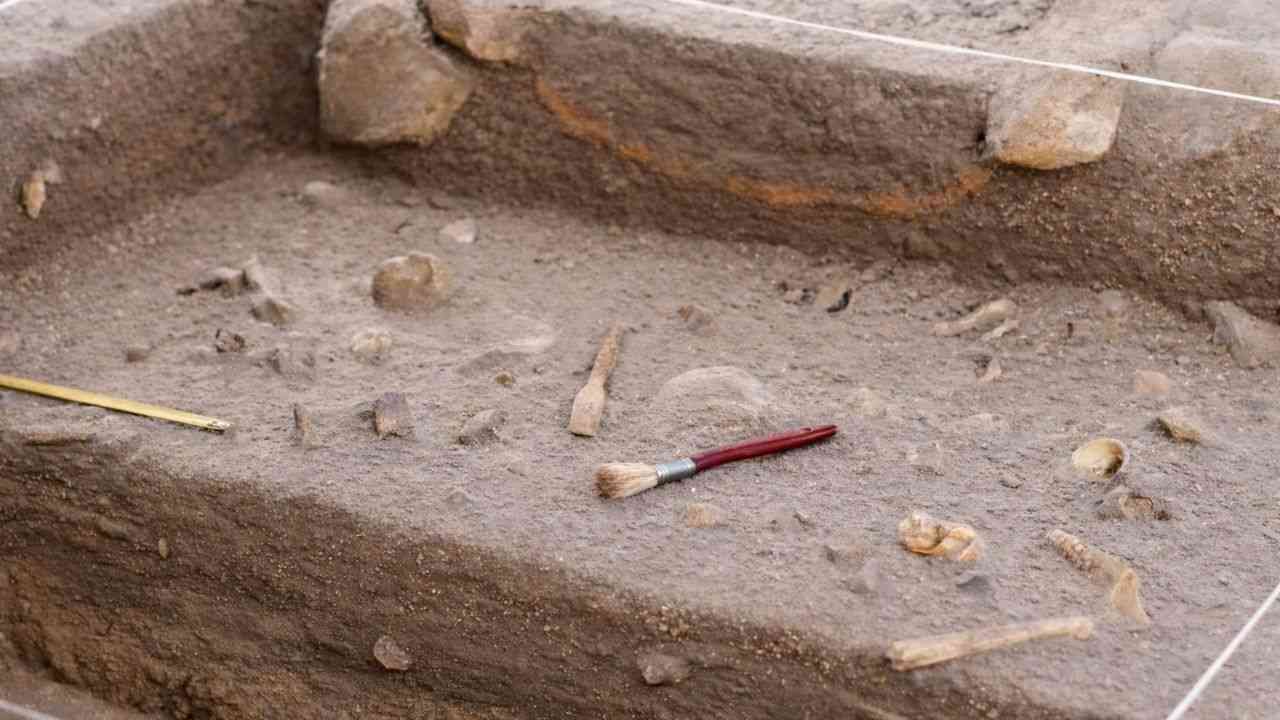
Over two million years ago, a creature lived in northern Kenya with a body that looked like a biological mashup of three different species. Its nearly complete skeleton is now forcing scientists to rethink everything we know about human origins in Africa.
In the parched, cracked earth of northern Kenya lies a history older than civilization. Several years ago, paleontologists stumbled upon a find that upends our traditional view of our ancestors. They have just released their groundbreaking results.
Emerging from the sand is the most complete postcranial Homo habilis skeleton yet found—a species that lived over two million years ago at the very dawn of human history. Finding remains this complete is incredibly rare. Scientists from Stony Brook University and the American Museum of Natural History agree: this ranks among the most puzzling discoveries in the study of human origins in Africa.
Homo habilis—or “Handy Man”—served as a bridge between the ancient world and modern humanity. The species stood on a razor’s edge: no longer an “ape-man,” but not yet a human like us.
They appeared about 2.5 million years ago as the African climate grew drier and forests gave way to savannas. This shift forced them to adapt. Researchers point to a diverse diet: mostly plants, fruits, and nuts, but supplemented by meat. Rather than hunting, habilis likely scavenged leftovers from predators, using tools to slice hide and crack bones for marrow.
As the first described member of the genus Homo, they emerged from the earlier Australopithecines. However, they differed significantly from Homo erectus—the later, more famous ancestor who traveled the globe. Habilis was earlier, more delicate, and more “experimental” in its build. They may even have used proto-speech, likely consisting of simple phrases about food sources.
This Kenyan skeleton remains in extraordinary condition, giving researchers a unique chance to reconstruct a body from two million years ago. The find includes:
The arm bones, however, present the biggest mystery. Some features look more “human” than expected for such an early ancestor, while others appear primitive, as if they belonged to a much older evolutionary branch.
The most striking feature is the arms—massive and powerful, they look almost identical to those of an Australopithecus. Yet, the rest of the body seems to come from a different era. This anatomical dissonance is the discovery’s greatest puzzle.
An analysis in the American Association of Anatomy journal describes the individual as a young adult, standing 157–164 cm (approx. 5’2″) and weighing just over 30 kilograms (66 lbs). This is incredibly light for the genus Homo, signaling that the upper body still carried the “ape-like” mark of earlier ancestors.
Conversely, the pelvis tells a different story. Its structure suggests this ancestor walked more like Homo erectus—with more confidence and a more “human” gait—than like an Australopithecine.
Indeed, there are only three other very fragmentary and incomplete partial skeletons known for this important species,
– said Fred Grine, one of the study’s authors.
One thing is certain: this is the most complete Homo habilis skeleton ever found. It is a unique specimen that paleoanthropology has never seen on this scale.
Furthermore, it is one of the oldest known representatives of our genus, dating back to 2.02–2.06 million years ago. For perspective, the very oldest remains of the genus Homo (found in Ethiopia) are about 2.33 million years old. This find sits right at the heart of human origins in Africa.
This discovery could be the missing piece of the puzzle. It allows scientists to better understand the world of hominins between 2.2 and 1.8 million years ago—a period when several closely related species coexisted on the same continent.
However, the big question remains: Was Homo erectus—which appeared about half a million years before habilis vanished—a direct descendant? Or were they parallel lineages? This Kenyan mystery might finally hold the key.
Read this article in Polish: Szkielet-zagadka sprzed 2 milionów lat. Kim był ten człowiek?


A graduate of journalism and social communication at the University of Rzeszów. She has been working in the media since 2019. She has collaborated with newsrooms and copywriting agencies. She has a strong background in psychology, especially cognitive psychology. She is also interested in social issues. She specializes in scientific discoveries and research that have a direct impact on human life.


Zmień tryb na ciemny