Education
What Does It Take to Keep a Child Curious?
28 September 2026





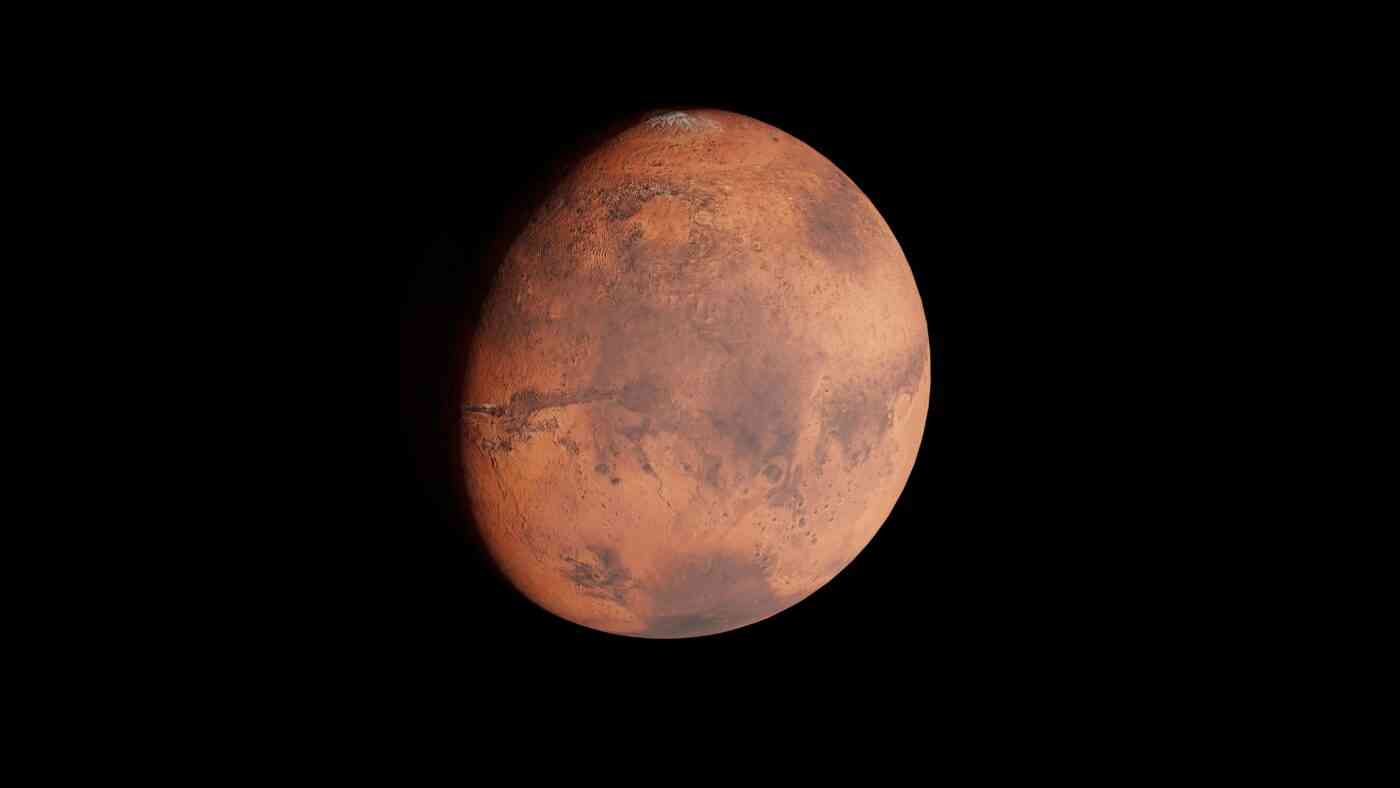
At the bottom of the Jezero Crater, the Perseverance rover has stumbled upon the remains of an ancient shoreline. These findings represent the first definitive evidence of a beach on Mars, providing a powerful argument that billions of years ago, the planet boasted a climate capable of supporting lakes, rain, and potentially even entire ecosystems.
Scientists have finally uncovered evidence confirming that Jezero Crater once held a massive body of water. An international team, led by Alex Jones of Imperial College London, analyzed images, spectrometric data, and rock samples gathered by the Perseverance rover, which has explored the crater since 2021. The journal Journal of Geophysical Research: Planets published these results on January 26, 2026.
Data from the rover’s cameras and geochemical instruments revealed a suite of features typical of a lakeside coastal zone. The discovery includes wave-formed sand deposits, rounded grains of olivine and carbonates, and rocks physically altered by prolonged contact with water.
Based on the texture and layering of these sediments, the researchers identified a high-energy shoreline where waves shaped the landscape over vast periods. These marks represent the first unambiguous traces of an ancient Martian coastline, indicating long-term interactions between rock and liquid water roughly 3.5 billion years ago.
Shorelines are habitable environments on Earth, and the carbonate minerals that form there can naturally record and preserve information about the ancient environment. Our findings, therefore, have significant implications for the past climate and the potential habitability of Mars,
– emphasizes lead author Alex Jones.
The discovery of this beach on Mars fits into a larger puzzle that began to take shape months earlier, thanks to work from Purdue University. In a study published in late 2025 in Nature Communications Earth & Environment, researchers demonstrated the presence of kaolinite—a type of white clay—within the crater. Crucially, the formation of kaolinite on Earth requires millions of years of rainfall in a humid climate.
Tropical climates, such as rainforests, are the most common environments where we find kaolinite clay on Earth. So, when you see kaolinite in a place like Mars, which is currently barren, cold, and certainly lacks liquid water on its surface, it tells us that there was once much more water there than there is today,
– adds Dr. Adrian Broz of Purdue University.
Observations show that these clays are scattered widely across the rim of Jezero Crater, appearing as bright, easily recognizable patches. This suggests that rainy, milder climatic episodes were not just local anomalies but covered vast swaths of the ancient landscape.
Combining the evidence of an ancient beach on Mars with the discovery of “rain-soaked” kaolinite soil paints a consistent picture of a planet that was once significantly warmer and wetter. We are looking at a world with rainfall, a hydrological cycle, and environments that—by Earth’s standards—would have been very friendly to microorganisms.
Lakeside coastal zones rank among the most productive environments on our home planet. They are nutrient-rich, dynamic, and feature a constant exchange between water, sediment, and the atmosphere. Carbonates precipitating in such areas can trap traces of microorganisms in the form of microscopic structures, isotopic shifts, or organic carbon remains.
Furthermore, the kaolinite rocks indicate that Mars experienced long-lasting rainy periods. Liquid water could have persisted on the surface for millions of years—far longer than some previous models of rapid planetary cooling suggested. This extra time significantly increases the window for simple life forms to emerge and evolve.
Recent findings from the University of Bern and Italy’s INAF – Osservatorio Astronomico di Padova add another layer to this mystery. They proved that roughly 3 billion years ago, an ocean at least as large as Earth’s Arctic Ocean covered the northern hemisphere of Mars. This shifts our vision of the planet from a dry, “red” desert to a “blue” world full of water and, perhaps, life.
This is why the Mars Sample Return mission is so vital. Bringing the samples collected by Perseverance back to Earth could provide final answers to the question of life on Mars. Unfortunately, the timeline remains uncertain. The 2026 NASA budget did not allocate funds for the mission, effectively “stalling” the project in its current form. However, the data remains: we now know for certain that a beach on Mars once felt the lap of waves, waiting billions of years for us to find it.
Read this article in Polish: Ślady po wielkim jeziorze na Marsie. Czy istniało tam życie?


A Journalism and Social Communication graduate with 15 years of experience in the media industry. He has worked for titles such as "Dziennik Łódzki," "Super Express," and "Eska" radio. In parallel, he has collaborated with advertising agencies and worked as a film translator. A passionate fan of good cinema, fantasy literature, and sports. He credits his physical and mental well-being to his Samoyed, Jaskier.



Zmień tryb na ciemny