Education
What Does It Take to Keep a Child Curious?
28 September 2026





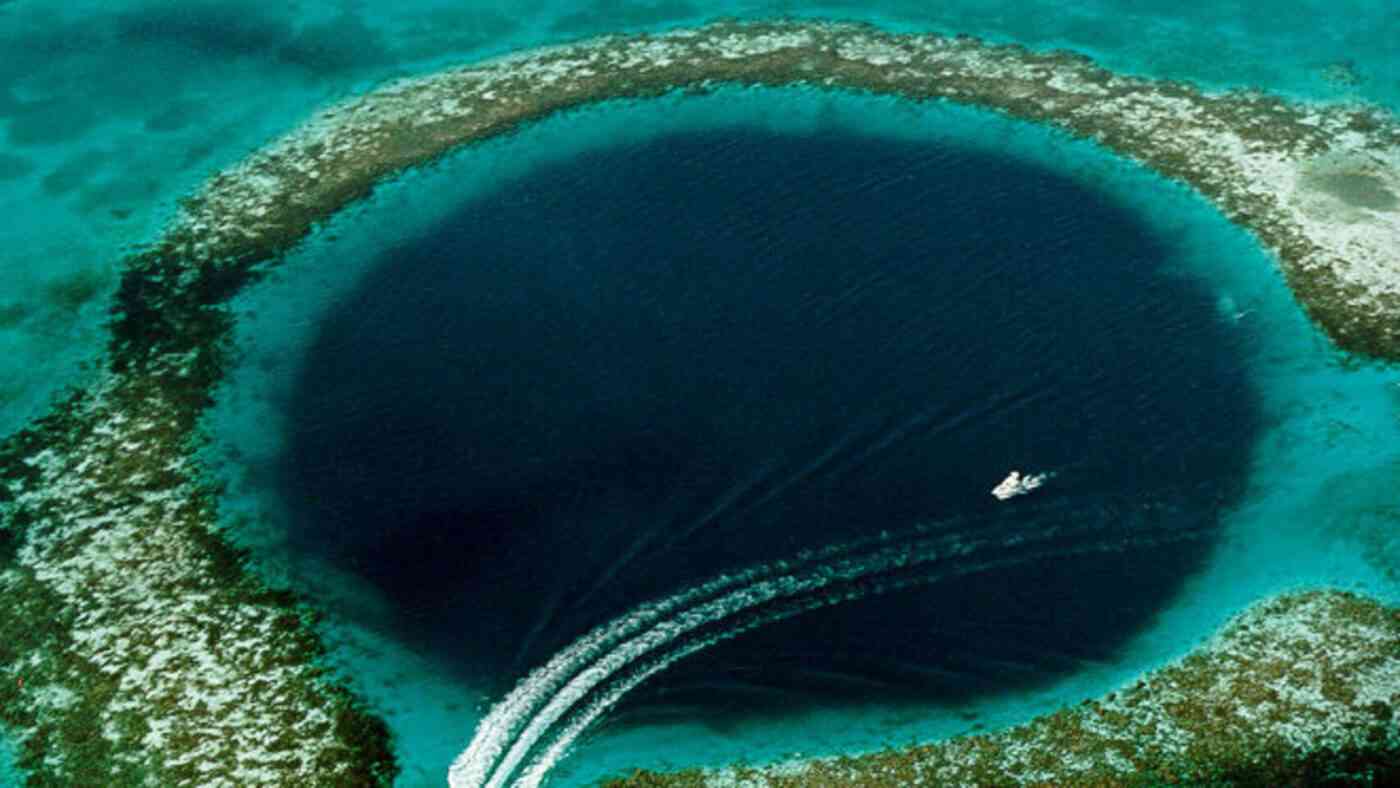
The South China Sea holds a dark secret. Deep within the Dragon Hole, one of the planet's most profound blue holes, Chinese scientists recently identified over 1,700 viral strains. Most of these Dragon Hole unknown viruses defy existing classifications, leaving researchers to wonder: what else is lurking in the abyss?
The Dragon Hole, also known as the Sansha Yongle Blue Hole, plunges nearly 300 meters into the limestone floor of the South China Sea. Located near the Paracel Islands, this vertical abyss appears from above as a mesmerizing, ink-black eye rimmed by turquoise shallows. Its 130-meter-wide mouth marks the entrance to a world largely cut off from the rest of the ocean.
Blue holes are massive submarine sinkholes carved into carbonate rock, such as limestone or ancient coral reefs. Over millennia, slightly acidic rainwater dissolved the stone, creating vast cavern systems. When sea levels rose following the last ice age, the ocean flooded these vaults.
Their signature dark blue color stems from their immense depth and steep walls, which efficiently swallow sunlight. While the Dragon Hole long held the title of the world’s deepest, the 2024 discovery of Taam Ja’ in Mexico’s Chetumal Bay—reaching over 420 meters—has since claimed the record.
The isolation of this site makes it a premier underwater laboratory. Because of its narrow opening and vertical structure, the water inside does not mix with the surrounding sea. This creates a stratified environment: while the top layers resemble the open ocean, the deeper sections are entirely devoid of oxygen.
In these “dead zones,” life thrives in defiance of common logic. Oceanographic teams from the Chinese Academy of Sciences discovered dense microbial communities that harvest energy from chemical reactions rather than sunlight. Each depth layer hosts a different “floor” of the ecosystem, mimicking the conditions of Earth’s primordial oceans.
By analyzing DNA sequences from water and sediment samples, researchers uncovered a staggering genetic library. They identified approximately 1,730 distinct viral types. Remarkably, the vast majority of these Dragon Hole unknown viruses do not match any known viral families in global databases.
Most of these entities are likely bacteriophages—viruses that infect the bacteria sustaining this alien ecosystem. The viral makeup shifts dramatically with depth; specific types dominate the oxygen-rich surface, while entirely different strains rule the pressurized, anoxic depths. This suggests that these viruses act as invisible puppet masters, regulating the chemical cycles of the entire hole.
While the discovery of 1,700 new viruses might sound like the plot of a thriller, laboratory data offers a reassuring perspective. Current evidence suggests these particles cannot infect humans. Instead, they evolved specifically to target the microscopic life forms inhabiting the hole’s oxygen-free layers.
Furthermore, the Dragon Hole’s natural containment acts as a biological shield. The lack of circulation prevents these viruses from hitching a ride on global currents. Even if a stray particle reached the surface, it would likely perish in an oxygen-rich environment, far from its specialized host.
The identification of Dragon Hole unknown viruses marks a milestone in marine biology. First, it proves that the ocean floor acts as a massive “archive” of evolution that we have barely begun to catalog. Understanding these viruses could reshape our models of the global carbon cycle, as they play a crucial role in how nutrients move through the deep sea.
Additionally, these extreme environments are gold mines for biotechnology. The unique enzymes and metabolic pathways found here—often carried by viruses—could lead to breakthroughs in medicine or carbon capture.
Chinese research teams are already preparing for follow-up missions. Armed with advanced ROVs (remotely operated vehicles), they plan to probe even deeper, comparing the Dragon Hole’s viral “bank” with other blue holes across the globe to see if these hidden archives are a worldwide phenomenon.
Read this article in Polish: W głębinach odkryto nieznane wirusy. Co skrywa Smocza dziura?


A Journalism and Social Communication graduate with 15 years of experience in the media industry. He has worked for titles such as "Dziennik Łódzki," "Super Express," and "Eska" radio. In parallel, he has collaborated with advertising agencies and worked as a film translator. A passionate fan of good cinema, fantasy literature, and sports. He credits his physical and mental well-being to his Samoyed, Jaskier.



Zmień tryb na ciemny