Science
Before There Are Planets, There Is Dust
16 October 2026





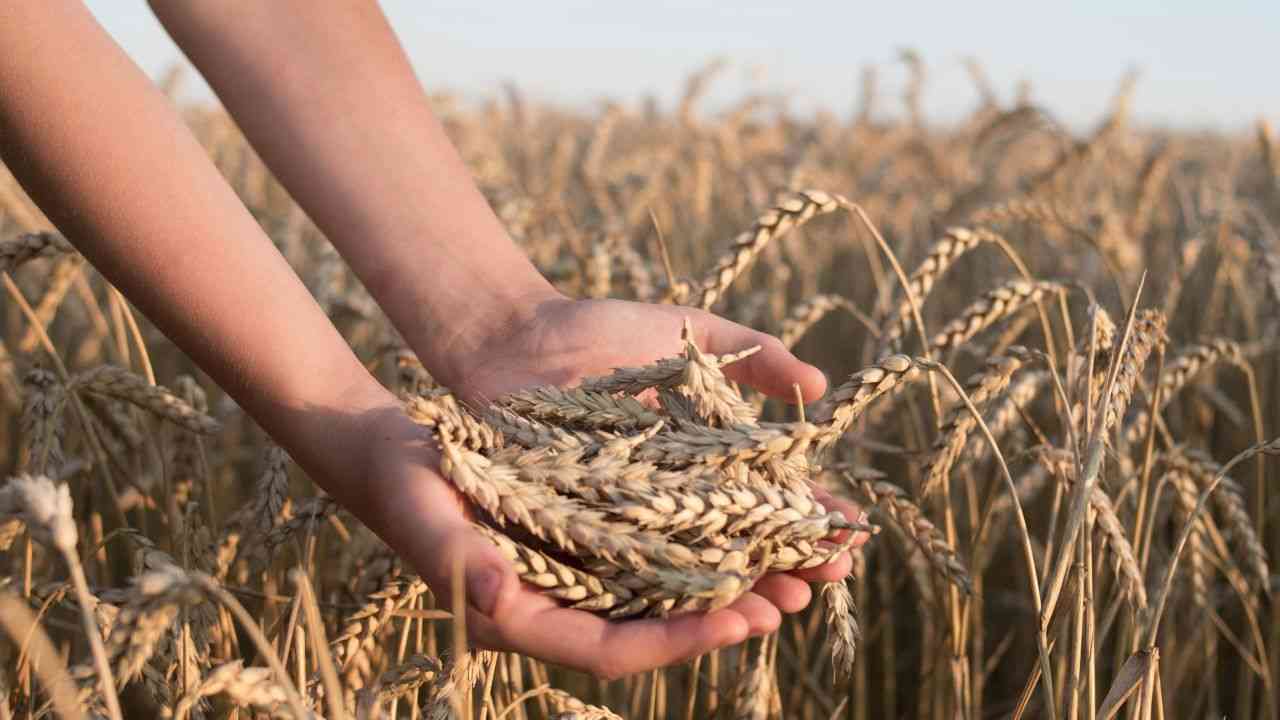
Forget toxic sprays and expensive pesticides. Scientists have discovered that a single adjustment to soil chemistry can slash pest populations and double crop yields. This breakthrough, rooted in the fields of Africa, reveals a biological mechanism that could revolutionize farming far beyond the savannah.
In a discovery that millions of farmers have been waiting for, researchers from Arizona State University and Université Gaston Berger have unlocked a new way to blunt locust-like outbreaks. The key is simple: nitrogen in fertilizers can shift plant nutrition in ways that make crops far less attractive to migratory pests.
To test the idea in real farming conditions, researchers from the U.S. and Senegal joined forces to study the Senegalese grasshopper, a major millet pest in the region. Unlike the desert locust, it doesn’t always form vast, cinematic swarms. Instead, it often appears in persistent, mobile clusters that can steadily grind down harvests over time.
The experiment was elegantly straightforward. Senegalese farmers planted millet on 2 separate plots: 1 treated to raise nitrogen availability and another left untreated as a control. The results showed clear differences in pest pressure and damage.
Reporting in Scientific Reports, the team described fewer pests and less crop damage in the treated plots—outcomes that translated into roughly a 100 percent increase in yield compared with the unfertilized fields.
The results are of great importance to both the scientific community and Senegalese farmers,
– said Associate Professor Mamour Touré, one of the study’s authors, in remarks carried by ScienceDaily. The practical appeal is obvious: the approach targets the pest’s biology instead of blanketing fields with toxins.
Why does nutrient-poor soil attract migratory pests so reliably? After long-term soil and insect work, scientists point to the balance between carbohydrates and protein in the plants pests rely on.
When soil is depleted, plants tend to be relatively higher in carbohydrates and lower in protein—exactly the kind of fuel many migratory grasshoppers need to sustain movement and feeding. But when nitrogen availability rises, the plant’s profile changes: protein increases while carbohydrates drop, shifting the protein-to-carbohydrate ratio in a way that makes the diet harder for these insects to handle.
Put simply: when the “easy energy” disappears and the plant becomes protein-heavy, the landscape becomes a worse refuelling station. The insects struggle to meet their energy needs and the pressure on fields can fall.
Even if the biology is compelling, cost matters. Commercial fertiliser can be prohibitively expensive for small-scale farmers. That’s why the research also points to grounded, accessible practices such as composting and returning crop residues to the soil instead of burning them—methods that can rebuild soil fertility and nitrogen over time.
These changes can carry outsized weight. In parts of Africa, where agriculture supports 50–70 percent of livelihoods in many communities (and where many smallholders are women), lifting yields from typical baselines of about 1.5–2.5 tons per hectare can be the difference between stability and crisis for millions. (Exact figures vary by country and season, but the dependence on farming is undeniable.)
The Senegalese grasshopper itself isn’t a direct threat in North America or Europe, but the underlying principle is widely relevant: plant nutrition can influence pest performance. Studies in nutritional ecology and pest management have repeatedly linked nitrogen-driven shifts in plant chemistry to changes in herbivore survival and reproduction.
Agricultural sectors worldwide face persistent pressure from multiple insect groups, from borers to aphids to mites. The Senegal results suggest a practical reframing: instead of reaching first for harsh chemicals, farmers and agronomists can ask whether soil health and crop nutrition can make fields inherently less hospitable to the pest’s needs.
The implication is straightforward: if we understand what these insects are actually trying to eat, we can make crops less appealing without poisoning the ecosystem. Done carefully, soil-first strategies could reduce reliance on broad-spectrum pesticides and give farmers a more resilient baseline.
And that’s the real promise here: not a miracle cure, but a scalable lever. Used wisely, nitrogen in fertilizers can be part of a pest strategy that works with biology rather than against it.
Read this article in Polish: Nie opryski, nie trucizny. Jedna zmiana w glebie powstrzymuje szkodniki


A graduate of journalism and social communication at the University of Rzeszów. She has been working in the media since 2019. She has collaborated with newsrooms and copywriting agencies. She has a strong background in psychology, especially cognitive psychology. She is also interested in social issues. She specializes in scientific discoveries and research that have a direct impact on human life.



Zmień tryb na ciemny