Culture
A Life Spent Becoming Someone Else’s Ideal
12 October 2026





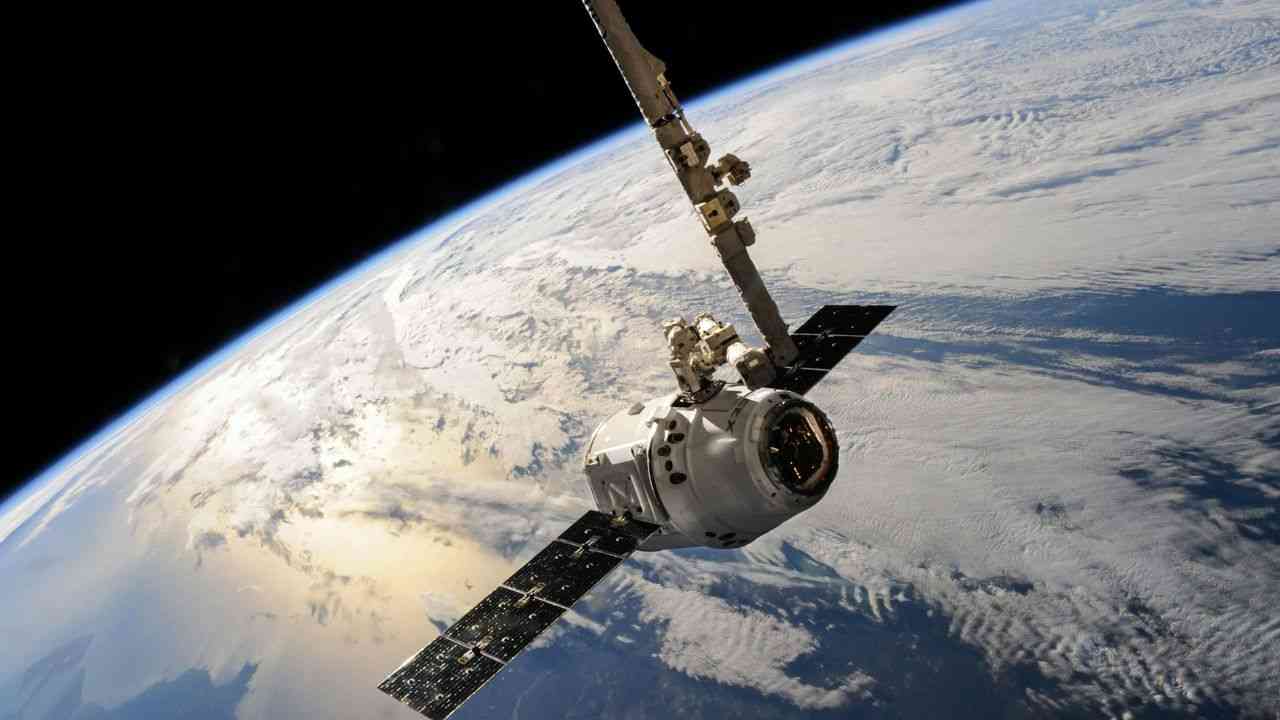
Only a few years ago, humanity would have had months to react to an orbital crisis. Today, researchers warn that the fallout from a major disruption could saturate today’s operating environment in just 2.8 days. A strong solar storm could tighten the chaos: it can swell the upper atmosphere, scramble tracking, and force huge numbers of satellites into unplanned manoeuvres at the worst possible time. Understanding modern satellite collision risks has become a race against the clock.
Most of us assume space poses no immediate danger. We picture carefully plotted orbits, constant monitoring, and tidy margins of safety. That comfort is fading. In low Earth orbit (LEO), the system increasingly depends on continuous, error-free coordination. If operators lose situational awareness—or if automated avoidance suddenly stops—the probability of a catastrophic collision rises fast.
A recent study proposes a blunt metric for that fragility: the CRASH Clock, which estimates how long it would take for a catastrophic collision to occur if avoidance manoeuvres halted or tracking degraded severely. For today’s LEO environment, the CRASH Clock comes out to 2.8 days. In 2018, before the full megaconstellation era, the same metric was 121 days.
LEO is now crowded enough that close passes have become routine. In the same study’s simulations, the average time between conjunctions within 1 km across all of LEO reached the scale of seconds in the 2025-era catalogue. In one set of results, conjunctions within 1 km for satellite–resident space object encounters appeared on the order of 22 seconds—a level of traffic that leaves very little room for mistakes.
Avoidance manoeuvres keep the system working, but they also show how hard operators must push just to maintain baseline safety. SpaceX’s own regulatory filings, cited in an Aerospace America report, indicate that Starlink satellites performed 144,404 collision-avoidance manoeuvres between December 2024 and May 2025—and that was with a constellation far smaller than SpaceX’s longer-term ambitions.
Avoidance systems work best under stable conditions. Solar storms break stability in two dangerous ways:
This is not a theoretical fear. The CRASH Clock paper points to the May 2024 Gannon geomagnetic storm and notes that in the days during and after the storm, more than half of all satellites (mostly Starlinks) manoeuvred due to increased drag and to avoid knock-on conjunctions created by the manoeuvres themselves.
When satellites collide, they shatter into thousands of fragments. Those shards become high-speed projectiles, hitting other objects and triggering further impacts. For decades, experts assumed this cascade—often discussed under the umbrella of the Kessler Syndrome—would take years or even decades to fully unfold, giving operators time to respond.
However, a recent paper, An Orbital House of Cards: Frequent Megaconstellation Close Conjunctions, paints a far tighter timeline. The authors show that the consequences of a major collision could effectively saturate a key orbital region in as little as 2.8 days, not 30 years. Put in perspective, earlier estimates from 2018 suggested a reaction window of roughly 121 to 164 days. In other words, the time available to prevent cascading failure may have shrunk by a factor of 43 to 60. With satellite collision risks rising, the margin for meaningful human intervention is rapidly disappearing.
Space weather forecasters do provide alerts and short-range forecasts, but severe events can still arrive with limited actionable lead time for operators who must coordinate thousands of assets.
If a major storm hits during a period of extreme congestion, engineers might save critical systems. Many others could face degraded control, higher fuel burn, and more emergency manoeuvres—exactly the conditions that compress decision-making and increase the chance of mistakes.
Megaconstellations have expanded connectivity and resilience on the ground, but they also raise the cost of failure in orbit. As dependence on satellites grows, so does the fragility of the web that supports GPS, timing, satellite internet, weather monitoring, and emergency communications. Without a new approach to managing satellite collision risks—better coordination, better standards, and better stress metrics—we remain one extreme space-weather event away from a silent, cascading orbital emergency.
Read this article in Polish: Burza słoneczna i tysiące satelitów. 3 dni do kosmicznej katastrofy


A graduate of journalism and social communication at the University of Rzeszów. She has been working in the media since 2019. She has collaborated with newsrooms and copywriting agencies. She has a strong background in psychology, especially cognitive psychology. She is also interested in social issues. She specializes in scientific discoveries and research that have a direct impact on human life.



Zmień tryb na ciemny