Science
Before There Are Planets, There Is Dust
16 October 2026





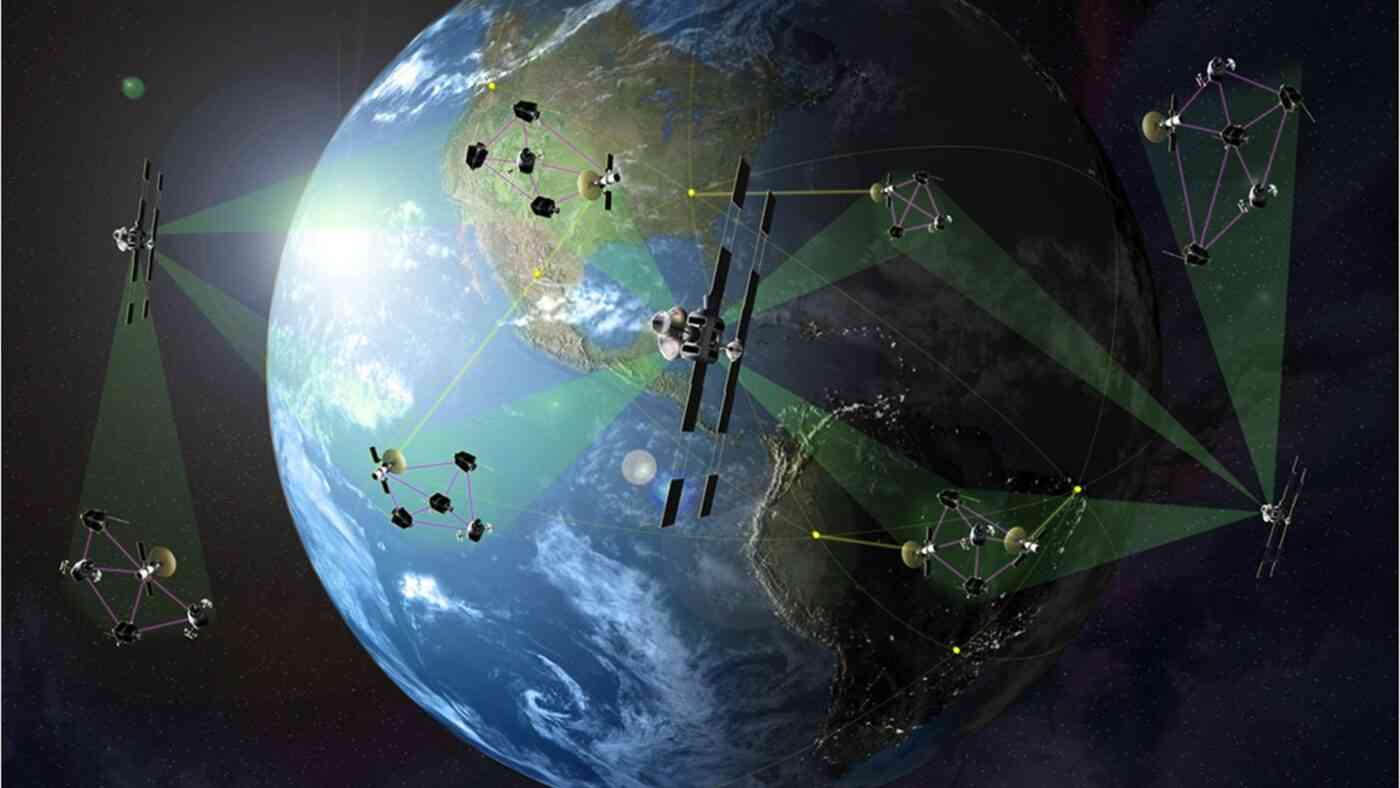
Space is rapidly transforming into a critical battlefield, and Beijing is signaling its readiness to challenge U.S. dominance. China has just unveiled a new, compact microwave weapon capable of "blinding" satellite constellations and announced plans for a futuristic, space-faring "aircraft carrier." As these next-generation Chinese space weapons emerge, are we witnessing the ignition of a new, orbital arms race?
Chinese scientists have reported the development of a groundbreaking type of space weaponry. The TPG1000Cs is a compact generator capable of producing electromagnetic pulses powerful enough to disrupt satellites in Low Earth Orbit (LEO)—including those in the Starlink constellation. Developed at the military-linked Northwest Institute of Nuclear Technology in Xi’an, the system represents a significant leap in the miniaturization of microwave weaponry.
The TPG1000Cs measures approximately 4 meters in length, weighs about 5 tons, and can generate pulses with a power output of 20 gigawatts for nearly a full minute. This marks a massive improvement over previous systems of this class, which operated for only a few seconds. Its compact dimensions make the device mobile enough for mounting on trucks, ships, aircraft, or even orbital platforms.
The TPG1000Cs functions like an extremely powerful version of a microwave oven. It emits short, high-energy bursts that can overload a satellite’s electronics, jam its communication systems, or permanently fry critical components. Crucially, the device acts at a distance and does not physically destroy the satellite. Unlike kinetic anti-satellite (ASAT) weapons, it generates no dangerous space debris.
Furthermore, this type of weapon can be difficult to trace back to a specific perpetrator. Its effects often mimic a technical failure or the natural impact of cosmic radiation, providing a layer of “plausible deniability.”
From Beijing’s strategic perspective, the ability to neutralize vast satellite swarms like Starlink—which have proven vital on the battlefields of Ukraine—is paramount. Chinese military analysts have long warned that dense commercial satellite nets could provide the U.S. with an insurmountable informational advantage during a conflict in Asia.
Simultaneously, China has revealed ambitious concepts for a futuristic space carrier named Luanniao (“Bird of Chaos”). This gargantuan aerospace craft would operate at the edge of the atmosphere, far above the reach of most conventional air defense systems. The vessel would reportedly carry dozens of unmanned drones armed with hypersonic missiles.
Conceptual blueprints suggest the Luanniao would measure 240 meters in length with a wingspan exceeding 600 meters, weighing over 100,000 tons. The “carrier” would cruise the boundary between the stratosphere and the mesosphere—flying above clouds, storms, and most surface-to-air missiles.
Western experts remain skeptical of the concept, citing immense engineering hurdles. Building such a colossus would require entirely new propulsion systems and materials capable of withstanding extreme environmental stress, not to mention the challenge of making such a logistics nightmare economically viable.
Even Chinese sources suggest that a functional deployment is a prospect for the next two or three decades. In practice, the Luanniao currently serves more as a manifesto of ambition. Beijing intends to show that Chinese space weapons of the future could eventually challenge the rest of the world.
If even a fraction of this concept becomes reality, a space carrier would serve as a forward-operating platform for unmanned fighters and reconnaissance drones operating near orbit. It would also be an ideal host for anti-satellite tools, such as microwave weapons, lasers, or rockets designed to deploy small, maneuvering satellites. Finally, it could function as a command and communication hub, coordinating satellites, drones, and ground units in real-time.
In a conflict scenario over Taiwan or the South China Sea, a vessel operating above standard defenses would become a potent tool for power projection. For now, however, it remains in the realm of advanced military fantasy.
The TPG1000Cs and the Luanniao are the most media-friendly symbols of China’s “space rearmament,” but they do not exist in a vacuum. Detailed reports on Chinese space weapons describe a wide array of tools already at Beijing’s disposal.
The Chinese counter-space arsenal includes:
Strategically, the TPG1000Cs fits into an existing architecture designed to give China the ability to disrupt or neutralize the “eyes and ears” of its adversaries in space.
U.S. government reports and think tanks have consistently described China as a nation that views space as a legitimate arena for future conflict. In response, the United States is expanding the U.S. Space Force, investing in the resilience of its constellations, and developing rapid-launch capabilities to replace lost satellites.
As the next generation of Chinese space weapons evolves, Washington is taking more aggressive steps to counter Beijing’s growing power. The U.S. is not only diversifying its satellite arrays but also developing its own offensive capabilities, including directed-energy weapons and cyber warfare tools. This shift also drives the U.S. to form new “space coalitions” with international allies.
In practice, every advanced project Beijing announces increases the political pressure in Washington to accelerate its own military programs in the final frontier.
The expanding arsenal of Chinese space weapons carries a heightened risk of crisis escalation. Disrupting early-warning or communication satellites could be misinterpreted as a prelude to a nuclear strike, increasing the danger of catastrophic miscalculations.
Furthermore, these weapons pose a direct threat to civilian infrastructure. Systems like the TPG1000Cs could easily target commercial telecommunications and navigation constellations, which are the backbone of the global digital economy.
Ultimately, China’s projects may goad other powers—the U.S., India, Russia, and eventually Europe—to build their own space-based arsenals. Consequently, it will become increasingly difficult to maintain space as a demilitarized “global commons” for the benefit of all mankind.
Read this article in Polish: „Zabójca Starlinka” i kosmiczny lotniskowiec. Nowy wyścig zbrojeń?


A Journalism and Social Communication graduate with 15 years of experience in the media industry. He has worked for titles such as "Dziennik Łódzki," "Super Express," and "Eska" radio. In parallel, he has collaborated with advertising agencies and worked as a film translator. A passionate fan of good cinema, fantasy literature, and sports. He credits his physical and mental well-being to his Samoyed, Jaskier.



Zmień tryb na ciemny