Science
Before There Are Planets, There Is Dust
16 October 2026





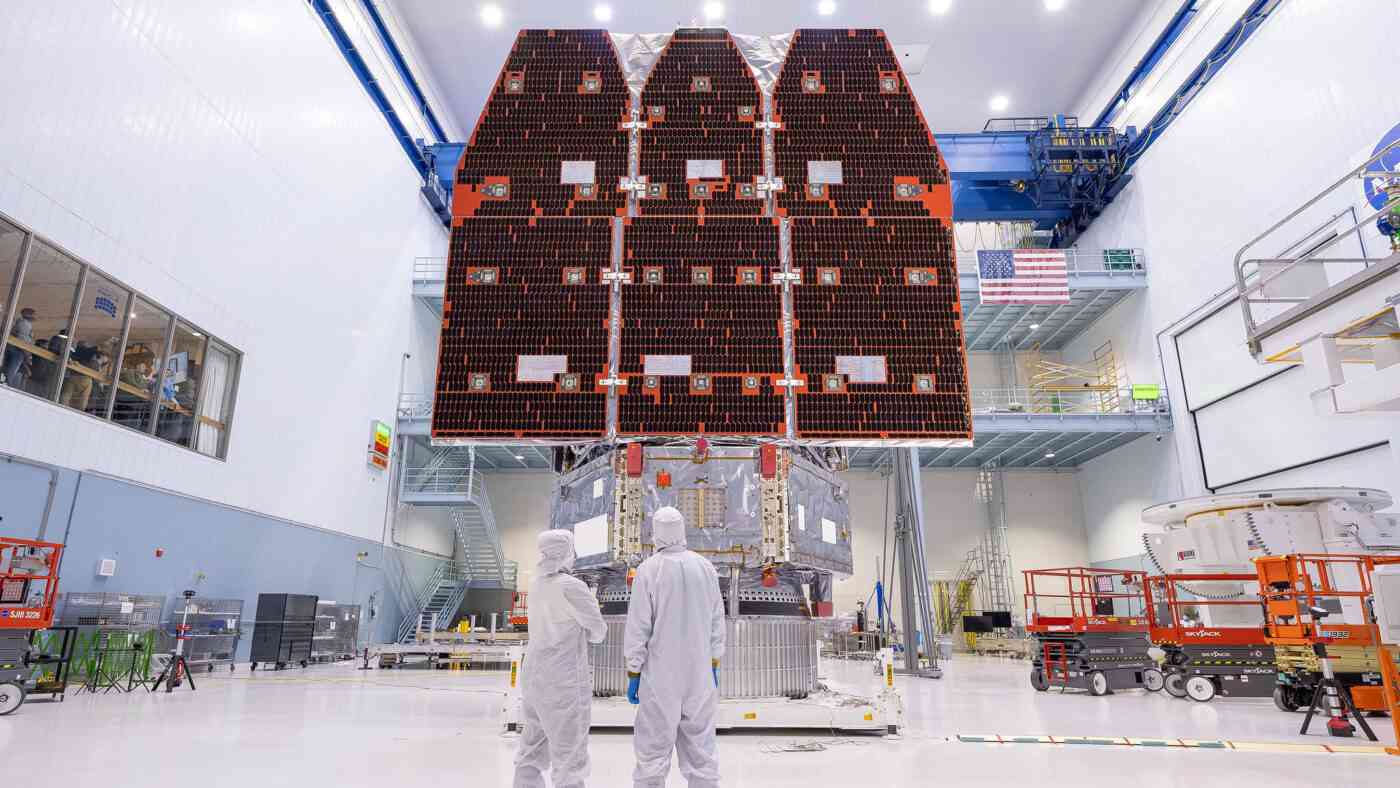
The universe is accelerating, and no one knows exactly why. In the fall of 2026, NASA will launch a telescope designed to crack this cosmic code. While the Roman Space Telescope could discover over 100,000 new worlds and billions of galaxies, its true quarry is something far more elusive. This mission aims to reshape our fundamental understanding of space and time.
The Nancy Grace Roman Space Telescope—NASA’s latest orbital observatory—is now fully assembled and awaiting its scheduled launch in the fall of 2026. Named after NASA’s first Chief of Astronomy, this mission stands as the successor to the legendary Hubble and James Webb telescopes. Its primary focus? Dark energy, dark matter, exoplanets, and sweeping wide-field surveys of the deep cosmos.
What sets this observatory apart is its unique combination of Hubble-class resolution with a field of view at least 100 times larger. Thanks to this wide perspective and infrared vision, the telescope will survey the sky up to a thousand times faster than Hubble ever could.
We are on the threshold of unfathomable scientific discoveries. Within the first five years of the mission, we expect to discover over 100,000 distant worlds, hundreds of millions of stars, and billions of galaxies,
– emphasizes NASA’s Julie McEnery.
The instruments on the Roman Space Telescope enable the detection of exoplanets using gravitational microlensing and direct imaging via an advanced coronagraph. The mission is uniquely capable of studying galaxy evolution on a grand scale. This will allow astronomers to hunt for “unknown unknowns”—rare, exotic objects that we don’t even know exist yet.
At the heart of the craft lies a primary mirror 2.4 meters (7.9 feet) in diameter—identical in size to the one inside the Hubble Space Telescope. However, it features a 300-megapixel wide-field camera and a state-of-the-art coronagraph for high-contrast imaging and spectroscopy. This allows the mission to marry high angular resolution with a massive field of view, a combination critical for high-precision celestial surveys.
Construction concluded in November 2025 at NASA’s Goddard Space Flight Center. This summer, following the completion of rigorous testing, the telescope will be transported to Kennedy Space Center in Florida for final launch preparations. It will ride into space atop a SpaceX Falcon Heavy rocket.
The Roman Space Telescope will be stationed near the L2 Lagrange point in the Earth-Sun system, approximately 1.5 million kilometers (930,000 miles) from Earth. This is the same “cosmic neighborhood” occupied by the James Webb Space Telescope. This orbit provides stable thermal conditions, a constant supply of solar energy, and the ability to observe vast swaths of the sky without interruption. The primary mission will last at least five years, though scientists are aiming for a full decade.
The mission focuses on three main pillars: dark energy, dark matter, and exoplanets, supplemented by broad general astrophysics surveys.
Regarding dark energy, the team will focus on baryon acoustic oscillations, supernova observations, and weak gravitational lensing measurements. For dark matter research, the telescope will create a detailed inventory of both ordinary and dark matter across various galaxy types, studying how mass distribution influences star formation and galactic evolution. Microlensing observations will help detect exoplanets and potentially “primordial” black holes.
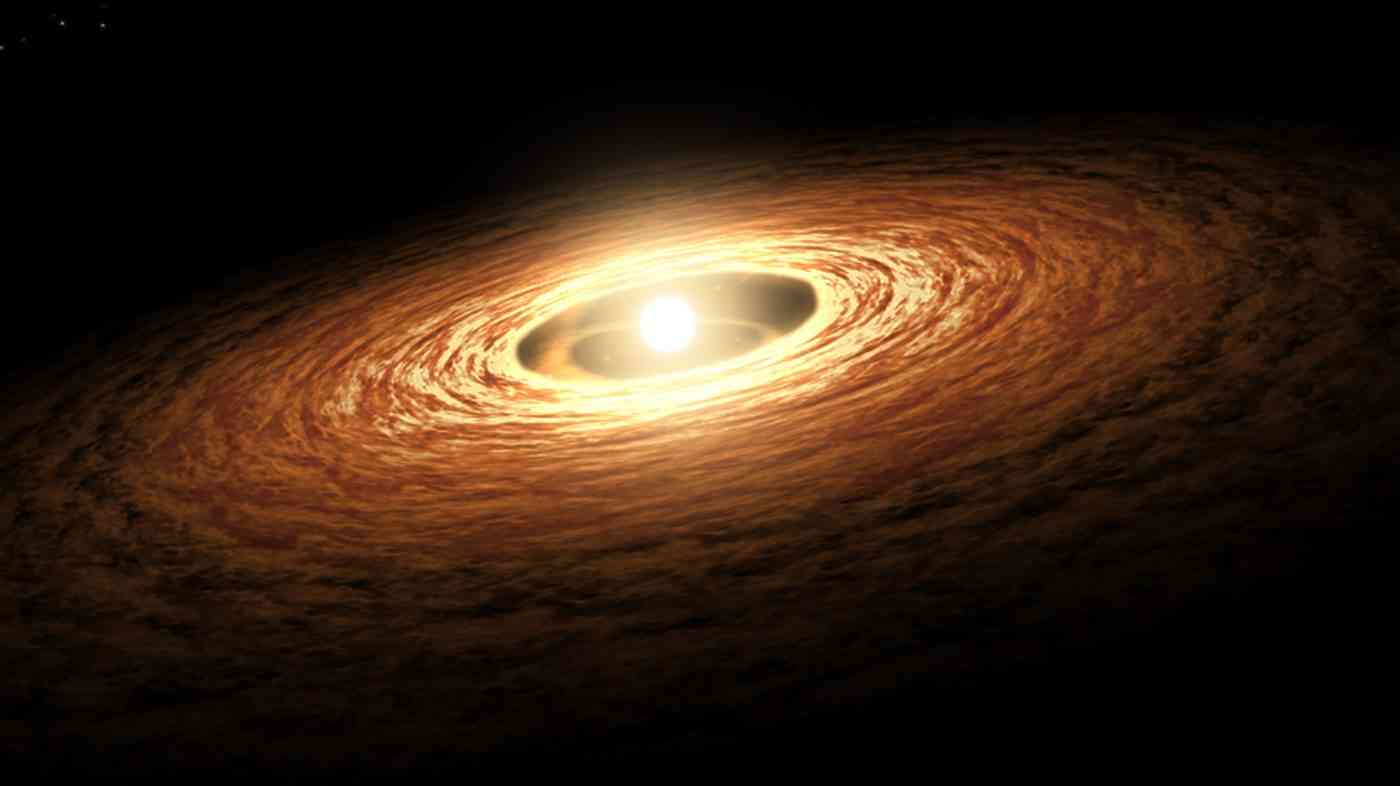
Furthermore, the coronagraph will allow for the direct imaging and spectroscopy of gas giants similar to those in our solar system, as well as dust disks around young stars. These observations will enable researchers to study atmospheric compositions, planetary system structures, and the processes behind their formation.
For the scientific community, this is more than just another instrument; it is a tool that could fundamentally alter our view of the cosmos.
During our lifetime, a great mystery concerning the cosmos has emerged: why the expansion of the universe seems to be accelerating. There is something fundamental about space and time that we don’t yet understand, and Roman was built to discover it,
– says Nicky Fox of NASA’s Science Mission Directorate.
It is important to note that it will not replace Hubble or Webb; it will complement them. While Hubble and Webb specialize in deep, “narrow” looks at specific fragments of the sky, the Roman Space Telescope is designed for rapid, high-precision surveys of massive areas. Its exoplanet data will create the perfect target list for Webb and future specialized missions to conduct detailed spectroscopic follow-ups.
The mission will also act as a natural partner to the European Space Agency’s Euclid mission. Both telescopes will investigate dark energy using slightly different wavelengths and methods, allowing for the cross-validation of their revolutionary results.
Read this article in Polish: 100 tysięcy nowych światów. NASA rusza z nową misją


A Journalism and Social Communication graduate with 15 years of experience in the media industry. He has worked for titles such as "Dziennik Łódzki," "Super Express," and "Eska" radio. In parallel, he has collaborated with advertising agencies and worked as a film translator. A passionate fan of good cinema, fantasy literature, and sports. He credits his physical and mental well-being to his Samoyed, Jaskier.


Zmień tryb na ciemny