Education
What Children Learn When They Count on an Abacus
25 September 2026





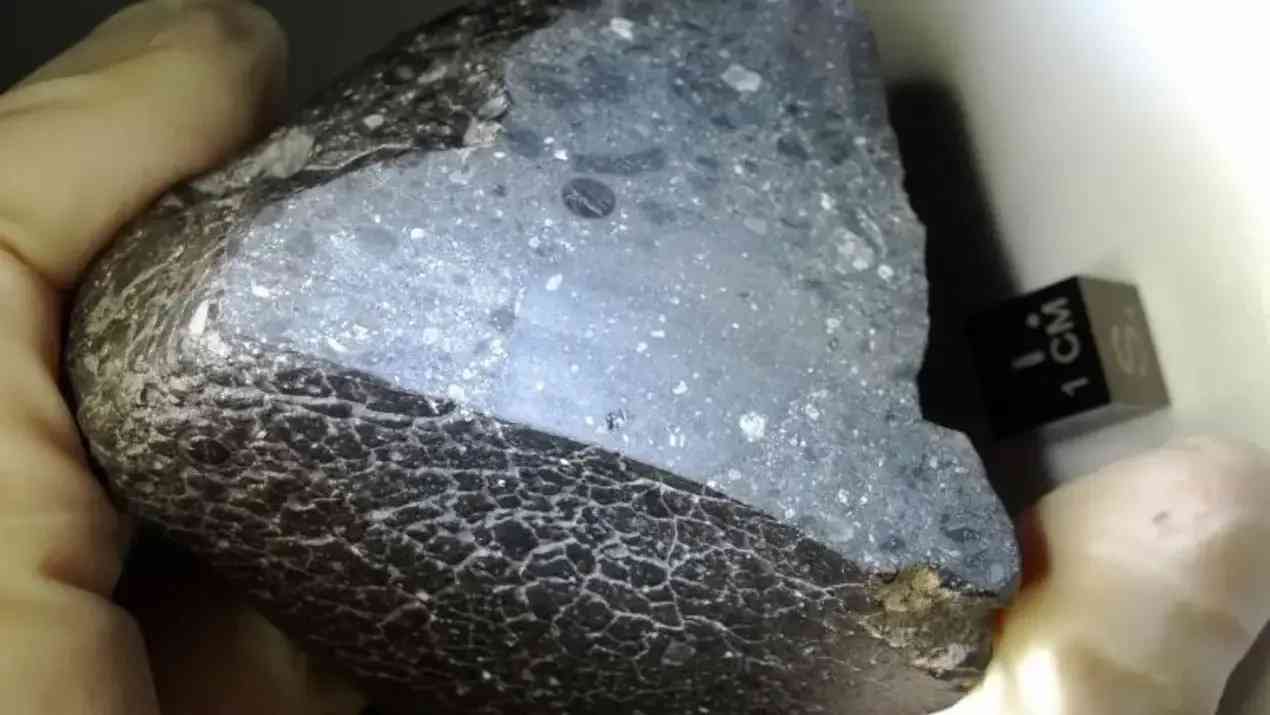
Mars has long captured the human imagination. Now, imaging technologies originally developed for medicine are helping scientists uncover its distant past. Computed and neutron tomography allowed researchers to look inside the Black Beauty meteorite, revealing traces of hydrogen that may point to an ancient watery environment on the Red Planet.
Scientific progress is not only about inventing new tools, but also about finding new ways to use the ones we already have. Technology designed to save lives and examine the human body is now helping researchers peer into cosmic history.
Computed and neutron tomography let scientists study meteorites without destroying them, effectively reading the planetary record preserved inside. That is exactly what happened with the Black Beauty meteorite, one of the most important Martian samples ever found on Earth.
Known formally as NWA 7034, Black Beauty is among the most famous meteorites in the world. It originated on Mars and was likely blasted off the planet’s surface by a massive impact before eventually falling to Earth. Scientists estimate that parts of it formed about 4.48 billion years ago, making it one of the oldest known pieces of Martian crust in the Solar System. Its nickname comes from its dark, striking appearance.
The meteorite is exceptionally valuable. In the past, studying it usually meant cutting away small fragments for analysis. That came at a cost, because some of the material crumbled or dissolved during testing, permanently damaging the sample.
Computed tomography, or CT, is one of the great achievements of modern medicine. It was developed to reveal what lies inside the human body without disturbing its structure. In planetary science, the same principle allows researchers to look inside rare meteorites while leaving them intact.
Neutron tomography works in a similar way, but uses neutrons instead of X-rays. This makes it especially useful for detecting hydrogen, an element that often serves as a subtle sign of past water. In Martian research, that matters enormously, because water is tied to some of the biggest questions scientists can ask about the planet’s history, including whether it may once have offered conditions suitable for life.
Using this method, an international team was able to examine Black Beauty without harming it. A tool created for medicine thus became a window into the deep past of another world.
In the study Direct detection of hydrogen reveals a new macroscopic crustal water reservoir on early Mars, researchers found that NWA 7034 is not a single uniform rock. Instead, its interior resembles a mosaic made up of many different fragments.
These fragments, known as clasts, are small pieces of Martian rock embedded within a larger mass. Each may come from a different place on Mars or from a different stage in the planet’s geological evolution. Together, they form a kind of archive, preserving evidence of processes that shaped Mars billions of years ago.
Clasts are not unusual in meteorites, and scientists had already identified them in Black Beauty. What surprised the researchers was the kind of material they found. Scientists from the Technical University of Denmark and Lund University identified hydrogen-rich iron oxide fragments, known as H-Fe-ox rocks.
These clusters are tiny, roughly the size of a fingernail, and make up only 0.4 percent of the sample’s volume. Even so, they contain as much as 11 percent water. That is a remarkable amount, especially given that liquid water does not exist on the Martian surface today.
The findings align with observations collected by the Perseverance rover, suggesting that billions of years ago Mars may have had liquid water, or at least water-rich conditions, at or near the surface. In principle, the same technique could be used to study other Martian samples returned to Earth, although that prospect has become more uncertain after setbacks to the Mars Sample Return effort.
Meteorites like Black Beauty are more than rare rocks in a laboratory. They preserve evidence of Mars’ early environment and offer scientists a chance to reconstruct a world that no longer exists. Every new technique used to study them expands our view of planetary history and reminds us that the search for knowledge is part of the human story itself.
The Black Beauty meteorite does not just tell us something about Mars. It shows how much can still be hidden inside a single stone, waiting for the right tool to bring an ancient world back into view.
Read this article in Polish: Kamień z Marsa i pytanie o początki planet. Co ukrywa Black Beauty


A graduate of journalism and social communication at the University of Rzeszów. She has been working in the media since 2019. She has collaborated with newsrooms and copywriting agencies. She has a strong background in psychology, especially cognitive psychology. She is also interested in social issues. She specializes in scientific discoveries and research that have a direct impact on human life.



Zmień tryb na ciemny