Science
Before There Are Planets, There Is Dust
16 October 2026





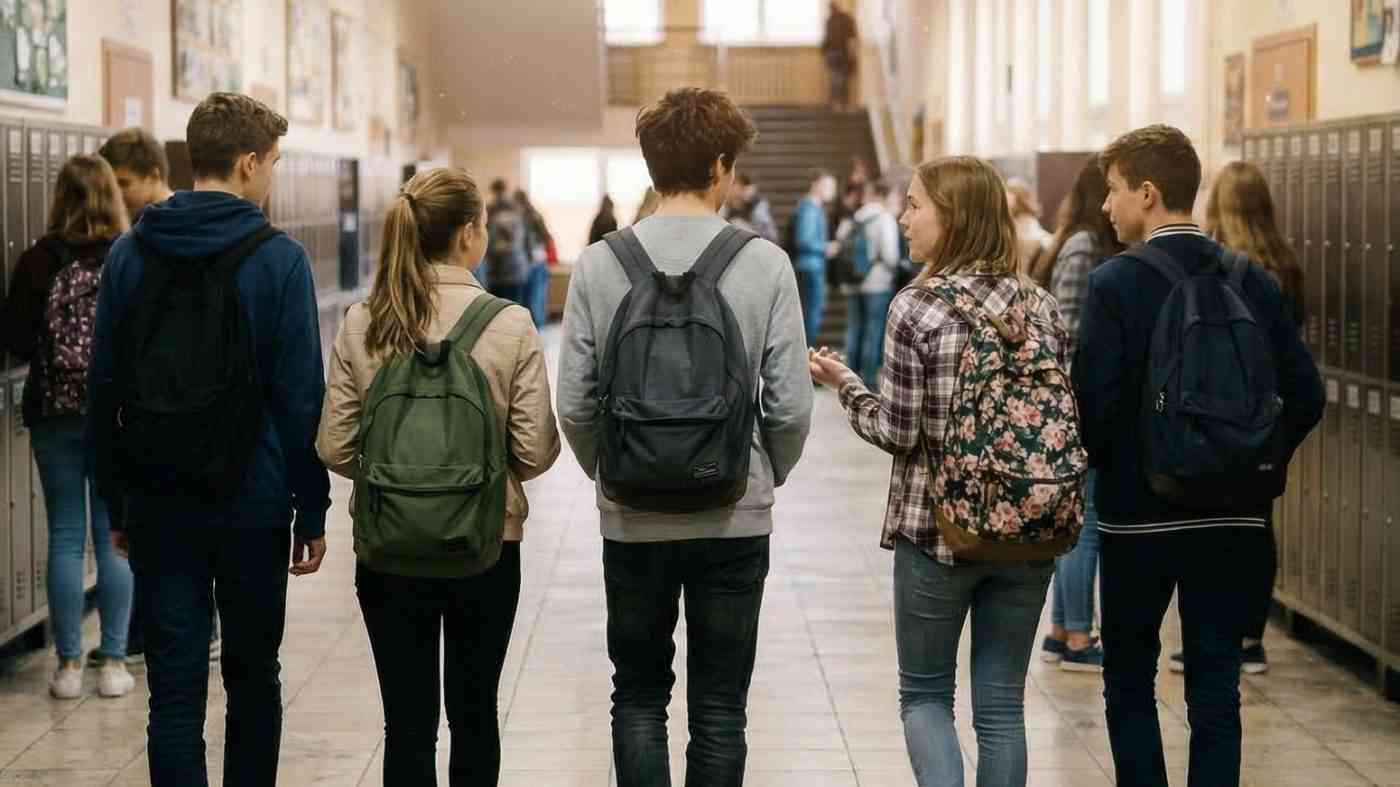
In Singapore, officials spent 7 years testing one change to make sure it would not harm students. In Estonia, teachers help shape how AI enters classrooms. Together, these cases show that education reform works best when a child’s well-being comes first.
Poland, autumn 2023. At an election rally, Donald Tusk promises Maciek from Włocławek that he will abolish homework in primary schools. By January 2024, Education Minister Barbara Nowacka announces on television that the regulation is ready and will take effect on April 1. She signs it on March 22 and publishes it in the Journal of Laws on March 25—just 1 week before the start date. Teachers learn the details from the media rather than through official ministerial training.
Singapore, 2009. The Ministry of Education creates the PERI committee. For 2 years, 16 schools test every aspect of a new assessment method—not to find the most efficient metric, but to understand how the change will affect the daily life of an 8-year-old in the classroom. Researchers at the National Institute of Education collect the results, pass them back to the schools, and the schools then report their feedback to the ministry. Full implementation comes in 2016—7 years after the process begins.
This is not simply a story about Singapore’s superiority over Poland. It is an attempt to answer a more important question: what does an educational reform actually mean, and whom is it really meant to serve?
Dennis Kwek, a researcher at the National Institute of Education, put it bluntly in a report published by the Brookings Institution:
Singapore’s reform is not a one-time event, but a continuous work in progress. It is a systemic journey aimed at moving away from a historically rooted, narrow academic paradigm toward a more balanced model, where a child’s holistic development carries as much weight as exam results.
That matters all the more because the statement comes from a country that has long ranked among the world’s top performers in PISA, the Programme for International Student Assessment.
The mechanism has a name: policy layering. Instead of tearing down the old system, Singapore adds new layers to stable foundations. In 2009, the PERI committee recommended a model of holistic assessment. The years 2009–2010 served as the prototype phase: 16 schools, limited scale, and careful documentation of mistakes. Between 2011 and 2013, the implementation phase expanded to 72 primary schools and involved more than 1,000 teachers. Only in the years 2014–2016 did the deepening phase arrive—125 schools, 3,300 teachers, and regular Teacher Learning Communities, where educators learned from one another rather than from a ministerial circular.
That does not mean the Singaporean system is flawless. Even today, despite more modern teaching methods, parental pressure to achieve remains intense. The tutoring market is thriving, and student stress related to the primary school leaving exam has not disappeared.
In February 2025, during an Independence Day speech, Estonian President Alar Karis announced the TI-Hüpe programme—the AI Leap. By September, 20,000 students and 4,700 teachers had gained access to artificial intelligence tools. Barely 6 months passed between the announcement and implementation.
Ivo Visak, executive director of TI-Hüpe and a former high school principal, explained the pace directly:
The AI leap has already happened among students, but we still have not directed it or grounded it pedagogically. That is why we have to act now.
Instead of imposing a ban, Estonia chose to intervene in the way students use AI. Working groups made up of scientists, teachers, school leaders, and tech entrepreneurs—including representatives from OpenAI and Anthropic—spent several months defining the competencies students should develop with AI before any tools were built.
This reverses the standard logic of digitalisation. First comes the pedagogical question—what do we want the student to know?—and only then comes the choice of technology. Estonia is consciously turning itself into a testing ground, but on its own terms: the country defines the goals, while technology companies provide tools to help achieve them.
The key question, as Visak put it, was simple:
Why would a student use standard educational aids when other tools can provide an answer immediately?
The answer lies in so-called Socratic AI models—systems that guide students through questions instead of delivering ready-made solutions. In this model, the teacher becomes the trainer of the algorithm rather than its victim.
Still, the tensions are real. Education Minister Kristina Kallas has publicly admitted that the greatest risk is a widening gap between highly motivated students and those who lack support at home. In 2027, when the first TI-Hüpe class graduates, it should become clearer whether speed was an advantage or a mistake.
To complete the picture, it is worth turning to a country that many still instinctively associate with the gold standard of schooling. For 2 decades, Finland was a byword for educational success. Then came successive rounds of PISA, and the scores began to fall. Since 2003, the country has lost 79 points in mathematics—the equivalent of roughly 2 years of learning. In December 2023, Minna Kelhä, Director General of EDUFI, said:
The causes lie in changes in the social environment: inequality, motivation, and the influence of social media.
The Finnish Ministry of Education has described the pace of that decline as “exceptionally fast” and “extremely worrying”—not as a neutral observation, but as an admission of systemic failure. In response, the government announced a €200 million package for curriculum reform. From August 2025, Finland added 2 extra hours per week of language and literature for grades 1–2 and made school funding in the poorest neighbourhoods permanent rather than temporary.
The response is almost anti-reformist in tone: more mathematics, more native language, a return to basics. Finland is not looking for a new paradigm so much as trying to recover something it has lost. For the Finns, the lesson is bitter but useful: no system is immune to social change. Even the most carefully designed reform will fail if schools do not notice that children are losing the ability to concentrate, and that the gap between a supportive home and a silent one grows wider every year.
Across these examples, 3 common variables stand out.
Time and piloting. Singapore needed 7 years to introduce a single assessment method. That reflects an understanding that even the most sophisticated systems are made of people, not just metrics. A reform without a prototype phase is an experiment on a living organism without the patient’s consent.
The teacher’s role as a subject, not an instrument. In Estonia, teachers sat at the table with engineers before the tools even existed. In Singapore, Teacher Learning Communities give educators a state-funded structure through which they can learn from one another. A reform in which the teacher is treated as an executor rather than a co-author is likely to provoke resistance.
Honesty about tension and failure. Singapore promotes holistic education, yet remains highly competitive. Estonia is moving quickly with AI while openly fearing for its most vulnerable students. Finland has admitted that its old myth no longer protects it. None of these systems is free of weakness—but each is willing to name its weakness clearly.
Maciek from Włocławek—and millions of children like him—deserves more than a campaign promise followed by a regulation read on a news portal. He deserves change that has been tested in schools, challenged by teachers, and improved before it reaches the classroom. In the end, the real task of education reform is not to move fast or sound modern, but to protect
Read this article in Polish: Reforma edukacji dla dobra dziecka. Tak robi to Singapur i Estonia


Journalist and podcaster specializing in psychological, social, and religious topics. Creator of Dobry Podcast and the founder and editor-in-chief of the Siewca.pl portal. On a daily basis, he analyzes digital media and communication trends. He gained his professional experience at Polskie Radio Kielce, Tygodnik Niedziela, and the Aleteia portal. He combines journalistic integrity with the ability to conduct in-depth interviews and create engaging audio and online content. In his free time, he enjoys reading—from popular science to non-fiction—while cycling through Masovian trails and cheering for Korona Kielce, Liverpool, and Barcelona.


Zmień tryb na ciemny