Education
What Does It Take to Keep a Child Curious?
28 September 2026





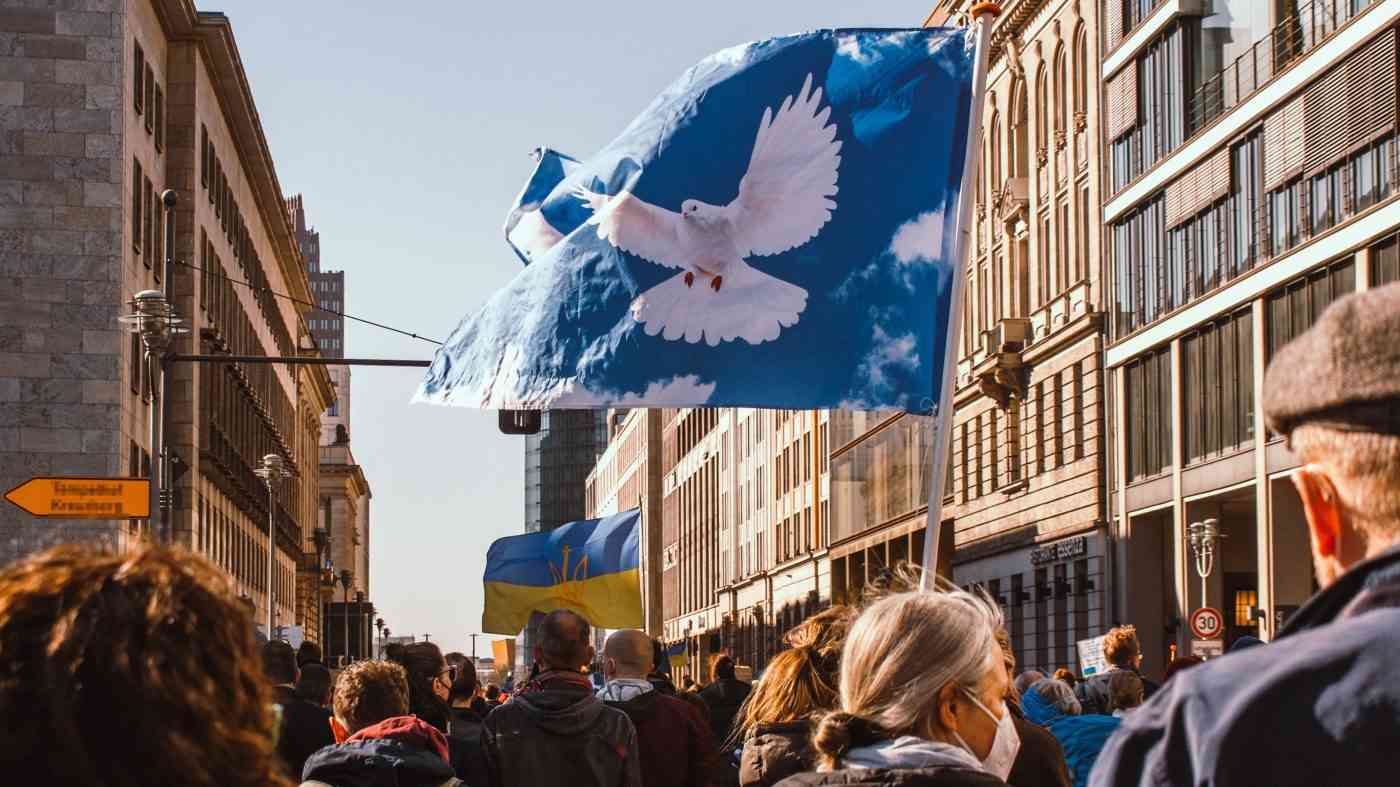
War rarely starts suddenly. Before the first shots are fired, it is born in the beliefs, fears, and stories we carry within us. Psychologists have examined the attitudes toward war that make some people more likely to accept violence.
The conflict in the Middle East has brought a familiar scenario: images of rocket attacks and speeches about “retaliation” or “defense” intermingle with pleas for an immediate ceasefire. Public space quickly split. On one side, we hear voices of approval; on the other, pacifist organizations and experts warn of escalation. This pattern repeats in every conflict—whether in Ukraine, the Gaza Strip, or the wider Middle East.
For years, psychologists have tried to understand why some people instinctively favor the use of force. Erich Fromm addressed this in The Anatomy of Human Destructiveness. He wrote that a person aware of their separateness must build new bonds with others. If they fail, a “striving to destroy all others” may emerge.
Eric Hoffer developed this further in The True Believer. He examined populism and “tribal wars,” analyzing the mechanism of fanatical hatred toward a “common,” often artificially created enemy.
Recent research sheds new light on this problem. It suggests that political differences or current emotions are not the only factors. Our stance is largely predictable based on personality traits, upbringing, and perceptions of masculinity, hierarchy, and violence.
One of the most interesting recent projects in this field is the study “Authoritarianism and the Psychology of War.” Although conducted in the UK, its conclusions are universal. The authors focus on a general tendency to back armed force rather than a specific conflict. They examine the classic concept of the authoritarian personality alongside “dark” traits (narcissism, Machiavellianism, psychopathy, sadism), social dominance orientation, and violent masculinity norms.
The study results clearly show that “authoritarian submission is strongly related to support for military action.” People inclined to obey strong authority and those seeking rigid hierarchies approve of war much more often. Aggression is also a key component—the readiness to punish those who break norms or appear as threats. A person convinced the world is dangerous often accepts bombing “for safety” as the only answer.
The authors also included “dark” personality traits in their model. Sadism emerged as a significant factor. This does not mean every proponent of a military response is a sadist. However, the study shows a subgroup that derives specific satisfaction from violence—even symbolic violence. This might manifest as a fascination with weapons or brutal games.
Furthermore, the study highlights the weight of masculinity norms linked to violence. The more someone equates a “real man” with strength and dominance, the more they favor military solutions. In practice, men with this profile, especially those with authoritarian views, are highly susceptible to slogans like “we must respond with force” or “they only understand violence.”
Interestingly, the study examined conspiratorial thinking as well. One might expect that a belief in “hidden enemies” always strengthens pro-war positions. However, after accounting for other variables, people prone to conspiracy theories were actually less likely to back war as a general solution. Instead of legitimizing government actions, they often viewed them with suspicion, seeing them as games played by elites. This shows how complex the formation of attitudes toward war can be.
Is this a matter of “character” or upbringing? The authors refer to the tradition of research on the authoritarian personality. This tradition places great importance on early childhood experiences. It specifically looks at patterns of discipline, the presence or lack of emotional warmth, and ways of resolving family conflicts.
Narratives justifying war often draw on childhood experiences of discipline and a lack of warmth. Conversely, greater emotional support in childhood can reduce authoritarian, militaristic attitudes,
— the study’s authors explain.
If we grow up where relationships rely on hierarchy, harsh punishment, and emotional coldness, we learn to see the world as an arena. In this arena, we either dominate or we are dominated. In adulthood, it is easy to translate this into politics. We begin to believe that enemies “only understand force” and that concessions are a sign of weakness. This fosters both authoritarianism and the acceptance of violence—including war.
In contrast, a childhood filled with support and security fosters empathy. It teaches us to resolve conflicts without violence. Such individuals are less likely to believe that bombing civilians is an “inevitable cost” or “collateral damage.” They remain distrustful of narratives that glorify violence.
In this sense, there is no simple division between “innate traits” and “acquired traits.” Personality can increase susceptibility to certain paths. However, our stance toward violence and war is “set” by our upbringing, experiences of violence, the emotional climate at home, and the culture in which we grow up.
In democracies, war needs legitimacy from citizens. It relies on their fears, imaginations, and beliefs. If we know which psychological profiles are susceptible to militaristic rhetoric, we realize that propaganda can target them with surgical precision. Language about “betrayal” or “existential threats” becomes a tool to mobilize people.
However, this knowledge can also serve as a basis for protection. It can inform media education, domestic violence prevention, and a more conscious public debate. In a world where local conflicts can turn into regional wars, these conclusions are vital. War starts in our characters and family histories. Instead of asking “who will win the war?”, perhaps we should ask: how do we raise a generation that will not need it? The answer lies in understanding the roots of attitudes toward war.
Read this article in Polish: Wojna zaczyna się w głowie. Skąd bierze się zgoda na przemoc

A Journalism and Social Communication graduate with 15 years of experience in the media industry. He has worked for titles such as "Dziennik Łódzki," "Super Express," and "Eska" radio. In parallel, he has collaborated with advertising agencies and worked as a film translator. A passionate fan of good cinema, fantasy literature, and sports. He credits his physical and mental well-being to his Samoyed, Jaskier.



Zmień tryb na ciemny