Culture
Between Spectacle and Reflection: What Do We Really Expect From Culture?
18 September 2026





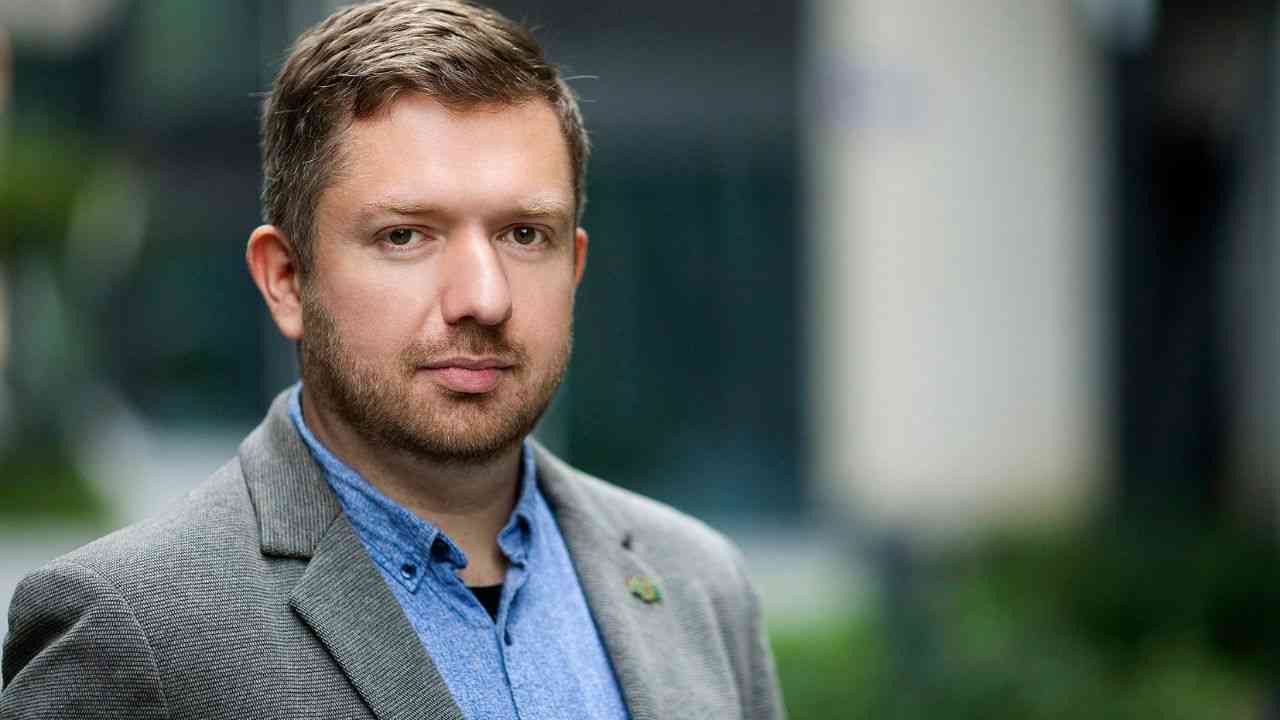
In this Donbas coal investigation, coal from occupied Donbas emerges as more than a raw material. It becomes part of a system that severs money from human suffering with alarming ease. Patrycja Krzeszowska speaks with Michał Potocki, co-author of Czarne złoto. Wojny o węgiel z Donbasu (literally, “Black Gold: The Coal Wars of Donbas”), about that machinery, the war, and the limits of morality.
Patrycja Krzeszowska: I would like to begin with the book itself. How did you come to launch a journalistic investigation into the smuggling of anthracite from the Russian-occupied Donbas?
Michał Potocki: I worked on it together with Karolina Baca-Pogorzelska. I focused on the eastern dimension, while she handled the energy angle. We started connecting the dots. If mines in the occupied part of Donbas were still operating, and if the coal extracted there was cheaper, then the obvious question was where it was going. The trail led to Poland.
We began checking, asking questions, combing through databases, and reading Ukrainian and Russian media reports. Eventually, we came across the name of a company registered in Katowice: Doncoaltrade. One Ukrainian newspaper mentioned it as an entity that appeared in Russian customs databases as a recipient of coal from the occupied part of Donbas.
We went to Katowice and checked the company’s registered address. There was nobody there. The premises were boarded up, and the mailbox was stuffed with flyers and unopened mail. Nothing suggested that any business operated there at all. People who worked in the building told us much the same. Still, we kept going. We reached people with access to Russian customs databases, which recorded every shipment, its volume, its recipient, and its declared country of origin. There we discovered more companies, many of them far more interesting than Doncoaltrade.
Little by little, a broader picture of the scheme came into focus. We were able to trace who sent the raw material, when, in what quantities, and to whom. At the same time, the investigation laid bare how this bloody criminal mechanism financed the occupation administrations and helped enrich new elites on the other side of the front.
What is anthracite?
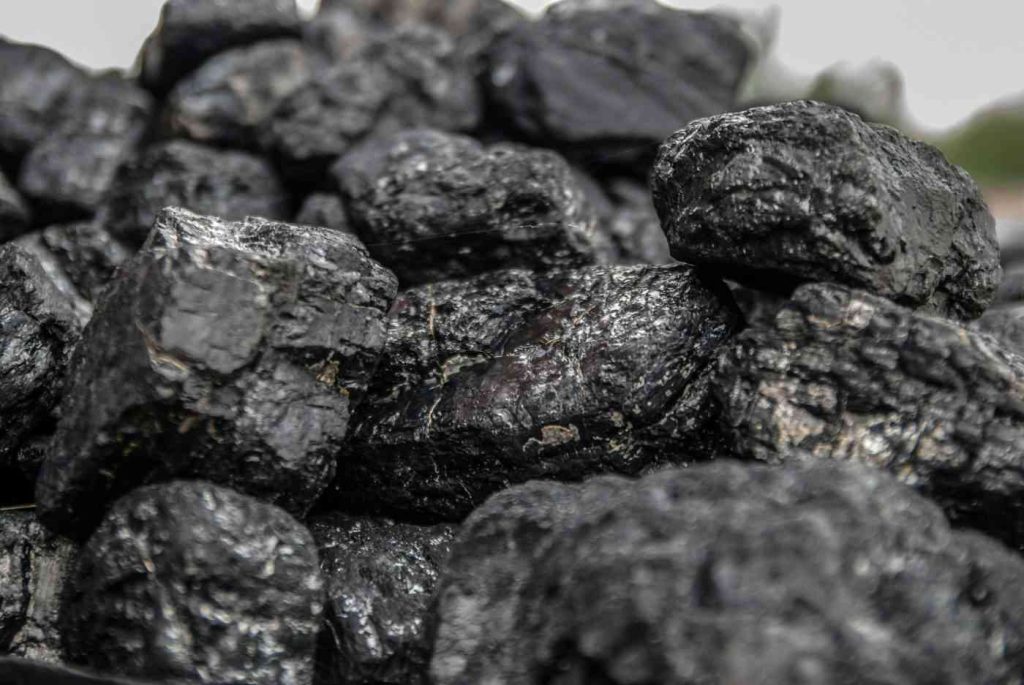
Anthracite is one of the most energy-dense types of coal, and the purest in its category. As a result, it delivers more energy than any other type of coal. People do not burn it in ordinary coal stoves. Industry, however, uses it widely, including in coke production and in industrial plants that require fuel with a very high calorific value.
Because of these properties, anthracite is also relatively more expensive than more common forms of coal, such as hard coal or lignite, both of which are mined in Poland, among other places.
What was the hardest truth you had to confront while working on this story?
What struck me most was how easily people made morally dubious decisions, including in large companies. Those importing coal from occupied Donbas knew perfectly well that it did not come from Russia, if only because of its parameters. It is hard, then, to speak of ignorance. And yet they chose to buy it, because it was cheaper and more convenient. Even if that meant, indirectly, feeding a bloody war.
What makes ordinary people, who in theory are good, or at least whom we assume to be good, ignore the suffering of others and want to profit from trading in such resources? What does that say about human nature?
I think it becomes easier because you do not see that suffering at first glance. Someone receives a railcar of coal, and that is that. The lumps are not bloodstained. You cannot tell where they came from, so it becomes easy to look away.
That does not mean those same people would be willing to harm another human being with their own hands in order to make a few dollars per tonne of raw material. Usually they would not. The problem lies elsewhere. Between the mine in occupied Donbas and the end recipient, whether in Silesia or elsewhere, stretches a long chain of intermediaries, companies, and dependencies. Add geographic distance to the mix, and it becomes all too easy to close your eyes to what happens at the start of that chain.
This mechanism has a universal character. The motive remains the same: money. It usually flows to people tied to power, occupation administrations, or groups that have seized someone else’s property and begun turning a profit from it. The pattern returns from one armed conflict to the next, and it will most likely return again.
When we began working on this subject, we believed that documenting it might change something in practical terms. Perhaps it would push the European Commission to impose an embargo on coal from occupied territories, or more broadly on trade with the so-called Donetsk and Luhansk People’s Republics. But that did not happen.
The European Commission imposed such an embargo only on 23 February 2022, one day before Russia’s full-scale invasion of Ukraine. Later, under pressure from Poland among others, sanctions expanded to cover all Russian coal, regardless of its actual origin. It took a full-scale war for those decisions to materialise at all.
At what moment, when observing Donbas, does one see most clearly that war strips people of their dignity and reduces them to elements of a system?
War strips people of dignity on many levels, both victims and perpetrators. Those who end up in the Russian army, often of their own accord, lured by high pay, become doubly dependent in a sense: politically and financially. They enter a system in which the state first pays them to sign a contract and then pays for their death at the front. That money goes to the families of the dead.
It is an extremely cynical mechanism, one in which a human being gets reduced to a resource that can be bought. Most often it affects people from the poorest regions of Russia, for whom such an offer may seem like the only chance to improve their material circumstances.
On another level, civilians spend long hours every day in shelters, or sleep in hallways, on mattresses, or in bathtubs because their cities come under fire. In daily life they have to follow air-raid alerts and decide, every single time, what those alerts mean: a missile threat, or a drone attack. Life falls under the rule of permanent danger, and each person has to interpret that danger alone, using their own judgment. Under such conditions, dignity becomes very hard to preserve.
Some political scientists and experts suggest that war can be “civilised.” What do you make of that?
Human beings carry both a capacity for cruelty and a desire to restrain it. That is why people keep trying to place war within more civilised limits. The experience of the 19th and 20th centuries shows a clear dualism. On the one hand, aggressive war is forbidden. An attack on another state, if unprovoked and not sanctioned by the UN Security Council, violates international law. On the other hand, once war begins, rules do exist that define how it may be fought and what crosses the line.
What lies beyond those limits we describe as war crimes, and at a higher level as crimes against humanity or genocide. Civilisation has adopted these norms in order to limit suffering at least in part, above all the suffering of civilians.
Much depends on whether the state waging war, whether in self-defence or aggression, treats those norms seriously. In Russia’s case, it clearly does not, and that fact shapes the scale of the war crimes, cruelty, and torture we keep learning about. Even with norms, conventions, and international agreements in place, war remains, in its essence, a systematic stripping away of human dignity.
What did you feel while working on this book and confronting all these horrors? Powerlessness? Something else?
We knew that our work could only limit the practices we described to a very modest extent. That was where the sense of powerlessness lay. Only the outbreak of full-scale war triggered decisive action. Yet we also saw more tangible effects. The mere fact that the issue entered public debate led some companies to pull back from working with contractors who supplied coal from occupied Donbas.
That happened, for example, in the case of Ciech, a major coal buyer, which decided to verify the source of its supplies and check whether any of the raw material came from occupied territory. That was a positive example. This is also where journalism matters: it makes the public and the elites aware of the mechanisms operating in the background. As a result, some companies began scrutinising their partners more closely, terminating contracts, or changing the rules of cooperation.
The results showed up in the data. In Poland, the scale of the practice fell by several dozen percent. That did not mean it disappeared altogether; some of the trade simply moved elsewhere. Still, one could say that Poland received markedly less of that coal than it had before our investigation began. After February 2022, the imports dried up entirely.
I believe the key lies in making readers more sensitive to the evil around them, and in showing them how they themselves can make better consumer choices. That is something we can influence. Whether someone decides to act on it, though, remains a matter of individual conscience.
Were the people responsible for this scheme ever charged?
It is difficult to bring such people to court, because they are Russian citizens who do not leave Russia. Various cases did make their way through the courts, especially in Ukraine. Most of them were tried in absentia, meaning that representatives of the occupation administration stood trial without being present. Some of those people are also Ukrainian citizens, because some Ukrainians betrayed their country and joined the occupier.
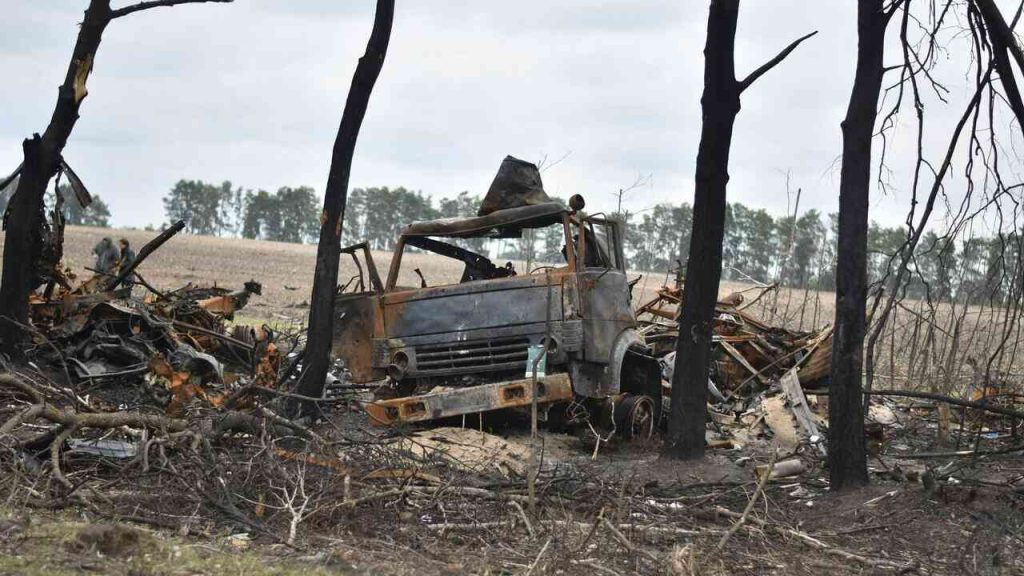
I do not see much hope for justice. All the more so because the ongoing war has already destroyed a large share of those mines. That is the paradox. Russia began the war in 2014 under the slogan of protecting Donbas. In reality, through that very war, it brought about the region’s total degeneration, effectively dismantling Donbas as a coal basin and industrial region.
What would have to change in the way we think, as human beings, for a story like this one from Donbas never to happen again?
What troubles a growing number of people is the habit of confusing the victim with the aggressor. We have a tendency, especially in the media and on social platforms, to search for blame not on the side of the aggressor but on the side of the victims. Yet the facts are simple. Russia bears responsibility for this war. Before 2022, a single decision at the EU level would have been enough to stop coal from Donbas from flowing into the European Union.
More broadly, we should make business and consumer decisions with greater sensitivity. Everything we buy was produced somewhere, and it may have been produced under radically different conditions, including environmental ones.
We should ask whether the company that made something for us respects environmental standards or breaks them. Does it damage its surroundings? Does it exploit prison labour or slave labour? And do the profits it earns end up in the pockets of warlords, militias, or authoritarian regimes?
That is the enduring lesson of this Donbas coal investigation: our choices are never as abstract as we would like to believe. Money travels. So does responsibility.
*Michał Potocki is a journalist with more than 20 years of experience. He is the author of numerous books, including Czarne złoto. Wojny o węgiel z Donbasu. He specialises in geopolitics, particularly in Eastern Europe, and has received several prestigious awards.
Read this article in Polish: Autor „Czarnego złota”: tam liczył się zysk, nie ludzkie życie

A graduate of journalism and social communication at the University of Rzeszów. She has been working in the media since 2019. She has collaborated with newsrooms and copywriting agencies. She has a strong background in psychology, especially cognitive psychology. She is also interested in social issues. She specializes in scientific discoveries and research that have a direct impact on human life.


Zmień tryb na ciemny