Education
What Children Learn When They Count on an Abacus
25 September 2026






How to overcome loneliness has become one of the defining questions of the 21st century. Many people assume the answer lies in grand social campaigns or institutional fixes. But often it begins somewhere smaller: in a brief conversation, a shared meal, a simple act of noticing another person before they disappear into silence.
Hig, a pilot and businessman, has lived on an abandoned airfield for several years after a flu epidemic took away the people closest to him. Bangley, the man who works alongside him, keeps him company. Hig flies regular missions to gather food, while his ally takes charge of their safety. They live beside each other, but mostly in order to survive. Hig’s only real refuge is Jasper, his dog, the one being who still connects him to the happiness of his former life and to the feeling that someone is always waiting for him.
One day Jasper dies, and the newly isolated Hig decides to make a dangerous flight. It is his attempt to escape loneliness and search for signs of communal life, the thing he misses most. He heads toward a faint radio signal, knowing that death itself may be waiting for him there. Even so, he takes the risk, because he knows that the emptiness of the airfield is killing him more slowly than any bullet ever could.
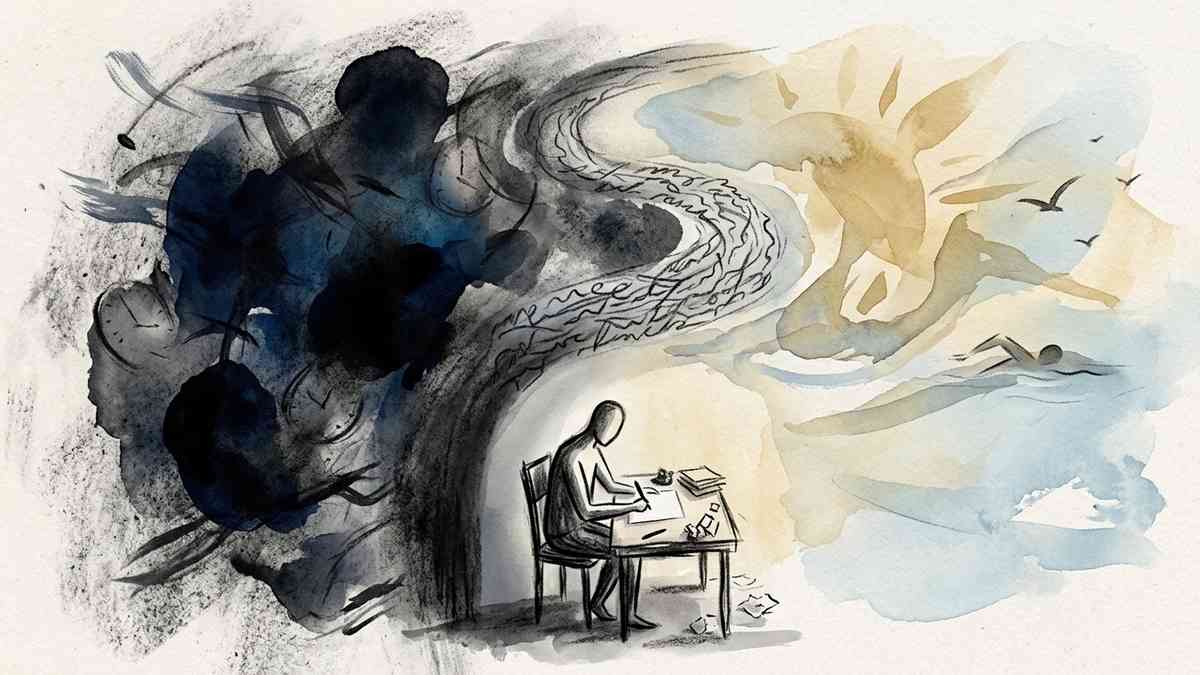
This image emerges from Peter Heller’s The Dog Stars. It is not simply a work of science fiction. In modern society, people increasingly experience loneliness without needing an apocalypse to bring it about.
In Poland, 1 in 4 older adults says they feel lonely. Time contributes to it, as do death and the departure of loved ones, while the pandemic years deepened social isolation even further.
In an interview for Holistic News, Dr Rafał Bakalarczyk notes that loneliness in later life does not end with a lack of contact with loved ones. A sense of meaninglessness gradually enters a person’s life. It often comes to dominate it, stripping away self-worth and leaving the person with the feeling that nobody needs them. Hig had Bangley as a companion. He was not a friend, but he was an ally who helped him survive. Many lonely people, by contrast, have at best the occasional phone call from family members. Those calls arise from duty, not from any real desire to sustain a living relationship.
I asked the psychologist and acclaimed author Dr Tomasz Witkowski why we long so deeply for closeness:
From an evolutionary perspective, we are a social species. We live in groups, not as solitary individuals. So one could say that the need for closeness is evolutionarily conditioned. In earlier times, life outside the group meant almost certain death, because it would have been difficult to cope alone with the dangers of the environment. This is most likely the most primal reason why we so strongly desire contact with other people. The absence of relationships or close bonds triggers anxiety, fear, and a sense of threat in us. One could therefore say that the need for closeness has its roots in the evolutionary past of humankind.
In Heller’s novel, Hig does not fly toward the radio signal solely out of longing for another human being. He takes that step because the death of his beloved dog robs him of the last illusion that he can manage on his own. The story shows that, at a certain point, loneliness stops being merely a state. It becomes a choice, a moment in which a person says: enough.
In our world, the situation looks much the same. The signal of life no longer comes from an abandoned airfield, but from a neighbour’s flat, from a queue in a grocery shop, or from a silent phone that someone learned to use only so that another person might call or send a message.
The greatest trap lies in the mistaken belief that the problem of loneliness can only be solved through large interventions: senior clubs, cultural events, or social programmes. Loneliness recedes when we make gestures that seem modest but matter deeply. We ask how someone is doing. We suggest a meal together, a walk, or a conversation about a favourite book or film.
In Heller’s novel, Hig meets Cima and her father during his journey. Through them, he gradually recovers the ability to build relationships again. Their meeting does not save him in some miraculous way. It gives him something more human than that: contact with people who see in him, first of all, a person, not merely a survivor of the apocalypse.
It is hard to rid our world of loneliness entirely. But we can reduce it and make it more bearable. That requires an effort few people want to make, yet it is worth looking at another human being as someone who may no longer be here tomorrow, someone whose absence would leave behind emptiness and silence.
Peter Heller wrote:
What did I miss all the time, more than anything? The shrieking nameless crowd, the noise, the parties, the flash of cameras? […] The choice: Everything or not? A little or none at all? Now, not now, maybe later? I do not have that now. Those choices. And still. […] Home. However modest. Even if I have nothing to lose. Nothing, though, is still something.
Hig flew in search of signs of life and in flight from silence, but we do not have to fly. One phone call is enough. So is a smile, a conversation, or the simple act of noticing another person. Because when everything else falls away, the only thing left to us is another human being. That may be the most honest answer to the question of how to overcome loneliness.
Read this article in Polish: Największa współczesna plaga. Ratunek jest na wyciągnięcie dłoni


A graduate of journalism and social communication at the University of Rzeszów. She has been working in the media since 2019. She has collaborated with newsrooms and copywriting agencies. She has a strong background in psychology, especially cognitive psychology. She is also interested in social issues. She specializes in scientific discoveries and research that have a direct impact on human life.


Zmień tryb na ciemny