Science
Before There Are Planets, There Is Dust
16 October 2026





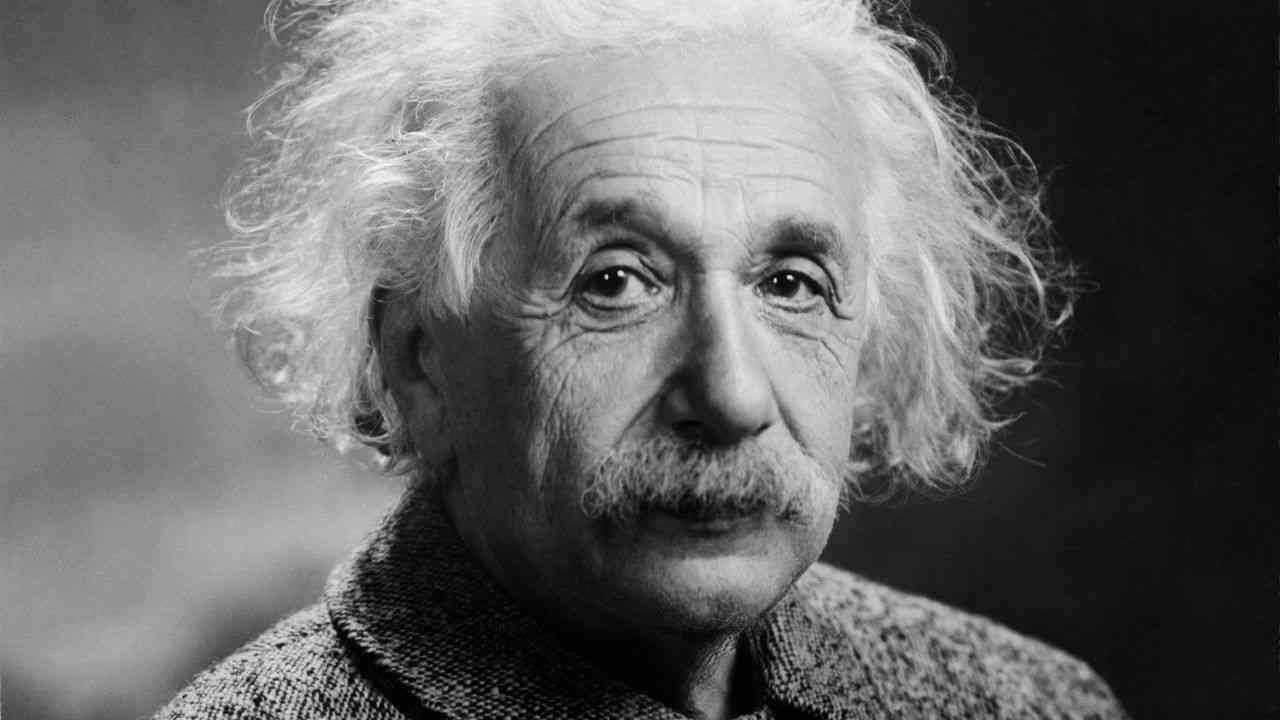
The power of curiosity does not begin with talent or perfect grades. The most transformative ideas often start with a single, quiet impulse—one question that refuses to let go. That is how the story of one of the greatest minds in history began.
He was 5 years old when he fell seriously ill. Confined to bed, restless in the way sick children often are, he received a simple gift from his father: a compass. The boy became fascinated by the needle, which moved on its own, without any visible force. The mystery behind its motion stirred something in him—a persistent need to understand what and why.
That curiosity stayed with him. It became the driving force behind discoveries that today shape modern technology—smartphones, navigation systems, and medical devices.
Most of us know someone like this. Someone who did not always excel in school, yet remained thoughtful, bold, and deeply curious about the world. Despite the concerns of teachers and parents, they went on to achieve remarkable things. What set them apart was not flawless performance, but persistence and the power of curiosity.
The boy in question was Albert Einstein. A popular myth suggests that he struggled in school. That is only partly true. He excelled in mathematics and physics, but teachers often saw him as defiant. Instead of following the expected path, he preferred to read philosophy on his own—especially Immanuel Kant—alongside popular science texts.
After completing his studies, Einstein took a job at a patent office in Bern. At 26, he published 4 papers that would transform physics. Among them were the theory of relativity, the famous equation E=mc2, and an explanation of the photoelectric effect, which later earned him the Nobel Prize.
His achievements did not emerge from obedience to a system. They grew from a willingness to think independently—and from the power of curiosity that pushed him beyond established frameworks.
Walter Isaacson captures this brilliantly in his biography Einstein: His Life and Universe. Drawing on letters that had remained inaccessible for years, he shows that Einstein thought primarily in images, not in words.
Einstein became known for his thought experiments. He would imagine, for example, what the world looked like from the perspective of a beam of light. He did not rely on traditional laboratory work. Yet his insights rested not only on imagination, but also on rigorous mathematical foundations.
Here lies the central point. Curiosity and the courage to think differently often matter more than good grades alone. Einstein’s life shows that intellectual independence can lead to breakthroughs that reshape the world. Had he remained within accepted boundaries, he might never have developed the theory of relativity.
This is how progress works. Thomas Edison, Nikola Tesla, Steve Jobs, and Alan Turing all faced moments when they were told something could not be done. They moved forward anyway—and in doing so, they created the paths we now follow.
Einstein was not without flaws. He divorced twice and had complicated relationships with his children. Yet he remained devoted to science until the end of his life. Curiosity and intellectual courage never left him. Even in his final days, sheets of paper filled with equations lay beside his bed.
So when you encounter a child who is bold, restless, and curious—one who resists passive obedience—it may be unwise to dismiss them. They do not need perfect grades or universal approval. It may be enough that they ask one good question.
Because more often than we admit, everything begins there—with the quiet, persistent power of curiosity.
Read this article in Polish: Ciekawość małego chłopca zmieniła świat. Zaczął od jednego pytania


A graduate of journalism and social communication at the University of Rzeszów. She has been working in the media since 2019. She has collaborated with newsrooms and copywriting agencies. She has a strong background in psychology, especially cognitive psychology. She is also interested in social issues. She specializes in scientific discoveries and research that have a direct impact on human life.


Zmień tryb na ciemny