Truth & Goodness
The Polar Silk Road: Can We Outsmart Geography?
26 March 2026





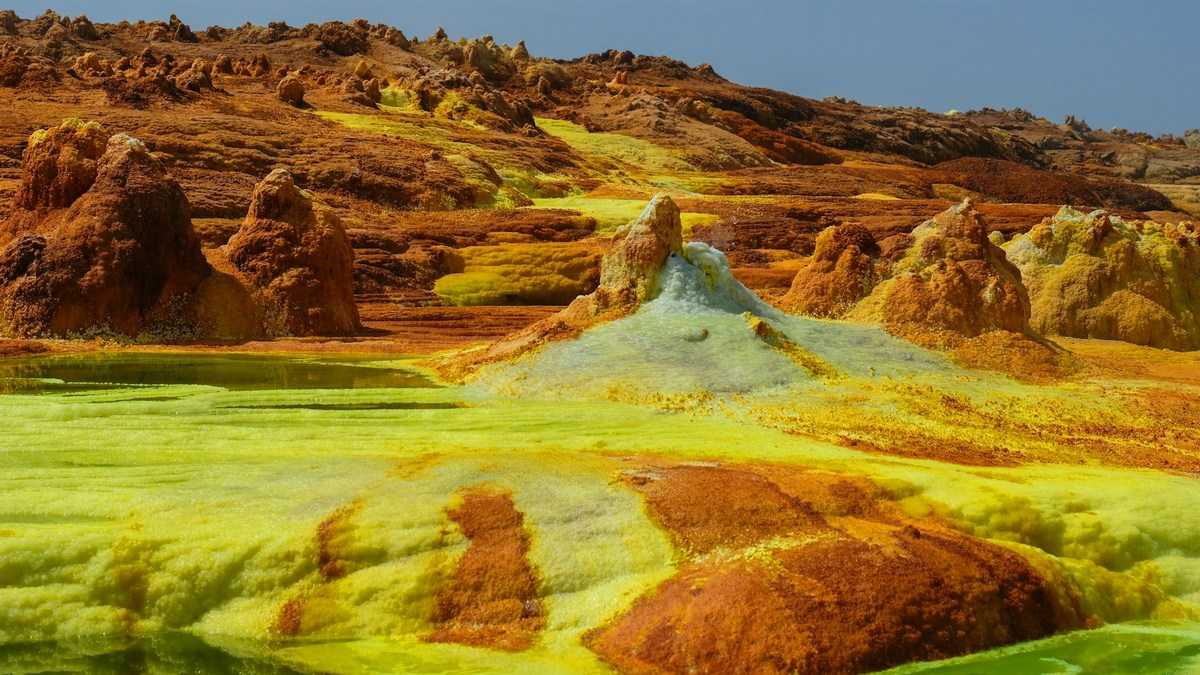
Africa is slowly cracking from within. Processes observed by scientists deep beneath the surface signal the birth of a new body of water. The world map as we know it may completely transform. What is truly happening beneath the crust of Ethiopia? The formation of a new ocean in Africa is no longer a mere hypothesis—it is an unfolding reality.
Something extraordinary is happening beneath East Africa. Deep within the Earth, under the Afar region of Ethiopia, magma has begun to pulse rhythmically and incessantly. Researchers compare this phenomenon to the heartbeat of our planet; with every “beat,” molten rock stretches the Earth’s crust and slowly forces it apart. This real-world geological process could lead to the creation of a new ocean in Africa. It all began with vibrations hidden in the planet’s depths.
A research team from Swansea University, led by Emma Watts, decided to take a closer look at this phenomenon. The scientists analyzed over 100 samples of volcanic rock from the Afar region. They combined this data with advanced computer models to better understand what is occurring beneath the continent’s surface.
The mantle beneath Afar is not uniform or static. It pulses. This has significant implications for our understanding of the interaction between the Earth’s interior and its surface,
– explains Dr. Watts, as quoted by Earth.com.
The analysis of chemical data hidden within the rocks revealed the rhythmic nature of these pulsations. The thinner the Earth’s crust, the faster these impulses travel—behaving much like blood moving through vessels.
In places where the plates are thinner […], the pulsations move more effectively, much like in narrow arteries,
– adds study co-author and geologist Tom Gernon from the University of Southampton.
This tectonic activity is peaking in the Afar region. This is the precise location where three massive rift systems converge: the Red Sea, the Gulf of Aden, and the Main Ethiopian Rift. Their collective movement is forging a new chasm. Researchers believe this is only the beginning, and the arrival of a new ocean in Africa may be just a matter of time.
While the breakup of a continent does not happen overnight, scientists agree that the process has already started. Beneath the surface, forces are deforming the Earth’s crust, creating new rift zones, and reshaping the planet’s geological landscape.
We discovered that the evolution of deep mantle currents is closely linked to the movement of the plates above. This will significantly impact how we interpret surface volcanism, seismic activity, and the process of continental breakup,
– says geophysicist Derek Keir from the University of Southampton, a co-author of the study.
The mantle currents Keir refers to are essentially the slow movements of matter occurring within the Earth’s mantle. This is why scientists are calling this a breakthrough. Research published in the journal Nature Geoscience shows that this rift is not accidental but represents the start of a massive transformation. In the future, it could lead to the formation of a new ocean in Africa, effectively severing the eastern part of the continent from the rest.
The birth of a new ocean in Africa is a process that has already begun. Even if it takes millions of years to complete, it will permanently alter the map of the world. While future generations will be the ones to witness the full extent of this change, we are left to observe the profound processes occurring deep within and on the surface of our planet.
Read this article in Polish: Nowy ocean podzieli Afrykę. Proces już się rozpoczął


A Cracovian by birth, choice, and passion. He pursued radio and television journalism, eventually dedicating himself to writing for Holistic.news. By day, he is a journalist; by night, an accomplished musician, lyricist, and composer. If he's not sitting in front of a computer, he's probably playing a concert. His interests include technology, ecology, and history. He isn't afraid to tackle new topics because he believes in lifelong learning.


Zmień tryb na ciemny