Humanism
In the Mountains of Madness: Science Confronts the Legend of the Halny
28 March 2026





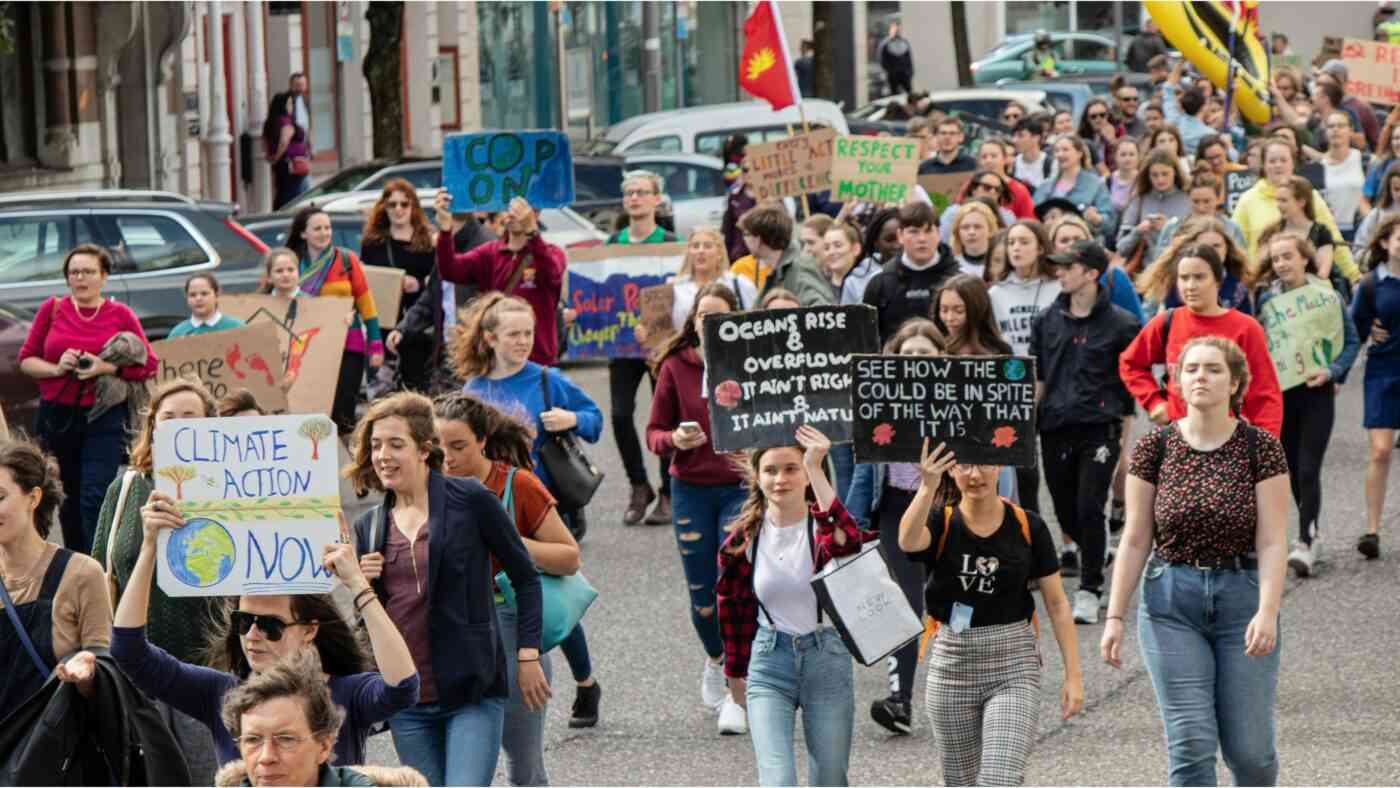
Activism has long been presented as evidence of empathy and concern for higher goals. However, the latest research indicates that participation in social actions can realistically change people, often in ways that do not fit the narrative of a "noble cause." Studies show that the link between activism and character is more complex than we previously thought, revealing a surprising connection to less altruistic personality traits.
Activism is increasingly becoming a lifestyle. For some, it is a way to truly change the world; for others, it is an element of identity and daily choices. But how does such engagement affect people?
This question was taken up by Prof. Hannes Zacher from the University of Leipzig. Instead of relying on self-declarations or media images, he decided to check what actually happens to individuals involved in activism over a long period.
The German scientist invited over a thousand volunteers to participate in the study, which involved two rounds of testing a year apart. This allowed researchers to observe not only what the participants were like at the beginning but also how their behavior and character traits changed over time as their involvement in activist activities—such as organizations “defending the Earth”—grew.
The researchers looked not only at activist attitudes themselves but also at which character traits had the greatest influence on the participants’ behavior. Particular attention was paid to the so-called Dark Triad of personality—a set of traits that has sparked controversy in psychology for years.
This includes narcissism (a strong need for admiration and a belief in one’s own uniqueness), Machiavellianism (associated with manipulating others and focusing on one’s own benefits), and psychopathy (understood as a lack of empathy and a tendency toward impulsive, antisocial behavior).
But the analysis did not stop there. The scientists also checked levels of aggression toward elites, attitudes toward censorship, and so-called anti-conventionalism—the opposition to commonly accepted social norms.
The study showed that the Dark Triad of personality has a real impact on what activism looks like and who gets involved in it. This is best seen in the example of Machiavellianism. Individuals prone to strategic thinking and manipulating others were significantly more likely to find their way into activist activities.
However, that is not all. Participation in activism itself also raised the level of Machiavellianism in the subjects. In other words, activism not only attracts certain types of people but may also strengthen these traits during the process.
And this is only the beginning of the more surprising observations.
Latest research published on the scientific platform ScienceDirect presents a strong thesis. According to the German scientist, participation in environmental actions can also raise narcissism levels over time. Where does this effect come from?
Researchers point to a simple mechanism: individuals involved in activism begin to perceive themselves as exceptional, or even morally superior.
The study results clearly change how we can view the psychological portrait of an activist. This does not mean, however, that everyone who participates in social actions becomes a narcissist or a person devoid of empathy. The conclusions are much more nuanced.
The study shows how the activist environment itself can influence personality traits—especially when it is dominated by a sense of moral superiority, constant conflict, and the pressure to act in the name of a “just cause.” It is these conditions that foster the strongest changes.
Importantly, the analysis also brought one clearly positive conclusion.
People actively participating in protests in defense of the Earth were less likely to support censorship and the restriction of free speech. The opposite was true among those who merely declared sympathy for the climate movement—it was this group that more often favored restrictions. The difference between real and performative activism proved to be distinct.
At the same time, the research results show that social engagement does not always go hand in hand with the development of positive character traits. In some cases, it is even associated with an increase in traits defined as the “Dark Triad.” Ultimately, it is not activism itself that determines these changes, but the way a person engages and the environment in which they function. The evolving relationship between activism and character reminds us that even while fighting for the world, we must remain mindful of how that fight reshapes ourselves.
Read this article in Polish: Nie tylko empatia i „słuszna sprawa”. Tak aktywizm zmienia ludzi


A graduate of journalism and social communication at the University of Rzeszów. She has been working in the media since 2019. She has collaborated with newsrooms and copywriting agencies. She has a strong background in psychology, especially cognitive psychology. She is also interested in social issues. She specializes in scientific discoveries and research that have a direct impact on human life.


Zmień tryb na ciemny