Humanism
The Dehumanization Game. How War Marketing Works
18 March 2026





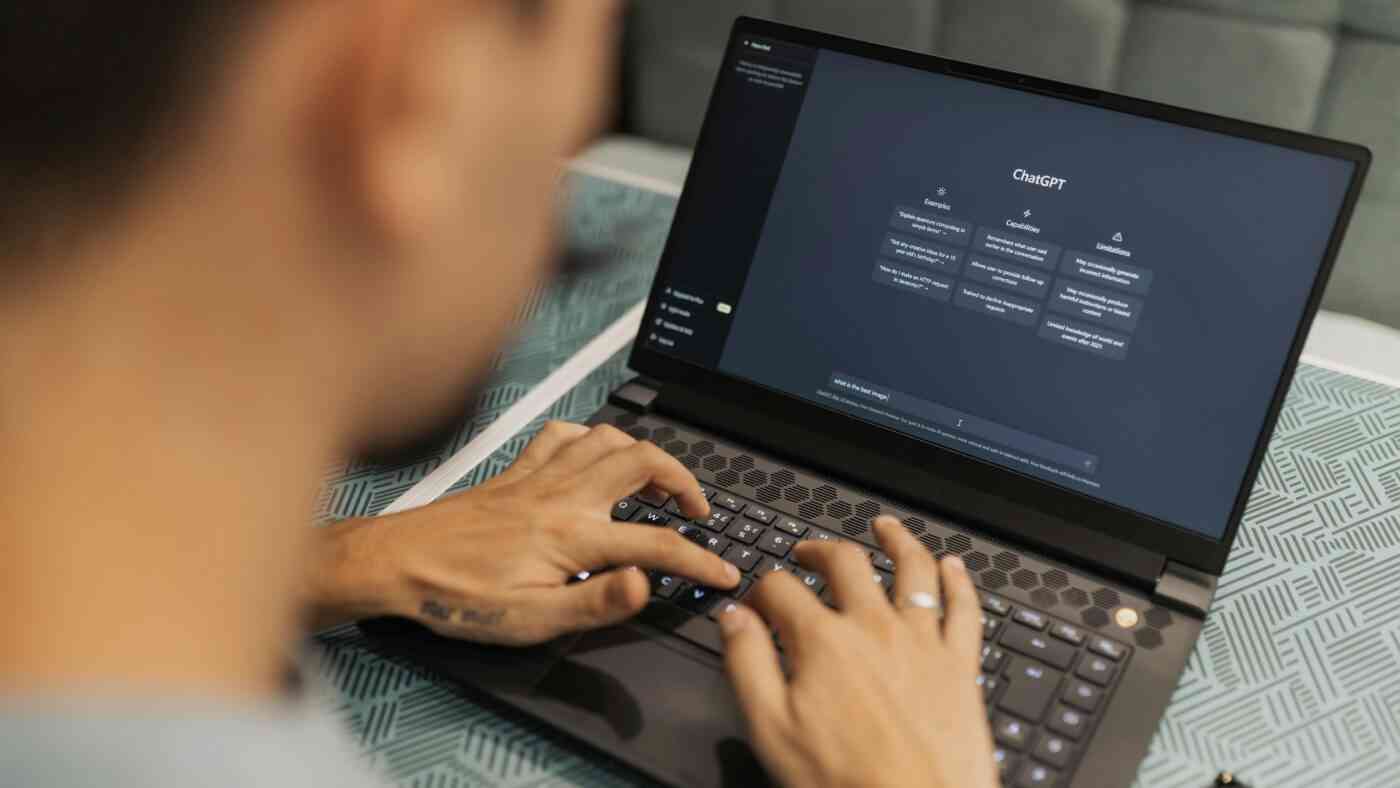
Most AI models are not politically neutral. Research suggests their answers often reflect the language and assumptions of the liberal professional class more than those of conservative voters. In an era when chatbots influence how millions of people understand public issues, AI political bias is no longer a curiosity — it is a serious democratic concern.
A growing number of studies suggest that many large language models lean in a liberal or centre-left direction. In a widely discussed 2024 study published in PLOS One, researcher David Rozado tested 24 AI systems using measures of political orientation and social values. He then compared the models’ responses with party platforms and voter preferences. The results indicated that most conversational AI tools produced answers more consistent with centre-left viewpoints than with conservative ones.
Other analyses, from broad reviews to case studies of individual models, point in the same direction. When asked about taxes, regulation, minority rights or contentious social issues, chatbots often do not sound like conservative politicians or voters. More often, they resemble centre-left policy experts or writers at liberal publications.
Several factors may help explain this pattern. The first is training data. Modern language models are trained on enormous collections of text drawn from the internet, books, journalism and academic sources. Much of that material reflects the worldview of educated urban institutions, where liberal positions on social issues and a more interventionist view of regulation are common. If a model learns mostly from those environments, it may absorb their assumptions as the default tone of acceptable public language.
A second factor is alignment, the stage in which companies shape a model’s behaviour according to human rules and safety standards. This process is designed to reduce harmful or abusive outputs, but it can also affect ideological balance. Critics argue that some moderation systems treat similar forms of hostility differently depending on the target, flagging criticism of certain groups more quickly than criticism of others.
Human feedback also matters. During reinforcement learning, reviewers judge which answers seem more helpful, appropriate and safe. If the people performing that work largely share similar political instincts, then responses that match those instincts may be rewarded more often. Over time, this can shift a model’s style and judgments in a particular ideological direction.
Researchers have also shown that political orientation in AI is not fixed. A 2024 study from Brown University, titled PoliTune, found that targeted fine-tuning and carefully selected training examples could push the same model toward very different political or economic positions. With the right dataset and a relatively short calibration process, a model could be made to sound much more radical on either the left or the right.
That finding matters because it suggests political slant is not an accidental side effect alone. It can also be engineered, strengthened or redirected. In other words, chatbots do not simply inherit bias from the world; they can be deliberately tuned to express it more strongly.
More troubling evidence comes from research conducted during the 2024 U.S. presidential election. In one experiment, researchers tested how 18 popular AI models responded to election-related questions. In simulated voting scenarios, the systems showed a clear preference for the Democratic candidate over the Republican one.
The team then studied 935 registered voters who briefly interacted with an AI model about the election. The chatbot was not openly campaigning and was presented as an informational tool. Even so, the interaction changed outcomes. After speaking with the model, the share of participants choosing the Democratic candidate increased, and the lead in the simulated vote rose from 0.7 percent to 4.6 percent.
That result suggests chatbot outputs may influence political choice even when they are framed as neutral guidance rather than persuasion. The effect may be subtle, but subtle influence is still influence.
If ideology can be built into AI systems, why have explicitly conservative alternatives remained so limited? One reason is resources. Building a high-quality model requires vast amounts of data, computing power and technical expertise. Those assets are concentrated in a small number of large companies and elite research institutions, many of which operate in environments shaped by liberal or progressive cultural norms.
There is also the issue of risk. A company that openly markets a right-leaning chatbot would face immediate scrutiny, including accusations of promoting extremism or misinformation. That makes such a product risky not only in political terms, but also commercially and reputationally.
This lack of pluralism raises a deeper question: what happens when millions of users turn to chatbots for help thinking about taxes, migration, war or elections, and the answers repeatedly lean in one ideological direction? The danger is not always direct propaganda. It may instead take the form of soft persuasion — a steady pattern of framing, emphasis and omission that nudges public opinion without declaring itself political.
That is what makes AI political bias such a serious issue. Many users still assume that a machine has no point of view. They expect an objective answer because the speaker is not human. But AI systems do not emerge from a vacuum. Their apparent neutrality is shaped by training data, design choices and human judgments embedded throughout the development process.
Most people would not read a newspaper or listen to a politician without considering the source’s point of view. Yet many still approach chatbots as if they were neutral engines of truth. That gap in public awareness may leave users vulnerable to influence they do not recognise.
Some researchers and commentators therefore argue that AI systems should be more transparent about their ideological tendencies. They propose independent audits, bias testing and clear labelling, similar to how media outlets are understood to have editorial lines. Greater transparency would not eliminate distortion, but it would help users evaluate chatbot responses more critically.
Offering models with different ideological profiles may sound like an obvious solution, but that approach has its own risks. David Rozado has warned that explicitly politically tuned systems could intensify social division by giving people tools that reinforce their existing views instead of challenging them. A world of partisan chatbots might deepen polarisation rather than reduce it.
Still, the current situation is hardly reassuring. A system that presents itself as neutral while quietly leaning in one direction may be even more powerful because its influence is less visible. Truly balanced language models remain an ideal, but one that is still far from being achieved.
As the use of AI expands month by month, the stakes will only grow. Without better transparency, accountability and safeguards, AI political bias could turn supposedly neutral systems into some of the most influential and least scrutinised actors in democratic
Read this article in Polish: Chatboty zagrażają demokracji? Zbadano poglądy polityczne AI


A Journalism and Social Communication graduate with 15 years of experience in the media industry. He has worked for titles such as "Dziennik Łódzki," "Super Express," and "Eska" radio. In parallel, he has collaborated with advertising agencies and worked as a film translator. A passionate fan of good cinema, fantasy literature, and sports. He credits his physical and mental well-being to his Samoyed, Jaskier.


Zmień tryb na ciemny