Humanism
In the Mountains of Madness: Science Confronts the Legend of the Halny
28 March 2026





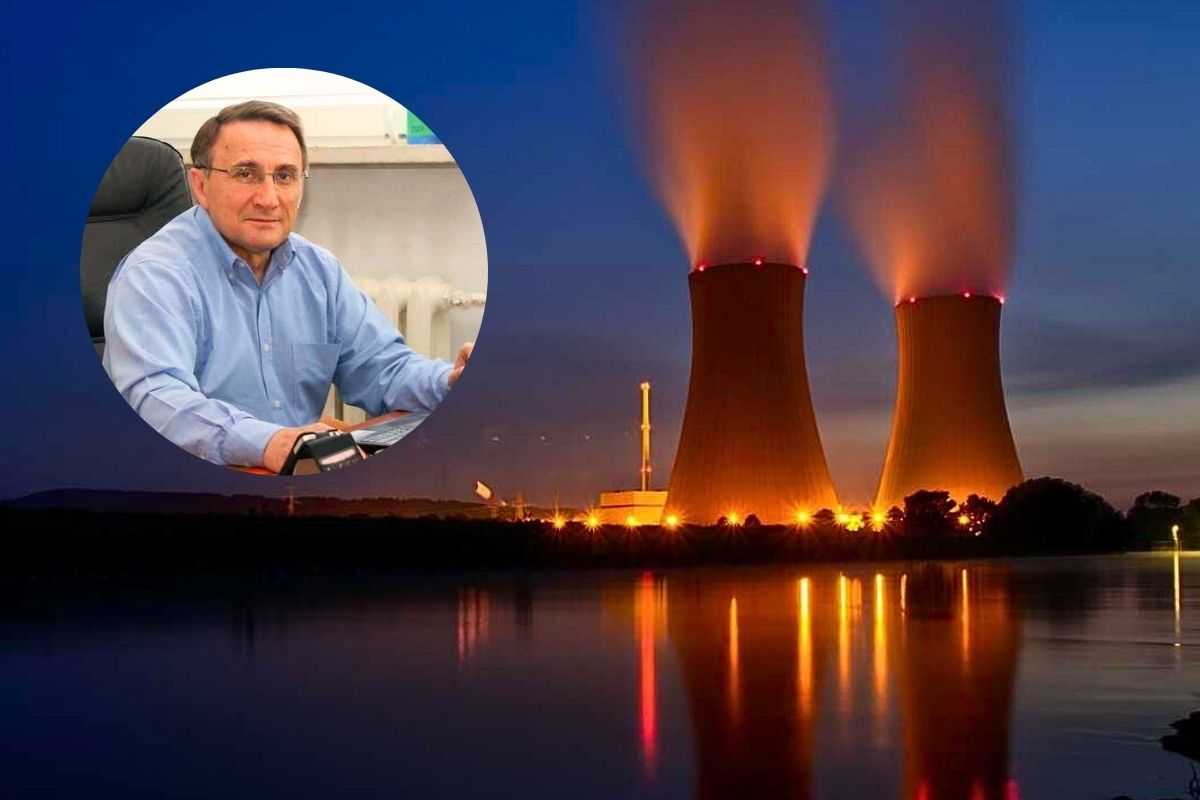
Creating an artificial Sun on Earth may sound like science fiction, but scientists are getting closer to this goal. Dr. Andrzej Gałkowski, a prominent Polish physicist, explains in an interview with Piotr Włoczyki how fusion works and why its development takes so long. The international ITER project has a chance to accelerate work on a commercial thermonuclear power plant. Will we see the first facility utilizing the energy of the stars in the coming decades?
Piotr Włoczyki: In terms of naming, it might seem that there isn’t a huge difference between a nuclear power plant and a thermonuclear power plant. What does it look like from a physics perspective?
Dr. Andrzej Gałkowski: The difference is fundamental. Physics knows no other technology with greater potential for providing energy. In the Institute of Plasma Physics and Laser Microfusion, which I headed for years, there is a very telling poster. It features a graphic showing how much fuel must be supplied to a conventional power plant to obtain the same amount of electricity as in a thermonuclear power plant. On one side, we have entire freight trains; on the other, just a few kilograms.
Contrary to appearances, this is not simply a modification of the nuclear power plant we have known for decades. The common denominator is nuclear energy, but the principle of operation is completely different.
The difference is also visible in nuclear and thermonuclear weapons, also known as hydrogen weapons. The latter is, of course, far more powerful than the former. Commercial nuclear power plants were built just two decades after the first nuclear explosion, yet 70 years have passed since the first detonation of a thermonuclear bomb, and there are no signs that we will develop a thermonuclear power plant anytime soon. Why?
The basis for this unjustified optimism was the rapid progress in nuclear energy. It was naively estimated that while building a thermonuclear power plant would take a bit longer than developing a nuclear one, it would still happen fairly quickly—within the 20th century.
The very concept of a thermonuclear power plant has much in common with thermonuclear weapons. It is exactly the same process; the only difference is that with weapons, the goal is for this enormous energy to be released instantly to cause maximum destruction. There is no need to worry about maintaining plasma in equilibrium there.
During thermonuclear fusion, a reaction occurs in the plasma where two isotopes of hydrogen—deuterium and tritium—combine. The former is found in nature in such quantities that we can speak of virtually inexhaustible amounts (deuterium is available in water). Tritium, though not readily available in nature, can be produced from lithium, which is very common in the Earth’s crust. This is a huge advantage of this technology. Not only will fossil fuels run out in the not-too-distant future, but so will uranium!
In our conversation, two terms will appear: nuclear fusion (or synthesis) and plasma, sometimes called the fourth state of matter. Over 99% of the universe is in a plasma state, which is ionized gas. The energy source of all stars, including our Sun, is nuclear fusion. On Earth, however, it is exactly the opposite: plasma hardly occurs naturally, and the same applies to thermonuclear fusion. Therefore, research work is about triggering this phenomenon artificially.
Sometimes, in the context of thermonuclear power plants, people speak of an “artificial sun.”
Yes, because we want to recreate on Earth what happens in the Sun. Let me remind you that we are talking about temperatures in the range of hundreds of millions of degrees. On Earth, such temperatures do not occur naturally anywhere, not even in the core, so they must be produced artificially. This has already been achieved and is not that difficult. At the Institute I headed, we routinely produced such temperatures. The problem, however, is maintaining this process over a long period.
Every now and then, we hear in the media that another research center, most often in China, has broken a new record. However, they speak not of days or hours of operation, but of minutes. What is the biggest problem here?
There are two basic ways to obtain high temperatures in the range of hundreds of millions of degrees. The laser method is developed almost exclusively in one country—the USA—and in facilities whose primary purpose is military research.
The second method, implemented in tokamaks and stellarators, involves maintaining plasma using a magnetic field. Plasma, or ionized gas, can conduct electricity. This is key—if current can flow through plasma, it can interact with a magnetic field. But something at a hundred million degrees cannot be held in a physical container. Therefore, a kind of non-material “trap” is created using a magnetic field. To create a magnetic field, magnets are needed. Modern magnets in most tokamaks are made of copper. When they generate a magnetic field, they heat up, requiring the experiment to be stopped to prevent damage. This is where superconductors come to our aid—in certain materials, under certain conditions, flowing current does not generate heat, which is invaluable in the context of controlled thermonuclear fusion.
So, building a thermonuclear power plant requires breakthroughs in other fields as well.
Indeed. Thermonuclear technology is actually a whole spectrum of technologies. In the context of superconductors, we are talking about very low temperatures, just slightly above absolute zero. This involves another branch of technology: cryogenics. In one place, we have a full spectrum of temperatures: from extremely low to unbelievably high. Our readers can probably imagine how great a technological challenge this is.
How are Poles doing in this field?
For over 20 years, we have participated in the European nuclear fusion program. We conduct work there on European tokamak and stellarator devices. In Poland, unfortunately, we do not have such equipment because it is a staggering cost.
We are likely talking about billions of euros?
Yes. Creating a large device that contributes to our knowledge requires investments at the level of billions of euros. Now, only huge tokamaks are needed to perfect nuclear fusion technology. The international community has joined forces and has been constructing such a massive device in southern France for years.
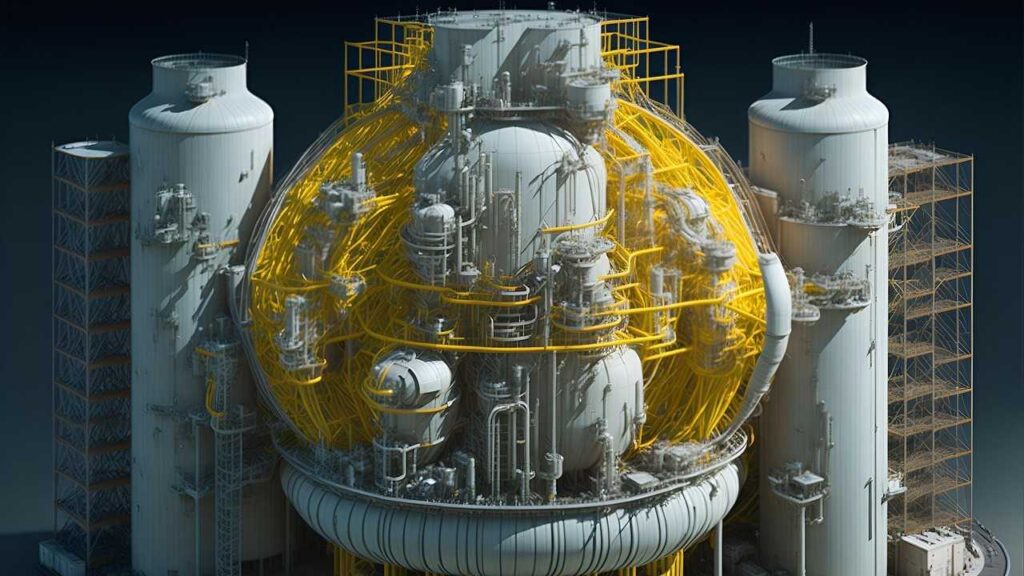
We are talking now about the so-called ITER (International Thermonuclear Experimental Reactor).
It is largely built already. When it is finally launched, the hope is that it will provide knowledge that allows us to think about a prototype for a thermonuclear power plant. As far as the physics of thermonuclear fusion is concerned, almost everything is already known; however, ITER can contribute a lot primarily in terms of technology.
What is your opinion on the timeframe? When will we hear about the first functioning thermonuclear power plant?
I will avoid a definitive answer, as there were specialists long ago who claimed that we would have thermonuclear power plants “in 20 years.” I will answer with the words of the Soviet scientist Lev Artsimovich, who specialized in this field. When asked about the time horizon, Artsimovich replied: “Nuclear fusion will be mastered exactly when it is needed by humanity.” And there is deep thought in that. Even if we mastered this process on an industrial scale today, such a power plant would not stand a chance on the market.
As long as we have fossil fuels and uranium, we will use existing power plants?
It seems so. The market situation is key, and it is known that old technologies are simply cheaper. This will not change in the coming decades unless the climate catastrophe accelerates and the world rejects fossil fuels en masse.
Who is currently the most advanced in thermonuclear fusion research?
The EU is in first place, or rather one of its communities—the Euratom Community. ITER is over 50% financed by Euratom. Actually, the EU could finance it independently, but years ago, for political reasons, it was decided that it would be good to expand cooperation to countries outside Europe, including Russia and China. Today, unfortunately, we have an unstable political situation here.
The USA is not very interested in nuclear fusion because, due to the shale revolution, Americans believe they have secured energy sources for a long time. China, South Korea, and Japan are different—the greatest determination is visible there. The Chinese and South Koreans are currently working on building their own projects similar to ITER.
Although thermonuclear fusion might sound scary to a layman, the huge advantage of this technology is safety.
Let’s start by explaining why nuclear power plants can pose a threat. We all know the concept of a “chain reaction”—one reaction induces several more, which must be kept under control. In the event of a nuclear reactor failure, a tragedy can occur if it stops being stable. In the case of thermonuclear fusion, we are not dealing with a chain reaction. As I said, it is very difficult for us to create the conditions for thermonuclear fusion to occur. Therefore, any deviation from the norm causes it to extinguish itself spontaneously.
So, any leak in a tokamak would be equivalent to… blowing out a candle?
Exactly. And in this respect, this technology is very safe. There is, however, a second aspect. Nuclear power plants produce tons of radioactive waste that must be stored for thousands of years. In the case of thermonuclear fusion, there is no waste resulting from the routine operation of the facility, as the product of the reaction is helium—a noble gas that makes children’s balloons float. The only problem would be the disposal of irradiated scrap after several decades of the operation of a thermonuclear power plant. Thus, we see only advantages and only one disadvantage: we are still waiting for that first plant!
* Andrzej Gałkowski, PhD, DSc – physicist and Director of the Institute of Plasma Physics and Laser Microfusion (IPPLM) in Warsaw. Associated with the Institute since 1976, he is a prominent expert in nuclear fusion. For many years, he has represented Poland in key European research structures, including advisory committees to the European Commission (CCE-FU) and the European Fusion Development Agreement (EFDA). Between 2004 and 2011, he coordinated the activities of the Euratom-IPPLM Association, managing Polish contributions to the global project of building an “artificial sun” – the ITER reactor.
Read the original article in Polish: „Sztuczne Słońce” na Ziemi. Ta technologia odmieni świat


Journalist with a degree in American studies, writing mainly about foreign policy and history. Author of numerous reports on international issues and interviews with leading experts in the field of economy, geopolitics and history. Since March 2023, editor-in-chief of the monthly "Historia Do Rzeczy".



Zmień tryb na ciemny