Humanism
In the Mountains of Madness: Science Confronts the Legend of the Halny
28 March 2026





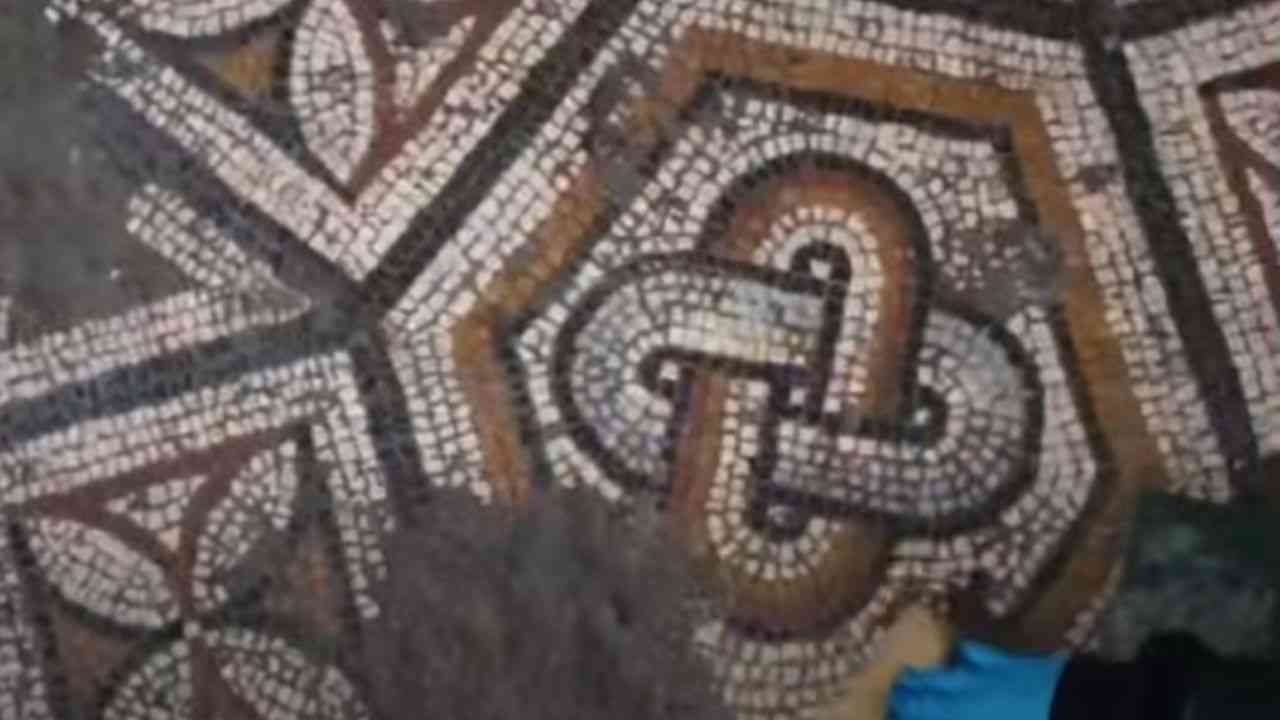
Beneath the bustling streets of modern İzmir, archaeologists have stumbled upon an unexpected treasure. A 1,500-year-old mosaic hall has emerged from the dust, hiding a powerful symbol designed to shield inhabitants from malevolent forces. This remarkable ancient find in Turkey offers a rare glimpse into the spiritual life of late antiquity through the mysterious "Solomon’s Knot."
No one anticipated this discovery. In the very heart of today’s İzmir, researchers found a space that shifts our perspective on the city’s history. They uncovered a mosaic hall—a room designed specifically to shield locals from evil. It served as a communal amulet, intended to ensure that the turbulent history of this prehistoric city would never repeat itself.
Smyrna, known today as İzmir, is a city with a rich and complex legacy. Founded by Greeks around the 11th century BCE, it passed through various hands: Persian, Hellenistic, Roman, and Byzantine, before the Ottoman and modern eras.
King Alyattes of Lydia once utterly destroyed the city, but Alexander the Great rebuilt it centuries later. From that point on, Smyrna flourished as a vital commercial and cultural hub. During Roman times, it was famous for its magnificent structures. It is no surprise then, that a hall adorned with intricate mosaics was constructed during this period. Today, that very room has become one of the most significant archaeological breakthroughs in recent years, all thanks to a hidden pattern with profound meaning.
The newly discovered floor is substantial, measuring approximately 3 by 4 meters. It consists of dodecagonal panels, a pattern that was quite popular during the late Roman period. However, the true sensation for archaeologists was what they found at the very center of the layout. This was no ordinary decoration. Researchers identified a Solomon’s Knot—not merely a pattern, but a form of spiritual protection for those who used the hall. This ancient find in Turkey highlights the deep-rooted beliefs of its former residents.
The Solomon’s Knot features two interlaced rings or bands woven together to resemble a horizontal cross or an infinity symbol—with no clear beginning or end. The history of this symbol is rich, weaving together cultural, religious, and even mathematical elements. While it served a purely decorative function in many places, experts are certain that in İzmir, its purpose was to protect against evil.
Crucially, archaeologists found small crosses surrounding the famous knot. Their presence was not accidental; they represent a symbolic transition from ancient beliefs to monotheism—in this case, Christianity.
According to researchers, this ancient find in Turkey dates back to a building constructed in late antiquity, between the 4th and 6th centuries CE. While the specific function of the building remains unknown, its location on a major street suggests it played an essential role in the city’s public life.
Most archaeological treasures wait thousands of years to be rediscovered. This time, the story was different. The mosaic hall remained in use between antiquity and the modern era—specifically in the 19th century, which is an extreme rarity.
Furthermore, new structures—a hospital and a residence—were built directly on top of it. Traces of construction materials indicate an intentional sequence: the ancient floor was first uncovered and secured, then integrated as a functional part of the new construction. This was no accident; it was a deliberate preservation of the past.
This isn’t the first time such a space has come to light. Seventy years ago, archaeologists encountered another hall—larger and even more spectacular. Consequently, this latest discovery is simply referred to as the “Mosaic Hall.”
These recent efforts clearly show that İzmir still hides many secrets just a few meters underground. Every new piece of evidence, like this ancient find in Turkey, enriches the historical heritage of all humanity.
Read this article in Polish: Magiczna mozaika odkryta w Turcji. Chroniła mieszkańców przed złem


A graduate of journalism and social communication at the University of Rzeszów. She has been working in the media since 2019. She has collaborated with newsrooms and copywriting agencies. She has a strong background in psychology, especially cognitive psychology. She is also interested in social issues. She specializes in scientific discoveries and research that have a direct impact on human life.



Zmień tryb na ciemny