Truth & Goodness
Betting on the Apocalypse: Can We Put a Price Tag on Tragedy?
12 March 2026





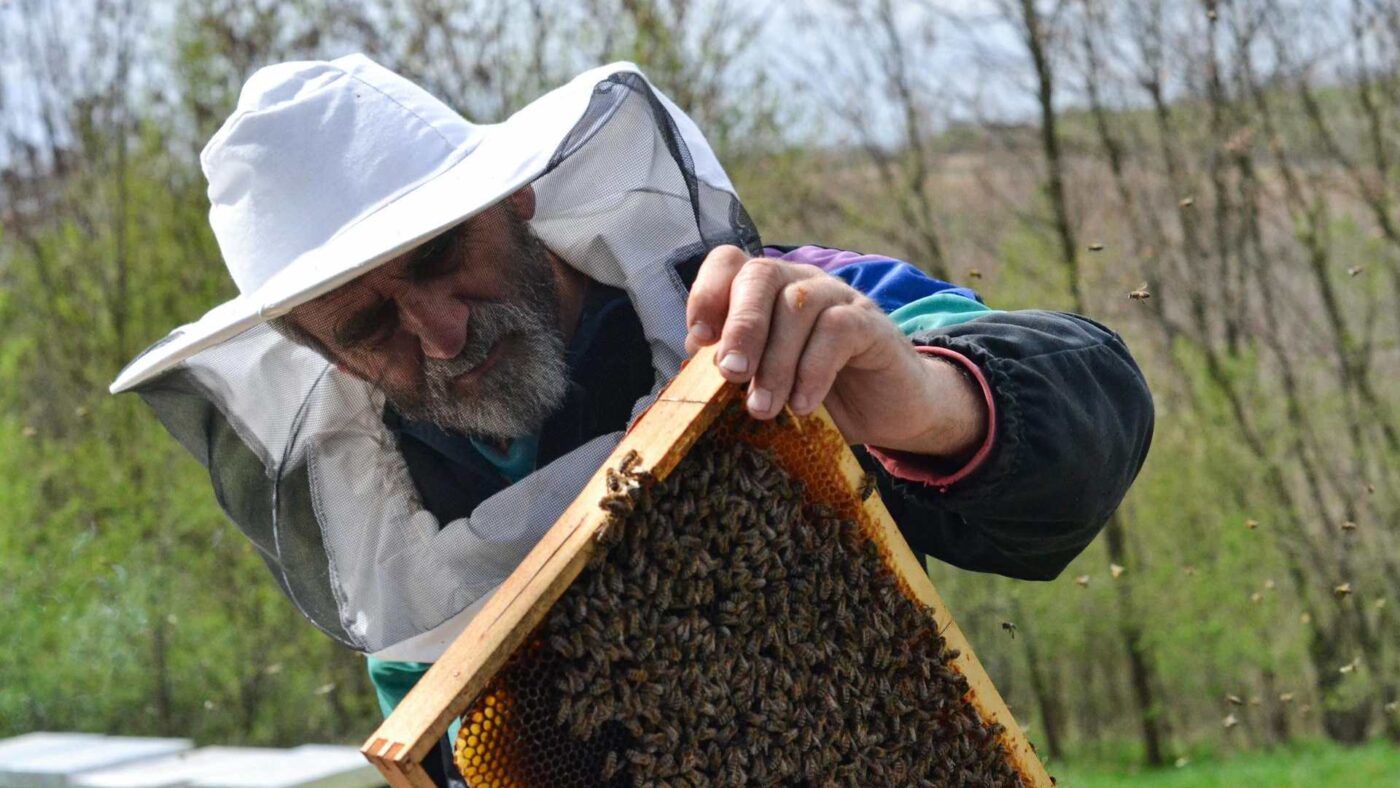
Bees, like other insects, care nothing for the boundaries humans set—including those that exist only in our minds. If we abandon the image of bees solely as honey-producing creatures, we suddenly find their traces almost everywhere. From artificial intelligence and military strategy to contemporary philosophy, the steady hum of the swarm resonates through countless fields. The intersection of bees and modern technology reveals a hidden blueprint for our own digital existence.
Due to their remarkable abilities—pollinating plants and producing honey, wax, bee bread, and propolis—bees have accompanied Homo sapiens since the dawn of history. Consequently, we know a great deal about them today—at least compared to other insect species whose paths do not cross ours so often.
One could argue that new insights into the hive have repeatedly transcended the interests of mere beekeepers and entomologists. To put it more bluntly, news from the colony has often sparked controversial, subversive, or reality-altering ideas.
Consider the famous figure of Father Jan Dzierżoń (1811–1906). A Roman Catholic priest and beekeeper from Silesia, Dzierżoń announced the discovery of parthenogenesis in the animal kingdom in 1845 after years of research. His observations focused on the development of unfertilized eggs in a bee colony, which ultimately produce drones—the male bees. This mid-19th-century discovery caused a sensation, fundamentally changing biological thought. However, making his analysis public triggered a conflict with Church authorities, who condemned the “heretical” theory of virgin birth. The dispute only intensified over the years, eventually leading to the priest’s excommunication.
Today, nearly 80 years after Dzierżoń’s discovery, we understand pheromone communication, the waggle dance, and the vibroacoustic communication observed just a few years ago. We know that bees can recognize human faces, possess extraordinarily advanced navigational skills, and maintain individual and collective memories that influence their decisions. They map their surroundings, creating mental images of the landscape and vital routes, which they then transmit with pinpoint accuracy to other workers who replicate them. The list of such discoveries continues to grow as scientists peer deeper into the hive.
For the Belgian writer Maurice Maeterlinck (1862–1949), a Nobel laureate in literature, understanding the weight of what transpires within the cramped space of a hive is equivalent to achieving scientific and spiritual enlightenment. Yet without changing our way of thinking, we will fail to see what bees truly offer us.
The profane person to whom we show an observatory hive for the first time, experiences at first a great disappointment. We told him that this glass box was swarming with workers and throbbing with feverish life… instead, he perceives a shapeless heap of small, reddish creatures, somewhat resembling roasted coffee beans or dried raisins.
– Maeterlinck wrote in The Life of the Bee.
The consternation caused by the sight of tiny bodies tangling in the darkness of the hive stems from our habitual anthropomorphizing of bees. Assigning human traits to insects in a binary way leads to disappointment upon first contact with an actual swarm. This does not mean Maeterlinck’s list of bee attributes is false. Bees feel, self-organize, and communicate—but they do so in a way that eludes our human projections. Ultimately, our relationship with them goes far beyond using their help for pollination and honey.
Jussi Parikka, a Finnish media theorist, shows in his book Insects and Media how insights drawn from bees have shaped modern technology in unexpected ways. Since the 19th century, inventors have viewed nature as a “warehouse,” as Parikka notes. This perspective is even more relevant in today’s world, dominated by digital techniques that operate not linearly but relationally—much like a swarm—relying on distributed problem-solving.
Technology has less and less to do with stable matter and more and more with changeability and metamorphosis,
– the Finnish theorist argues.
The “spirit of the hive”—the mysterious, fluid self-organization of the swarm—is now being enclosed within computer hardware. This process creates so-called sentient algorithms. These algorithms, much like colonies of social insects or flocks of birds, have limited access to information about their surroundings. Consequently, they cannot rely solely on rigid patterns; instead, they must constantly develop variable, collective behaviors in relation to other elements and to the environment.
Modern models used to simulate the evacuation of large crowds rely on this transfer of bee behavior into the world of media and technology. Craig Reynolds’ “Boids”—objects that function according to algorithms reflecting the flocking behavior of birds—simulate crowd reactions in the entertainment industry. We see these animated non-human boids in Batman Returns, The Lord of the Rings trilogy, and other Hollywood productions. Similar “digital insects” appear not only in cinema but also in video games, bio-art, and traffic management systems.
Bee swarms also hold immense significance in the military sphere. As Lauren Wilcox argues, the defense industry effectively appropriates social insects. Drones—a term that literally refers to male bees—are shaping the face of modern warfare. They function on the contemporary battlefield by mimicking swarm behavior, which facilitates the autonomization and decentralization of various military operations.
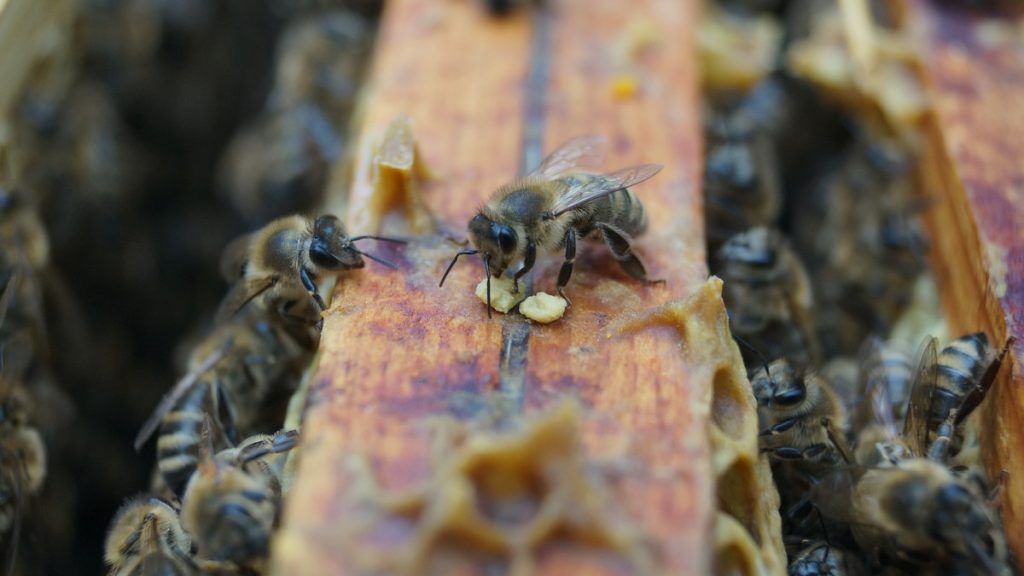
Insects—particularly social insects like bees—have become a vital intellectual figure in contemporary philosophy, especially within the currents of New Materialism and Posthumanism. As the influential philosopher Rosi Braidotti claims, they “pose the question of radical otherness,” forcing us to rethink the cognitive boundaries that we, as humans, cannot fully cross.
If humans gave birth to most ideas in Western political philosophy, insects provide the most important alternative to this way of thinking,
– Parikka argues.
The constantly “becoming” swarm shakes us out of our safe, stagnant assumptions. The bee carries the promise of radically new possibilities that change our perception of life—as in the case of Jan Dzierżoń’s discovery—or at least revolutionize media and hardware. Taken together, these developments reveal just how deeply bees and modern technology are intertwined.
Read this article in Polish: Pszczela monarchia. Jak owady nadają kształt wszystkiemu, co znamy


A literary scholar affiliated with the University of Silesia, where he conducts research in econarratology. He also occasionally works as a writer, screenwriter, and copywriter. Each day, he balances his time between his books and an urban apiary, where he tends to hundreds of thousands of bees.
Truth & Goodness
12 March 2026

Science
11 March 2026

Zmień tryb na ciemny