Humanism
When Goodness Becomes Procedure. How Generosity and Solidarity Fade
07 April 2026





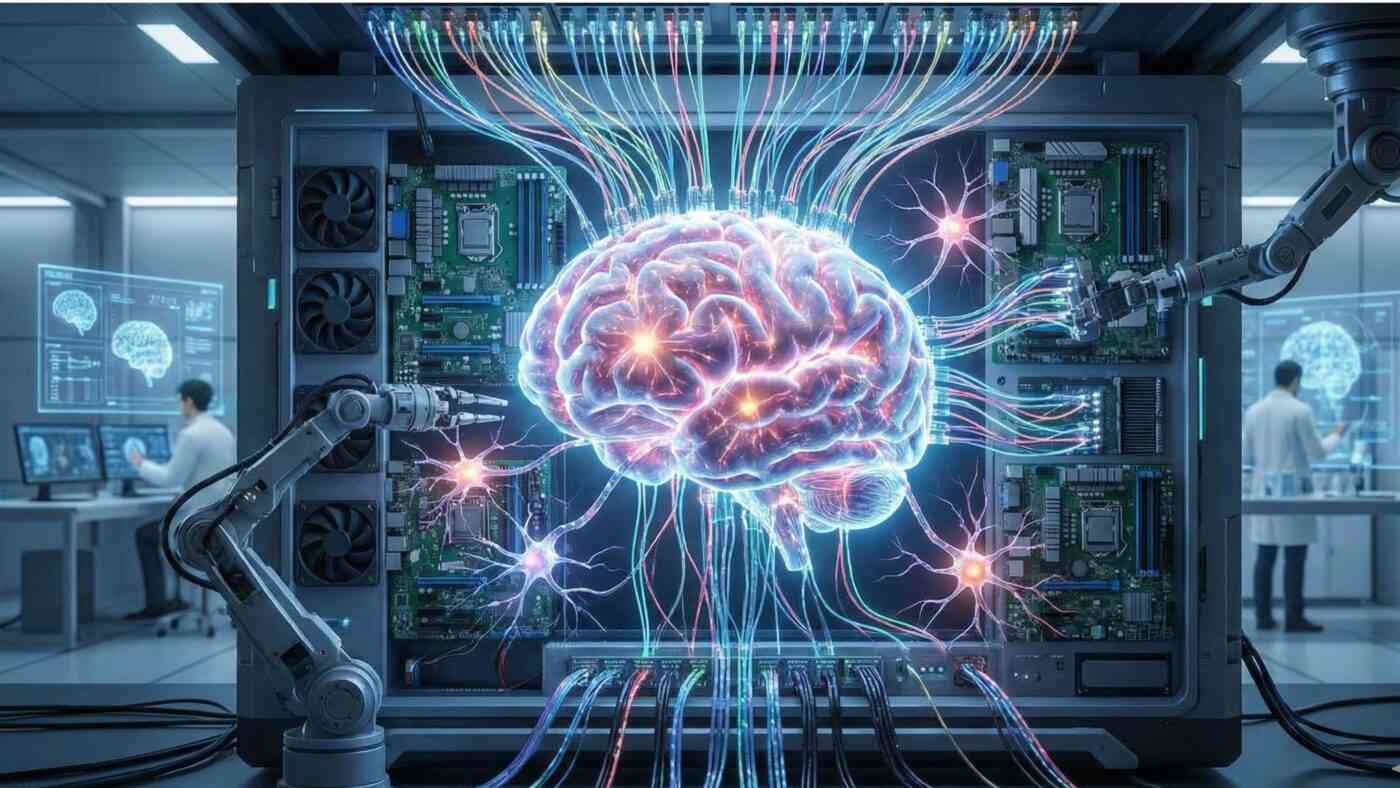
What recently felt like science fiction has officially entered the laboratory. A biocomputer utilizing human cells actually works: scientists now connect neurons – human brain cells grown in a lab – with electronics, achieving capabilities that traditional machines simply cannot mimic. This experiment fascinates the world, but it also sparks justified concerns.
Until recently, a machine using neurons sounded like a scene from a futuristic movie. Today, it stands as a reality. Researchers created an experimental system where living nerve cells collaborate with hardware, forming a completely new type of technology.
Although it remains in its early stages, experts already apply this extraordinary connection in practice. The possibilities reach further than one might imagine.
Some researchers use these systems to better understand our own minds. Biocomputers allow them to observe neuronal activity under controlled conditions, which may accelerate neurological and pharmacological research. Others focus purely on technological potential. They test what a new system offers where classic computing systems hit their limits.
This approach has fueled the imagination of computer scientists for years. They know perfectly well that the human brain performs incredibly complex operations with minimal energy consumption. A traditional computer requires far greater resources to achieve a similar result.
Connecting human brain cells with electronics could finally bring this biological efficiency into the digital world. Furthermore, early experiments prove that hybrid systems already solve specific tasks.
In August, scientists showcased a robot powered by human neurons. Its task involved recognizing Braille, and it handled the challenge with surprising efficiency. When the system utilized three types of human brain cells, the reading accuracy reached 83 percent. Remarkably, the entire setup operated remotely via the internet. During the experiment, the robot stayed in the UK, while the lab-grown cells worked in Switzerland.
This is only the beginning. A few years ago, another team used a biocomputer to learn a simple video game, proving that these systems adapt and learn.
Today, scientists see potential for this technology in pharmacy, advanced computing, and even predicting oil spills in hard-to-reach areas like the Amazon jungle. However, alongside these new possibilities, a serious gap emerges—a weakness that some experts believe receives too little attention.
The fusion of computers and human tissue remains both a breakthrough and a controversy. The scientific community lacks consensus here. According to the journal Nature, some researchers view biocomputers as a technology that could eventually rival or even surpass artificial intelligence and quantum computers. Others approach these forecasts with great caution.
Some scientists fear that these processors couldfeel pain or suffering. This raises moral questions: is using human cells for calculations a form of exploitation? Other issues persist: biocomputers remain vulnerable to infections. Lab-grown neurons can suffer contamination from bacteria, fungi, or viruses, making them unstable compared to silicon chips.
Finally, some experts emphasize that current organoids remain far from a real brain. They resemble fetal brains, and their computing power stays basic, failing to scale as well as silicon-based AI. Scientists quoted by STAT News suggest that we urgently need ethical discussions before this technology becomes mainstream.
“I worry that if these studies get too much attention and are presented in an exaggerated way, the reaction won’t be: ‘We need to look at this more closely,’ but rather: ‘We need to stop it altogether,'”
– said Madeline Lancaster, a developmental biologist at the University of Cambridge, quoted by Nature.
A computer made of human cells represents a future happening right now. Responsibly developed biocomputing technology could bring a real breakthrough—from medicine and brain research to environmental protection.
At the same time, the growing capabilities of these systems raise questions about oversight and control. When access to biocomputers depends mainly on financial resources, their use could easily escape existing regulations. This lack of transparency leads some scientists to speak today not only of a great opportunity but also of a potential threat. Therefore, a computer made of human cells remains one of the most discussed topics in modern science.
Read this article in Polish: Ludzki mózg połączony z maszyną. Co może pójść nie tak?


A graduate of journalism and social communication at the University of Rzeszów. She has been working in the media since 2019. She has collaborated with newsrooms and copywriting agencies. She has a strong background in psychology, especially cognitive psychology. She is also interested in social issues. She specializes in scientific discoveries and research that have a direct impact on human life.



Zmień tryb na ciemny