Education
What Singapore and Estonia Teach About Education Reform
21 March 2026





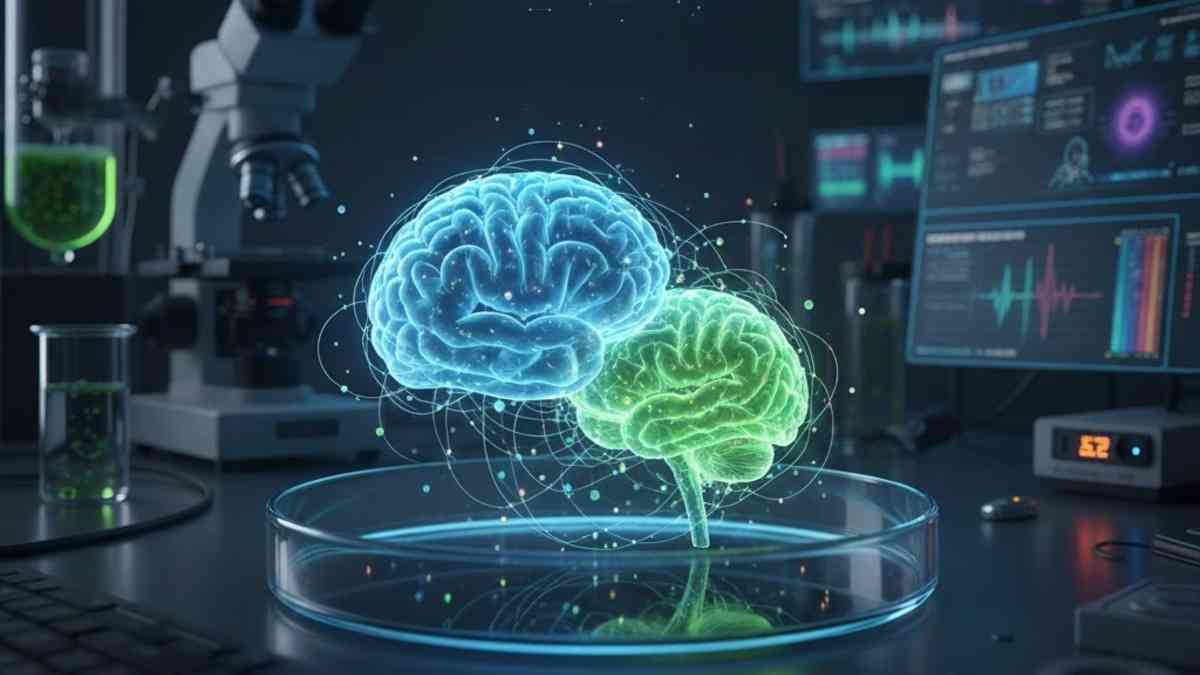
Where and how do thoughts originate? Researchers at Nagoya University have found the answer in the laboratory. By creating a living brain in a dish circuit, they discovered that the thalamus—the brain’s deep-seated relay station—acts as the true architect of higher mental functions.
Japanese scientists have grown the first functional connection between two critical regions of the human brain. This breakthrough, achieved by developing an advanced brain in a dish model, allowed them to observe in real-time how one region—the thalamus—acts as a conductor, organizing the maturation of another: the cerebral cortex. Nagoya University announced the breakthrough, citing details from the study published in the Proceedings of the National Academy of Sciences (PNAS).
While science long viewed the thalamus as a simple “relay station” for sensory signals, this latest research reveals a far more fundamental and active role. It serves as the master builder of higher mental functions.
Directly studying the development of the human brain presents immense ethical and technical challenges. To bypass these hurdles, Professor Fumitaka Osakada’s team at Nagoya University utilized advanced organoid and assembloid techniques.
The researchers first separately grew two 3D tissue models from human induced pluripotent stem cells (iPS)—a cortical organoid and a thalamic organoid. They then fused them to create an assembloid: an integrated neural circuit that began to live a life of its own. As the authors explained in their press release, they combined these regions to observe how they interact during development.
This interaction is vital because the cerebral cortex is the seat of our highest functions: thinking, language, and consciousness. It consists of many specialized neuron types that must form precise connections. Disruptions in these circuits often lie at the heart of neurological and psychiatric conditions, such as autism spectrum disorder.
The experiment yielded groundbreaking observations. Just 14 days after the fusion, nerve fibers (axons) from the thalamic organoid began actively growing toward the cortex, while cortical neurons sent their own projections back toward the thalamus. These functional synaptic connections faithfully mimicked real brain architecture.
The key discovery came from genetic analysis. The cortex connected to the thalamus showed signs of significantly greater maturity than a cortex developing in isolation. This provides the first direct evidence that communication with the thalamus is an essential catalyst for the maturation of the human cerebral cortex.
Furthermore, electrical activity in the brain in a dish assembloid spread in characteristic wave patterns from the thalamus to the cortex. Scientists observed that these signals synchronized the activity of only specific types of cortical neurons—those that, in turn, send feedback to the thalamus. This indicates a precise, dialogic mechanism: the thalamus does not bombard the cortex with random impulses, but selectively “trains” and organizes its networks. By doing so, it helps form the coherent circuits that serve as the physical foundation for thought and consciousness.
We have made significant progress in a constructivist approach to understanding the human brain by reconstructing it. We believe these findings will help accelerate the search for mechanisms underlying neurological and psychiatric disorders and the development of new therapies.
– said Professor Osakada in the Nagoya University statement.
The creation of a functional human thalamocortical circuit opens a new chapter in neuroscience. These assembloids provide a powerful platform to study how thoughts, emotions, and perceptions are born in the human brain—and what happens when this process fails. It also offers a chance to test potential drugs in an environment that closely resembles the human brain before they ever reach a patient.
Read this article in Polish: Eksperyment pokazał jak powstają myśli. Mózg w naczyniu

A graduate of Journalism and Social Communication at the University of Warsaw (UW), specializing in culture, literature, and education. Professionally, they work with words: reading, writing, translating, and editing. Occasionally, they also speak publicly. Personally, they are a family man/woman (head of the family). They have professional experience working in media, public administration, PR, and communication, where their focus included educational and cultural projects. In their free time, they enjoy good literature and loud music (strong sounds).


Zmień tryb na ciemny