Humanism
Solitude Is Not a Curse: The Danger of Pathologizing Being Alone
29 March 2026





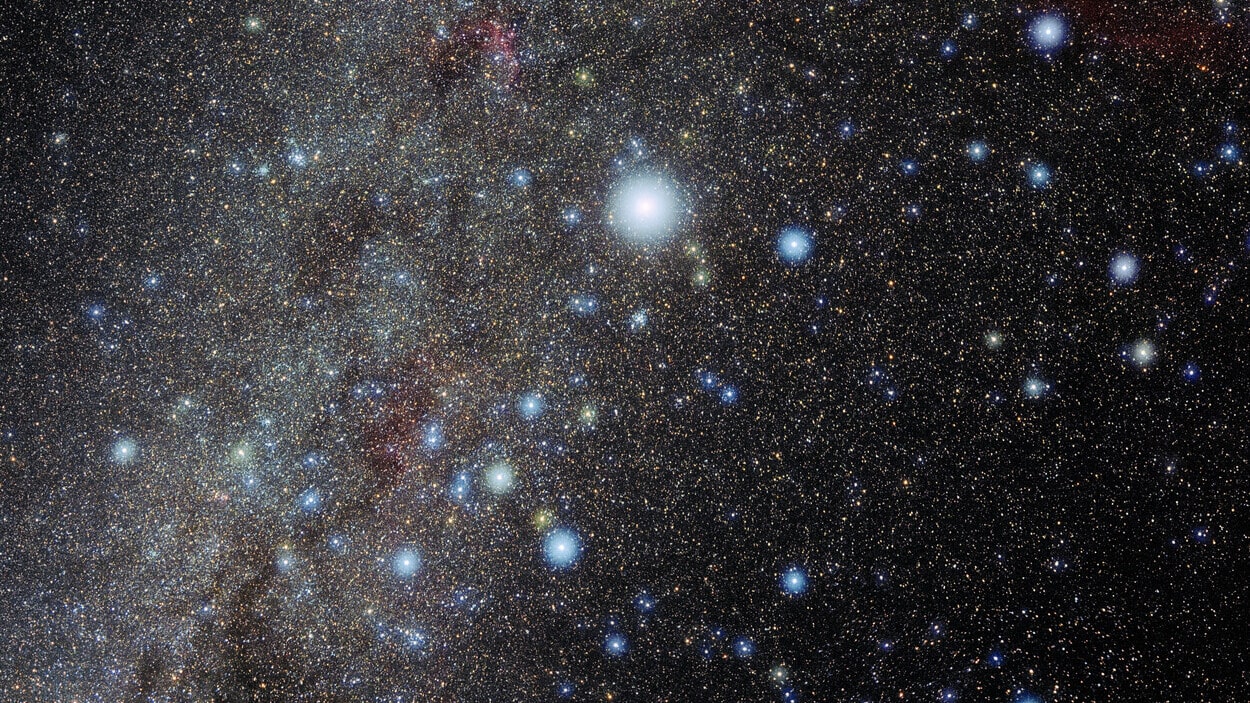
Two incredibly bright stars, which now form part of the Canis Major constellation, narrowly missed Earth millions of years ago, leaving behind a cosmic trace that still protects us. Now, scientists have discovered how their ancient radiation affects our space and what could happen when this protective shield begins to disappear.
4.5 million years ago, two stars narrowly missed Earth—passing just 32 light-years away. Today, they are hundreds of light-years further and form the Canis Major constellation. Scientists have just discovered that their flyby had extraordinary consequences.
If these two stars were above us today, their combined glow would effortlessly replace the lighting of a large stadium.
“These two stars would have been four to six times brighter than today’s Sirius, the brightest star in our current night sky,” said Michael Shull, an astrophysicist at the University of Colorado, quoted by Space.com.
However, their brilliance is only the prelude to a larger mystery hidden in the interstellar space surrounding us.
The Solar System drifts through a massive void known as the Local Bubble. Yet, at its center lies something unique—a small “island” of gas, or the local interstellar clouds. One of the greatest cosmic enigmas hides precisely here.
Although nothing nearby should be emitting strong radiation, up to 20 percent of the hydrogen and 40 percent of the helium there is electrically charged. Therefore, where did the energy come from that so intensely “heated up” this gas?
To unravel the mystery, a team of scientists, including those from the University of North Carolina and the University of Colorado in the USA, reconstructed the history of our cosmic neighborhood over the last few million years. For this purpose, researchers created a simulation that included the Sun’s movement, the stars’ positions, and the matter drifting between them.
It turned out that several powerful sources influenced the ionization level. These include:
But only the last two puzzle pieces explained the mystery.
The focus is on two B-type stars: Epsilon Canis Majoris and Beta Canis Majoris. These were the stars brighter than Sirius that skimmed Earth millions of years ago at a distance of only 32 light-years. They are extremely hot and emit enormous amounts of high-energy radiation. Scientists believe that during this flyby, they might have literally “scorched” the local gas clouds—and we still see the traces of this ionization today.
In The Astrophysical Journal, the researchers compare this effect to graffiti—the stars are gone, but their energetic imprint endures. Eventually, the ionization will start to fade, and the gas will return to its normal state.
However, this is just the beginning of what scientists discovered next.
Today, our planet is in an exceptionally favorable location—the surrounding local gas clouds act as a natural shield. This protective “blanket” dampens some radiation and particles that could otherwise affect Earth’s atmosphere, magnetosphere, and even climate.
The problem is that this shield will not last forever. According to calculations, in less than 2,000 years, the Sun will leave this safe zone and enter a much harsher region of interstellar space. What does this mean for us?
When we leave the safe zone, Earth may be more exposed to radiation and a changing flux of particles in the heliosphere. Consequences that we do not yet know about may also appear. This is a reminder that the Solar System does not stand still—it travels through the galaxy and passes objects whose influence can linger for millions of years.
Read this article in Polish: Dwie gwiazdy minęły Ziemię o włos. Odkryto tajemnicę Wielkiego Psa


A graduate of journalism and social communication at the University of Rzeszów. She has been working in the media since 2019. She has collaborated with newsrooms and copywriting agencies. She has a strong background in psychology, especially cognitive psychology. She is also interested in social issues. She specializes in scientific discoveries and research that have a direct impact on human life.



Zmień tryb na ciemny