Truth & Goodness
The Polar Silk Road: Can We Outsmart Geography?
26 March 2026





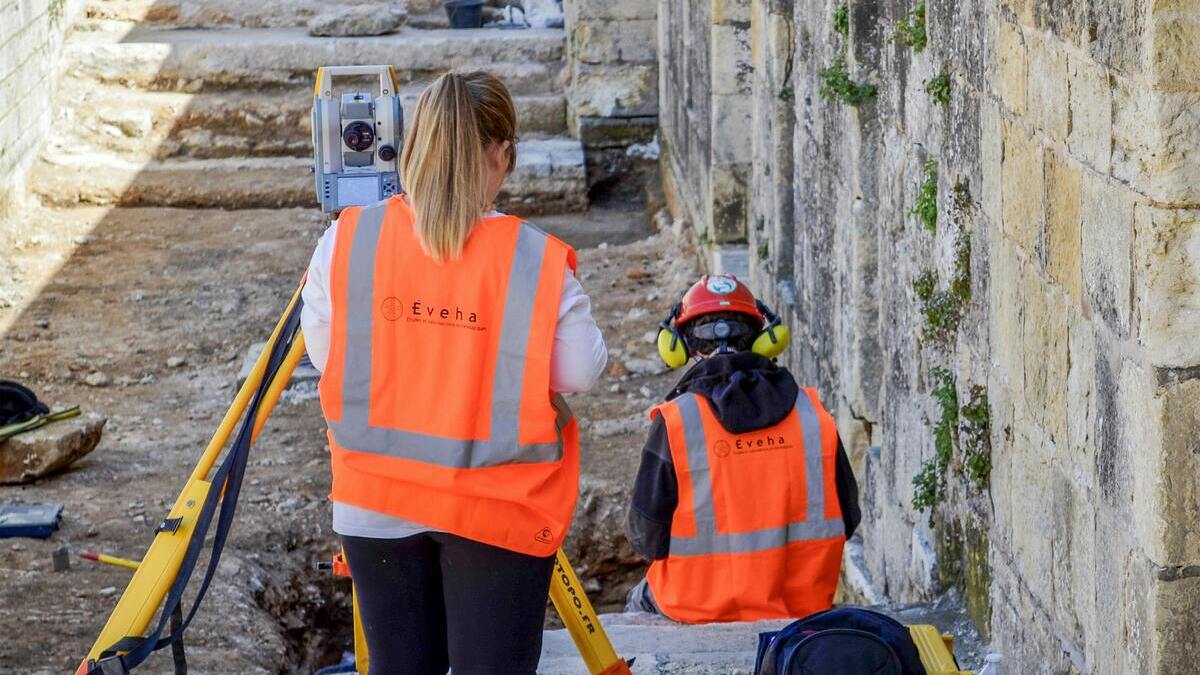
In the ruins of Roman Heraclea Sintica, archaeologists discovered remains that challenge the established view of antiquity. Among the disaster victims was an individual with severe congenital defects who—contrary to popular stereotypes—was not abandoned. This finding forces researchers to re-examine the fate of the ancient sick disabled in the Greco-Roman world.
The ancient sick disabled and infirm were not always cast aside, even during times of crisis. Nevertheless, a harmful stereotype about the ruthless treatment of people with disabilities in antiquity remains deeply rooted in the collective social consciousness. Historically, this myth was used to justify cruel eugenic practices. However, the latest archaeological findings compel us to radically change our perspective. They reveal a world full of complex attitudes, where human care and solidarity were clearly present.
One of the most compelling pieces of evidence changing our understanding of the past comes from research conducted at the Roman city of Heraclea Sintica, located in modern-day Bulgaria. As reported by National Geographic, archaeologists there found tangible proof that the community did not abandon its weaker members in their time of need.
As researchers Viktoria Russeva and Lyuba Manoilova detail in the Journal of Archaeological Science, the remains of six individuals were discovered in a cistern that had served as a refuge for victims of a 4th-century AD earthquake. This spot became a kind of time capsule, freezing the dramatic moment of escape. Crucially, anthropological analysis revealed a significant detail: one of the young men suffered from a severe congenital malformation syndrome, most likely Apert syndrome.
The condition of this young man was congenital. Apert syndrome causes abnormal fusion of the skull bones, as well as characteristic deformities of the hands and feet. Therefore, in ancient realities, this person likely required constant care and support for daily activities. The key question scientists asked themselves was: Was he left to fend for himself in the face of the approaching catastrophe?
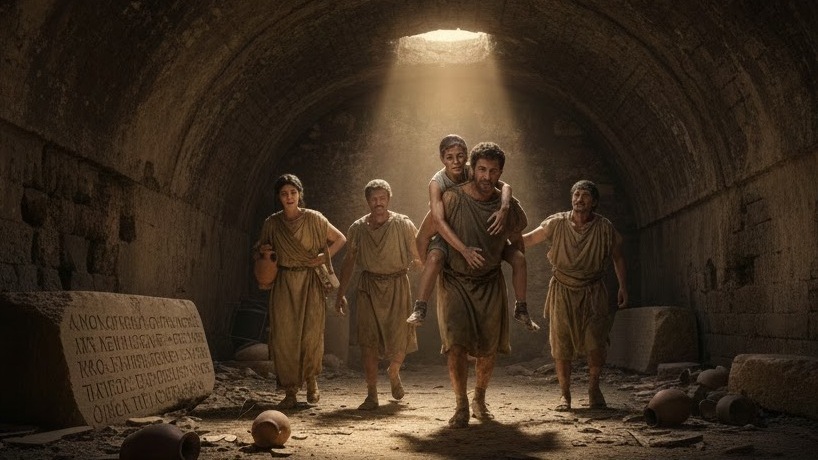
According to the Bulgarian scientists, cited by National Geographic, the fact that the man with the disability was found among the group of fleeing people clearly indicates community action.
“It is possible that one of the victims found in the cistern was accompanying and trying to help the disabled person survive the disaster,” the study authors write.
This discovery is fundamentally important. It is tangible, archaeological evidence that, at a critical moment of life or death, the ancients chose solidarity, not abandonment, towards the ancient sick disabled.
Equally telling are discoveries concerning the youngest members of ancient societies, which challenge the myth of the widespread abandonment of “imperfect” infants.
The National Geographic article references the work of archaeologist Debby Sneed, who analyzed infant burial sites in Ancient Greece. A particularly revealing example is the so-called “bone well” in the Athenian Agora. This was a site where children who died at a very early age, often before they were named, were buried. Among the hundreds of remains found there are the bones of an infant with a severe limb defect and another suffering from hydrocephalus.
Significantly, both children lived for several months, and their bones bear no signs of violence or neglect. On the contrary, the state of their remains indicates long-term and caring attention. The child suffering from hydrocephalus was systematically nursed during the period when their health deteriorated. These are not the burials of abandoned newborns. They are the resting places of children who, despite having visible and severe disabilities, were fed, protected, and cared for by their families until natural death.
Summarizing these findings, National Geographic points to the necessity of moving away from a black-and-white perception of the past. Although the practice of abandoning children and newborns did exist in the ancient world, the reasons for it were numerous and complex. Crucially, these decisions rarely rested solely on the child’s physical “imperfection.” Rather, they resulted from economic, social, or demographic pressures.
The discoveries from Bulgaria and Greece coalesce into a new, more complex narrative about antiquity. They reveal a world in which—alongside cruelty and difficult choices—there was room for nurturing, compassion, and responsibility for those who needed support. The bones discovered in Heraclea Sintica are not just a testament to an ancient tragedy. Above all, they are an enduring symbol of humanity’s readiness to provide aid, even at the highest risk. This serves as a reminder that even in distant eras, the human heart was capable of beating in rhythm with solidarity and care for the ancient sick disabled.
Read this article in Polish: Mit o starożytnych okazał się kłamstwem. Jak naprawdę traktowano chorych


A graduate of Journalism and Social Communication at the University of Warsaw (UW), specializing in culture, literature, and education. Professionally, they work with words: reading, writing, translating, and editing. Occasionally, they also speak publicly. Personally, they are a family man/woman (head of the family). They have professional experience working in media, public administration, PR, and communication, where their focus included educational and cultural projects. In their free time, they enjoy good literature and loud music (strong sounds).



Zmień tryb na ciemny