Culture
Old Books, Friendship and Children in the Online World
01 April 2026





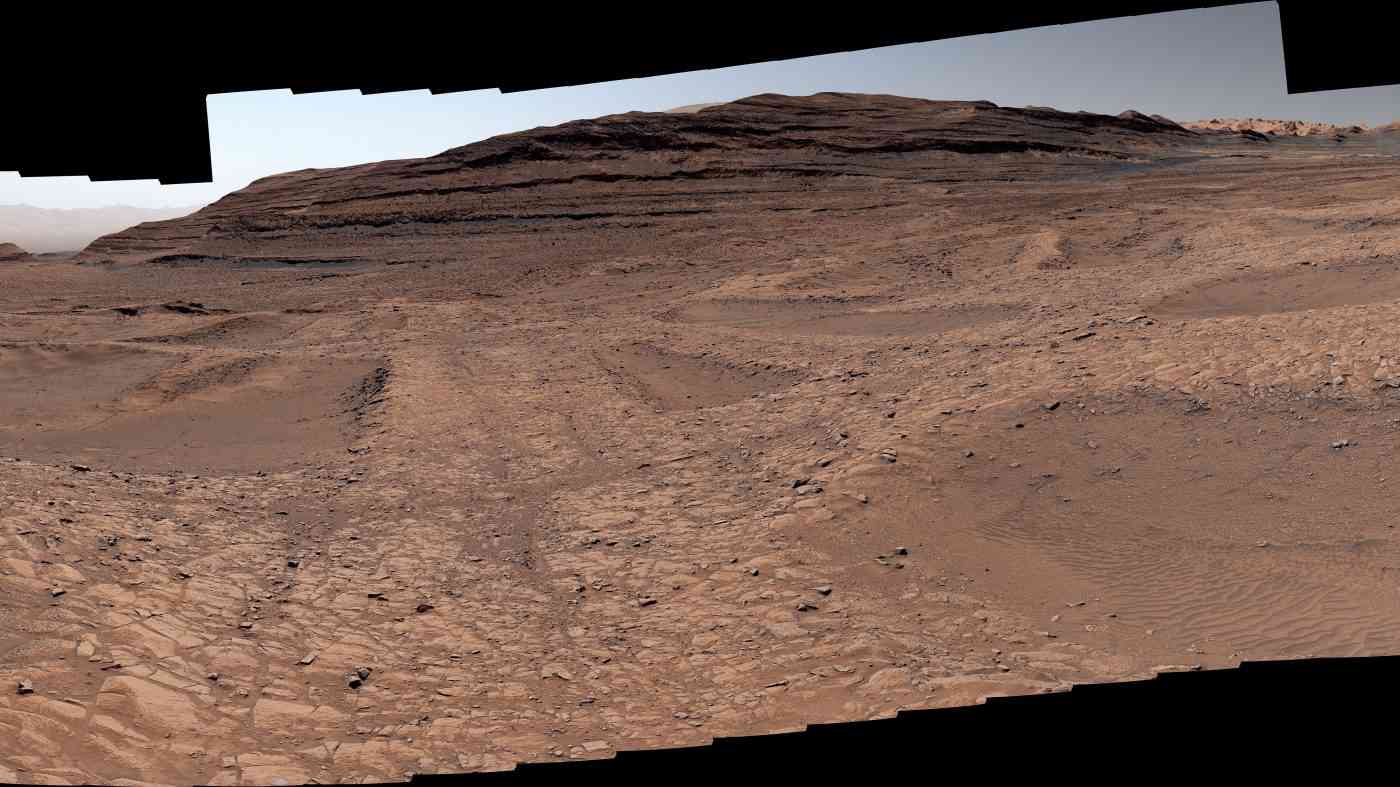
On the latest images beamed back from the Red Planet, gargantuan, stony cobwebs on Mars appear as if someone scattered hundreds of miniature arachnid eggs across them. While researchers emphasize that these are certainly not the work of Martian spiders, they also openly admit that they cannot fully explain the phenomenon.
New images from Mars, captured by the Curiosity rover, reveal geological structures known as “boxwork.” These formations consist of low ridges, roughly three to six feet high, separated by sandy hollows that resemble a spider’s web when viewed from orbit. These cobwebs on Mars stretch for miles across the slopes of Mount Sharp within Gale Crater, an area Curiosity has explored since 2012.
Latest analyses suggest that ancient groundwater flows created this effect. Mineral-saturated waters seeped through cracks in the bedrock, depositing minerals that eventually “stiffened” these sections of rock. Over billions of years, the wind eroded the surrounding, unreinforced material, leaving behind only the hardened mineral “threads” of the web.
Curiosity’s Mastcam captured key wide-angle shots of the formation on September 26, 2025, providing a panoramic view of the network of ridges and the voids between them. However, the most scientifically intriguing images arrived on August 21, 2025, when the rover closed in for a detailed look.
On the walls and within the recesses of these rocky ridges, small, irregular “egg-like” structures the size of a pea are visible. They resemble miniature spheres or clumps which, in close-up shots, evoke images of arachnid eggs. This impression became widespread after NASA published the photos in late February. The comparison felt almost inevitable, given that the objects lay within the strands of a massive Martian “cobweb.”
Scientists have noticed similar “clumps” elsewhere on Mars and previously linked them to the action of water. In this instance, however, the location of the nodules surprised the team.
By combining orbital imagery with Curiosity’s ground-level observations, researchers confirmed that the dark lines seen from space are indeed fractures—channels where groundwater once flowed. According to the dominant geological model, the most intense mineralization should occur within these cracks. Naturally, scientists expected to find the highest concentration of nodules there. Instead, Curiosity showed the opposite. The “eggs” cluster along the walls of the ridges and the hollows between them, rather than near the central fractures.
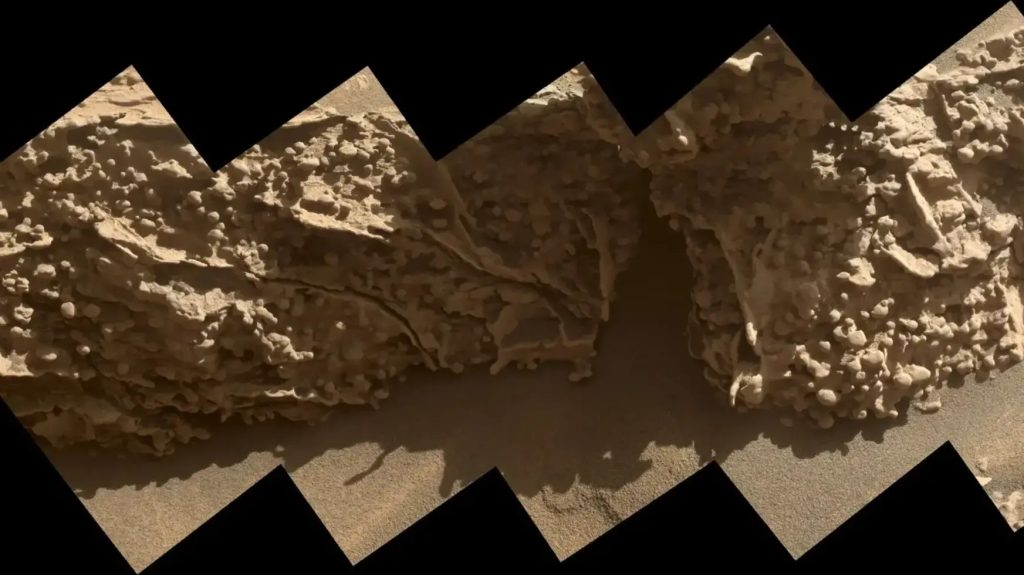
We can’t yet explain exactly why the nodules appear specifically there. Perhaps minerals cemented the ridges first, and later periods of groundwater left the nodules around them,
– says Tina Seeger of Rice University in Houston.
Experts also stress that while the structures look “eerily biological,” no evidence suggests they involve actual organisms or eggs. Today, the prevailing view attributes their creation to inorganic processes involving groundwater, brines, and the slow transformation of rock within Mars’s shifting climate.
According to researchers, the cobwebs on Mars and these egg-like nodules provide another trail of evidence for the long-term presence of water deep within the Martian crust. They demonstrate that water may have circulated through the rocks much longer than previous models suggested. Consequently, potential niches for microbes might have endured on the planet far longer before it transformed into a frigid, desiccated desert.
We will have to wait a while longer for a definitive answer regarding these “arachnid eggs” and their formation. In the coming months, Curiosity will continue to probe Martian rocks, analyzing them to the best of its ability and transmitting new images. However, a final resolution may require missions that return Martian samples to Earth. Only in terrestrial laboratories can we conduct the precise analyses needed to solve the mystery. Yet, this path may prove more complicated than it seems.
As previously reported by Holistic News, NASA might soon face a funding crisis for bringing Martian samples home. In January 2026, the U.S. Congress passed a budget bill that does not include funds for the Mars Sample Return program. Until a new plan emerges to retrieve these samples from the Red Planet, many questions will remain unanswered.
The Curiosity rover—a 2,000-pound, radioisotope-powered machine—landed in Gale Crater in August 2012. Its primary mission involves reconstructing the environmental history of Mars and determining if the planet could have once supported microbial life. To achieve this, it examines rocks and minerals, hunting for organic compounds and traces of ancient water.
The rover carries a suite of sophisticated instruments—from cameras and spectrometers to a drill and a miniature chemical lab—allowing it to study rocks inside and out. By March 2026, it had traveled over 22 miles and collected 42 samples.
Despite over a decade of labor in one of the most hostile environments known to man, Curiosity remains operational and continues to provide fresh data. Age, however, takes its toll. Engineers must carefully manage power from the radioisotope generator, monitor aging wheels and instruments, and seize every opportunity to study intriguing formations—like the cobwebs on Mars. Every new image and every drill site represents a compromise between scientific curiosity and the caution required to ensure the rover works for years to come.
Read this article in Polish: „Pajęczyny” i dziwne „jaja” na Marsie. Naukowcy rozkładają ręce


A Journalism and Social Communication graduate with 15 years of experience in the media industry. He has worked for titles such as "Dziennik Łódzki," "Super Express," and "Eska" radio. In parallel, he has collaborated with advertising agencies and worked as a film translator. A passionate fan of good cinema, fantasy literature, and sports. He credits his physical and mental well-being to his Samoyed, Jaskier.



Zmień tryb na ciemny