Humanism
In the Mountains of Madness: Science Confronts the Legend of the Halny
28 March 2026





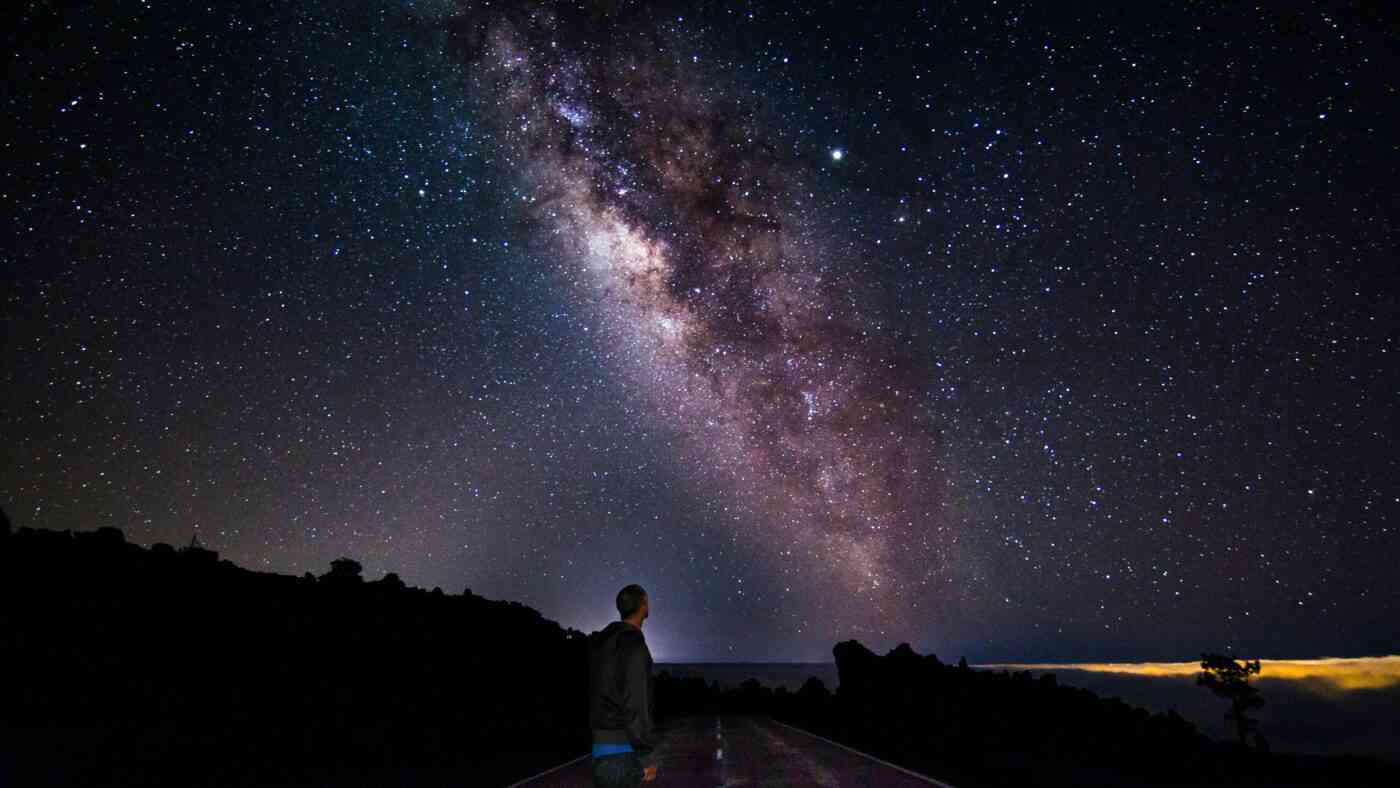
For decades, astronomers have puzzled over why neighboring galaxies behave as if they barely feel the tug of the Milky Way and Andromeda. The latest discovery suggests that the answer lies in a different distribution of dark matter gravity than previously assumed in the region surrounding our home galaxy.
For several decades, one specific mystery has tormented astronomers: why do nearby galaxies act as though they are nearly immune to the gravitational pull of the Milky Way and Andromeda? On one hand, calculations indicated that the Local Group—the collection of dozens of galaxies including our own—possesses immense mass. It should be enough to exert a powerful pull on everything in its vicinity.
On the other hand, neighboring galaxies behave as if they hardly notice this mass at all. In simplified models, such a massive concentration should cause everything around it to rush toward us at high speeds. Instead, the velocities of our cosmic neighbors remain surprisingly low.
New research published in January 2026 in Nature Astronomy shows that the problem did not lie within the laws of physics. Rather, it was a flaw in how we imagined the distribution of dark matter gravity around our galaxy.
Researchers from the University of Groningen, alongside colleagues from Germany, France, and Sweden, reconstructed the mass distribution in our cosmic backyard. They utilized data on the positions and velocities of dozens of nearby galaxies. It turned out that the vast majority of this mass consists of dark matter—the invisible substance that holds galaxies together. Crucially, it is not distributed evenly like a spherical “bubble” around the Local Group. Instead, it takes the form of a vast, flattened structure stretching across approximately 30 million light-years.
Within this plane, the density of matter is significantly higher than in the surrounding “voids,” which are exceptionally sparse in galaxies. Notably, all known nearby galaxies—including the Milky Way and Andromeda—lie within this plane. Furthermore, its orientation aligns with the so-called supergalactic plane, which astronomers had previously noted by observing only bright galaxies.
To reach these conclusions, researchers created hundreds of “doppelgängers” of our local neighborhood. These are simulations of various possible configurations of matter that could lead to the current arrangement of the Milky Way, Andromeda, and their neighbors. The results showed that only simulations where dark matter forms a sheet-like structure can simultaneously account for the mass of the Local Group and the “calm” movements of neighboring galaxies.
We are investigating all possible local configurations of the early universe that could eventually lead to the formation of the Local Group. It is wonderful that we now have a model that is consistent with the current cosmological model on one hand, and with the dynamics of our local environment on the other,
– emphasizes study co-author Ewoud Wempe.
Until now, it was believed that if the Milky Way and Andromeda were highly massive and sat within a roughly spherical “bubble” of dark matter, their gravity should heavily disrupt the movement of nearby galaxies.
The new model rests on the assumption that the massive Local Group is part of a much larger, flattened structure. In the plane of this sheet, mass is distributed relatively evenly. Galaxies within this structure feel not only the attraction of the Milky Way and Andromeda but also the “tug” of immense amounts of matter spread across the entire plane. Consequently, the additional influence of the Local Group on their motion is smaller than what the spherical bubble model suggested.
This discovery does more than solve an old puzzle; it inspires further exploration into dark matter gravity and may prove invaluable for future studies regarding the distribution of matter across the entire Universe.
Read this article in Polish: Coś ogromnego otacza Drogę Mleczną. I steruje ruchem galaktyk

A Journalism and Social Communication graduate with 15 years of experience in the media industry. He has worked for titles such as "Dziennik Łódzki," "Super Express," and "Eska" radio. In parallel, he has collaborated with advertising agencies and worked as a film translator. A passionate fan of good cinema, fantasy literature, and sports. He credits his physical and mental well-being to his Samoyed, Jaskier.


Zmień tryb na ciemny