Education
What Singapore and Estonia Teach About Education Reform
21 March 2026






The American operation in Caracas looked like a display of absolute control. Yet before Delta Force became a benchmark for modern special operations, its true beginnings lie in one of the most humiliating failures in U.S. military history. Understanding the Delta Force origins requires returning to the Iranian desert.
I could hardly believe it was happening. No one stopped me, searched me, or even glanced at my backpack. No permits, no ID checks, no basic questions like: “Who are you? What brings you here?” A friend of mine, a captain, simply walked me past the sentry post. Just like that, I was standing inside a major military base in the heart of Caracas.
My surprise only grew when I saw the “discipline” of the soldiers on duty. Men in uniforms drifted around the base, joking and laughing—it felt more like a khaki-colored fiesta than a cog in a high-functioning war machine. After touring the facility, my friend called a driver for a military vehicle. It was my last day in Venezuela, and I needed to get to Simón Bolívar International Airport to catch my flight back to Europe.
I felt deeply grateful for the captain’s concern. He wanted to ensure a foreign guest reached the terminal in one piece.
Caracas remains one of the most dangerous cities on Earth; anyone looking like a “gringo” is an easy target. Last year, The Economist ranked Venezuela’s capital as the worst city in the world to live in, “surpassing” even Kyiv and Damascus. This was the raw reality of the Caracas garrison during my last visit—Hugo Chávez had just passed away, and Nicolás Maduro was beginning his first term.
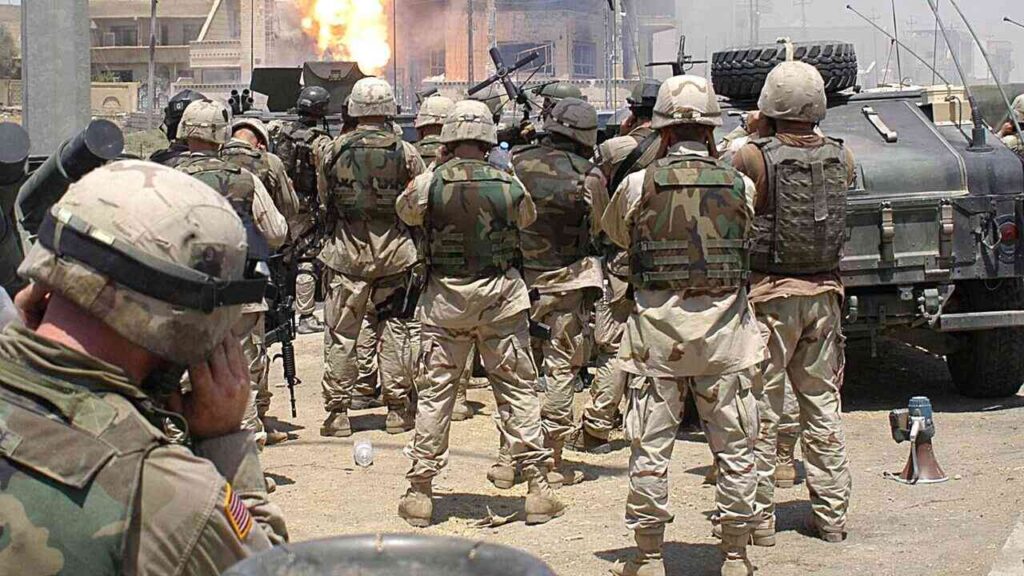
I remembered that visit vividly when news broke about American commandos storming central Caracas. They reportedly snatched Maduro and his wife right from their bedroom and flew them to a detention center in New York. While initial reports spoke of heavy casualties, official communications later confirmed that several dozen Cuban soldiers tasked with protecting the “presidential” couple were killed during the raid. Maduro had recently rigged an election he had clearly lost, and the U.S. moved in with surgical precision.
However, these weren’t Venezuelan soldiers; they were Cubans. It’s an open secret, even among the Chavista elite, that the corrupt, disorganized Venezuelan army is incapable of providing real protection. Instead of relying on his own failing military, Maduro turned to Cuban “Praetorians”—highly trained and equipped commandos sent by Havana to guard their ally in exchange for cheap fuel.
Maduro had every reason to feel safe. Although the U.S. had been massing forces near Venezuela since September—including a carrier strike group—the regime leader was hunkered down inside Fuerte Tiuna. This massive military complex in Caracas featured a specially adapted building with multi-level security and was surrounded by hundreds of Cuban bodyguards.
Furthermore, modern anti-aircraft systems purchased from Russia and China protected the entire area. But it was all an illusion. The Americans sent their best specialists to dismantle the Cuban defense: Delta Force. A unit famous for doing the undoable.
The entire raid lasted just 2 hours and 20 minutes. The U.S. President gave the “green light” last Friday just before 11:00 PM. Three hours later, Caracas residents were uploading videos of explosions rocking the capital and a “convoy” of helicopters moving like ghosts at low altitudes toward the city center.
“What they did in Caracas is absolute mastery. Delta Force is a legend among special forces worldwide. There have been situations where just a few soldiers from this unit successfully defended themselves against over a hundred enemies,”
– says Andrzej, an officer in the Polish Armed Forces who served in the GROM* unit (he remains on active duty and requested anonymity).
He adds:
“Delta is the elite of the elite, but beyond having incredibly effective soldiers, this unit operates its own helicopters and pilots trained for the most extreme conditions. Our own GROM was modeled after them; they also maintain their own specialized transport capabilities.”
What does “elite of the elite” actually mean in the context of the Delta Force origins? For starters, the unit recruits primarily from specialized US Army branches like the Green Berets or Rangers (Delta is an Army unit, unlike their rivals, the Navy SEALs).
Only the best soldiers with significant combat experience can even apply; typically, ten seasoned commandos compete for a single open spot. Interestingly, the US Army still does not officially acknowledge that the unit exists.
Delta Force has been at the center of America’s most high-profile missions, including the invasion of Panama (where Maduro arrived in the U.S. under similar circumstances to Panamanian dictator Manuel Noriega) and the Battle of Mogadishu, later immortalized in Black Hawk Down.
Eric L. Haney, a former Delta operator, describes the unit’s extreme training in his autobiography, Inside Delta Force. He recalls a task where he had to infiltrate an Air Force base to steal a specific component. To raise the stakes, the FBI was brought in to hunt for the intruders. In the end, as Haney describes, the Delta operators still came out on top.

“This looked incredibly spectacular, and the Caracas raid will surely go down as one of the best special operations in history, but Delta Force doesn’t operate in a vacuum,”
– says General Roman Polko, former commander of GROM.
“In real life, it’s not like the movies where a single James Bond handles everything. In Caracas, we saw how the Americans could dismantle an opponent, blind them, and bring them to their knees. The entire U.S. military-intelligence machine did a brilliant job here. The Russians tried something similar in Ukraine, but the gap between Russian and American forces is a canyon. The Americans just showed them how to conduct a high-finesse operation.”
General Polko points out that Delta’s current lethality is the result of bitter, historic lessons. In 1980, shortly after the unit’s formation, its soldiers were part of a disaster that humiliated the U.S. The mission aimed to rescue personnel from the American embassy in Tehran, which had been seized the previous year.
With American diplomats serving as propaganda tools for Ayatollah Khomeini’s regime, President Jimmy Carter finally turned to Delta Force, founded three years earlier by Colonel Charlie Beckwith. To understand the Delta Force origins, one must look at Beckwith’s vision: he spent years convincing the Pentagon that America needed a unit like the British SAS—capable of both precision strikes and complex hostage rescues.
One of the officers who helped Beckwith build the unit was Major Logan Fitch, who participated in the failed 1980 attempt, Operation Eagle Claw. I had the opportunity to speak with Major Fitch about this.
“We were officially formed in 1977, but spent two years finding, training, and equipping our men. We screened 10,000 to 15,000 personnel files. By October 1979, we had about ninety fully trained commandos.”
– major Fitch told me.
For the Tehran rescue, they practiced the assault on a full-scale replica of the embassy. Decades later, for the Caracas mission, Delta operators likely knew the layout of Maduro’s armored residence by heart before they even touched the ground.
However, once the commandos landed at a site called “Desert One” in the Iranian wilderness, several hundred miles southeast of Tehran, problems mounted. Technical failures sidelined two helicopters, and a third was deemed unfit for the mission. With only five of the planned eight aircraft available, the mission had to be aborted. As the team prepared to retreat, disaster struck.
“We felt crushed by the decision to abort,”
– Major Fitch recalled.
“While sitting in the Hercules waiting for takeoff, we still hoped we might return to ‘Desert One’ the following night. The Hercules is a very loud plane. Suddenly, I heard two explosions. I thought we were under attack. I grabbed my weapon and ran to help open the plane’s rear left door. Outside, it was already hell. We tried to lower the ramp, but it was already in flames. Finally, we opened the rear right door and started jumping out one by one. I ran about 50 yards away, still thinking we were under attack. Then I saw a helicopter smashed into our plane… That was the end of the rescue mission.”
The desert disaster gave America’s enemies cause to celebrate, but it also forced a total military overhaul. Major Fitch explained that the main issue was a “hodgepodge” of units.
“It was an ad hoc mission. The general in charge knew nothing about the units he was commanding,” Fitch said. “The Joint Chiefs wanted every branch of the military to have a piece of Eagle Claw so everyone could share the glory if it succeeded.”
It was a fatal mistake. The pilots weren’t a select group trained for such specialized flying. Since that fiasco, such a compromise is unthinkable. Part of the Delta Force origins story is how the unit secured its own dedicated aviation wing and pilots.
Following the “Desert One” tragedy, the U.S. established the Special Operations Command (SOCOM) to ensure seamless coordination. As the recent raid in Caracas proved, American elite forces have traveled a long, hard road from the burning wreckage in the Iranian desert to the surgical precision they display today.
* GROM (JW GROM) is Poland’s premier elite special missions unit. Formed in 1990 and modeled directly after the US Delta Force and British SAS, it specializes in counter-terrorism and hostage rescue. GROM has earned a fearsome international reputation through years of close cooperation with U.S. forces in Iraq and Afghanistan.
Read the original article: Zaczęło się od tragedii. Jak Delta Force stała się niepokonana


Journalist with a degree in American studies, writing mainly about foreign policy and history. Author of numerous reports on international issues and interviews with leading experts in the field of economy, geopolitics and history. Since March 2023, editor-in-chief of the monthly "Historia Do Rzeczy".


Zmień tryb na ciemny