Humanism
When Goodness Becomes Procedure. How Generosity and Solidarity Fade
07 April 2026





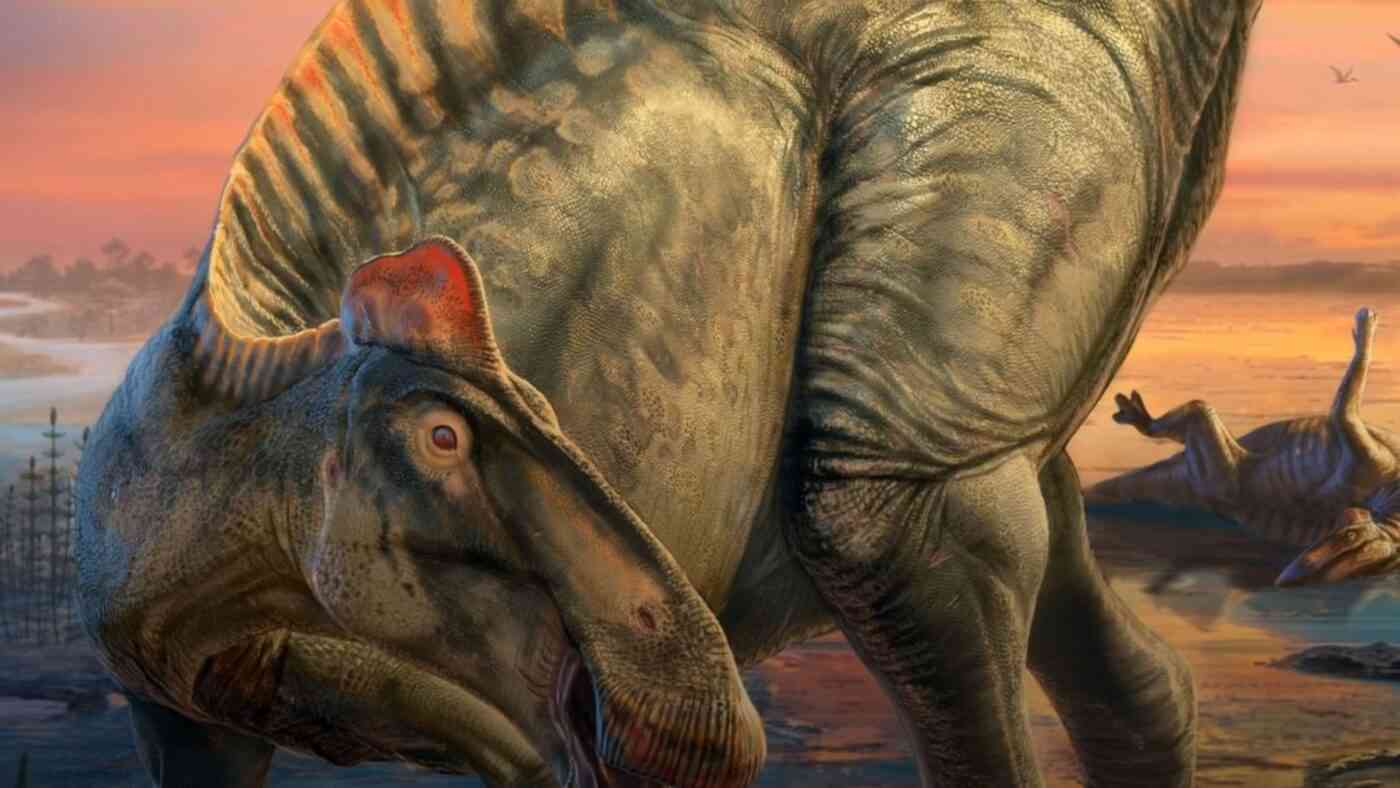
Dinosaurs with crests along their backs, delicate skin, and… hooves like horses. Thanks to modern research, scientists have finally seen dinosaurs with their full silhouettes, skin textures, and body details preserved. These remarkable dinosaur mummies found in the USA are rewriting everything we thought we knew about prehistoric life.
The latest findings on dinosaurs, published in the prestigious journal Science, have become a worldwide sensation. The research focuses on two Edmontosaurus mummies—one juvenile and one adult—discovered at a site in east-central Wyoming.
While researchers found these remains years ago, it wasn’t until the fall of 2025 that paleontologist Paul Sereno and his team released the results that shook the world of paleontology. But to understand the significance, we must look at how it all began.
This story started over a century ago. In 1908 and 1910, the legendary fossil hunter Charles H. Sternberg stumbled upon something extraordinary in the badlands of east-central Wyoming. He found the first known “mummies” of the duck-billed dinosaur Edmontosaurus annectens, featuring skin preserved in the form of clear impressions. The discovery quickly became a museum sensation.
The real turning point arrived at the start of the 21st century. In 2000 and 2001, paleontologist Paul Sereno of the University of Chicago returned to the same area with his students. Using archival data and the help of a local rancher, he identified the “mummy zone”—a small area less than 6 miles in diameter where unique geological conditions favored the preservation of soft tissue.
There, the team excavated two more mummies: a juvenile named “Ed Jr.” and an adult known as “Ed Sr.” For years, their remains sat in storage and laboratories, waiting for technology to advance enough to allow for sophisticated microscopic, geochemical, and imaging analyses. Only in October 2025 did Sereno’s team finally publish their findings.
The study revealed that while the actual skin did not survive, an incredibly thin—less than a millimeter—clay matrix did. This natural “mask,” formed by bacteria and minerals on the surface of the decomposing body, allowed scientists to see details previously beyond reach: a fleshy crest running along the neck and back, and rows of interlocking spikes above the hips and tail.
“This is the first time we have a complete, fully ‘muscled’ image of a large dinosaur that we can be truly confident about,”
– Professor Paul Sereno, a specialist in organismal biology and anatomy, told UChicago News.
Paleontological analysis showed that the Edmontosaurus possessed:
While these details are impressive, the most shocking discovery involves the appearance of their feet.
The larger of the dinosaur mummies hid a secret no one expected. On its hind limbs, the team found hooves—nearly identical to those of modern horses. The tips of all three toes featured a wedge-shaped hoof, flat on the bottom, perfectly adapted for moving across hard ground.
This specific detail makes the find a true revolution. Until now, no hadrosaur remains allowed for such a precise reconstruction of the lower limbs.
“In these duck-billed dinosaur mummies, we see so many incredible ‘firsts’—the earliest documented hooves in a land vertebrate, the first confirmed hoofed reptile, and the first four-legged hoofed animal with different postures for its front and hind limbs,”
– Professor Sereno added.
These findings transform our image of the Edmontosaurus from a boring “cow of the Cretaceous” into a striking animal with impressive hooves and crests. Paleontologists hope this isn’t the last breakthrough from Wyoming’s “mummy zone.”
Read this article in Polish: To nie są zwykłe skamieniałości. Tak naprawdę wyglądały dinozaury


A graduate of journalism and social communication at the University of Rzeszów. She has been working in the media since 2019. She has collaborated with newsrooms and copywriting agencies. She has a strong background in psychology, especially cognitive psychology. She is also interested in social issues. She specializes in scientific discoveries and research that have a direct impact on human life.



Zmień tryb na ciemny