Truth & Goodness
More Than a Moral Virtue: The Hidden Power of Letting Go
29 March 2026





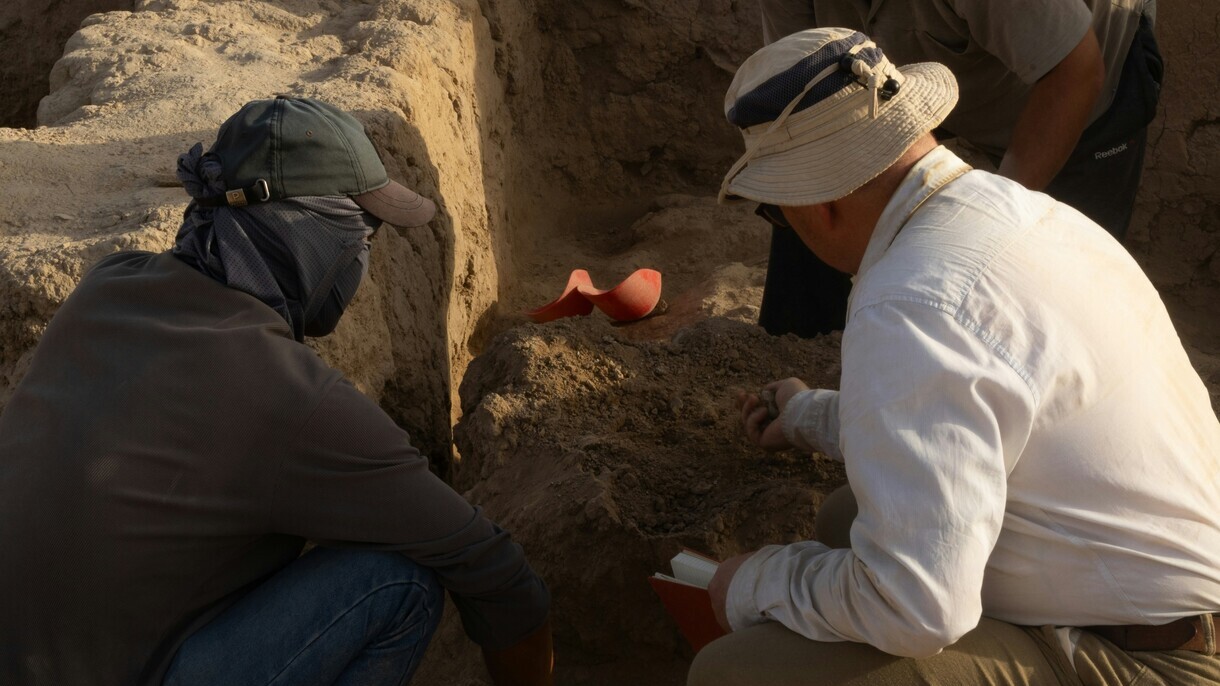
For over 8,000 years, three distinct communities inhabited the same region of modern-day Argentina—without wars, alliances, or any contact whatsoever. This groundbreaking study of 238 ancient genomes, published in Nature, has unveiled one of humanity's most astonishing historical puzzles.
Genetic analysis revealed something researchers simply did not anticipate. For millennia, a community existed in what is now Argentina that deliberately avoided contact with other humans. Why did they so persistently keep their distance? And most importantly, who were these people whose existence we learned about only recently?
An international team of archaeologists and geneticists from Argentina and the USA conducted the study. The analysis of 238 human genomes dating back approximately 8,500 years should have been a formality; similar projects were already completed in the Andes, Amazonia, and Patagonia.
However, this time, the standard examination uncovered something truly unexpected. It is a finding that has reshaped the established history of South America—and left behind far more questions than answers.
For more than 8,000 years, the indigenous inhabitants of modern-day Argentina lived near other groups—without conflict, alliances, or any interaction. Three populations occupied the very same area, yet they maintained absolutely no relationship. It was as if their neighbors did not exist. Consequently, the scientific community described the unprecedented discovery Argentina in the journal Nature.
Perhaps the strangest detail is that their isolation from the outside world did not stem from geographical constraints. No mountains, rivers, or natural barriers blocked them. Quite the opposite, the terrain was open, and conditions for migration and intergroup contact gradually improved over time.
For centuries, droughts ravaged these lands, forcing people into constant adaptation. They changed their lifestyles: moving from hunting and gathering to early farming, eventually encountering incoming populations from the Amazon. Normally, such crises build bridges between cultures—they compel cooperation, knowledge sharing, and joint survival strategies.
But not here.
The region’s indigenous people consistently held to a single, closed cluster, as if an invisible boundary separated them from the rest of the world. No climate change, no environmental pressure, and no new human group could break this separation. Therefore, this long-term isolation caused scientists to label them people of a “deep lineage”—a community whose genetic continuity survived outside the main historical current well into modern times.
Further research revealed something even more surprising. Although they formed one community, they did not use a single language; several different communication systems functioned among them.
Nevertheless, linguistic differences did not lead to the community’s breakdown or to them opening up to others. Instead, they endured together for thousands of years, entirely ignoring the neighboring groups of people. These extraordinary factors ensure that the history and lifestyle of these groups remain one of South America’s greatest historical enigmas.
The scientists’ results not only shed new light on how people lived in the past, but also demonstrate that despite decades of research, many secrets still await discovery. This remarkable finding gives experts a new starting point for subsequent studies. If discoveries that change our perspective on history interest you, read the articles on Holistic News.
Read this article in Polish: 8 tys. lat żyli w ukryciu, obok innych ludzi. Niezwykłe odkrycie w Argentynie


A graduate of journalism and social communication at the University of Rzeszów. She has been working in the media since 2019. She has collaborated with newsrooms and copywriting agencies. She has a strong background in psychology, especially cognitive psychology. She is also interested in social issues. She specializes in scientific discoveries and research that have a direct impact on human life.


Zmień tryb na ciemny