Humanism
When Goodness Becomes Procedure. How Generosity and Solidarity Fade
07 April 2026





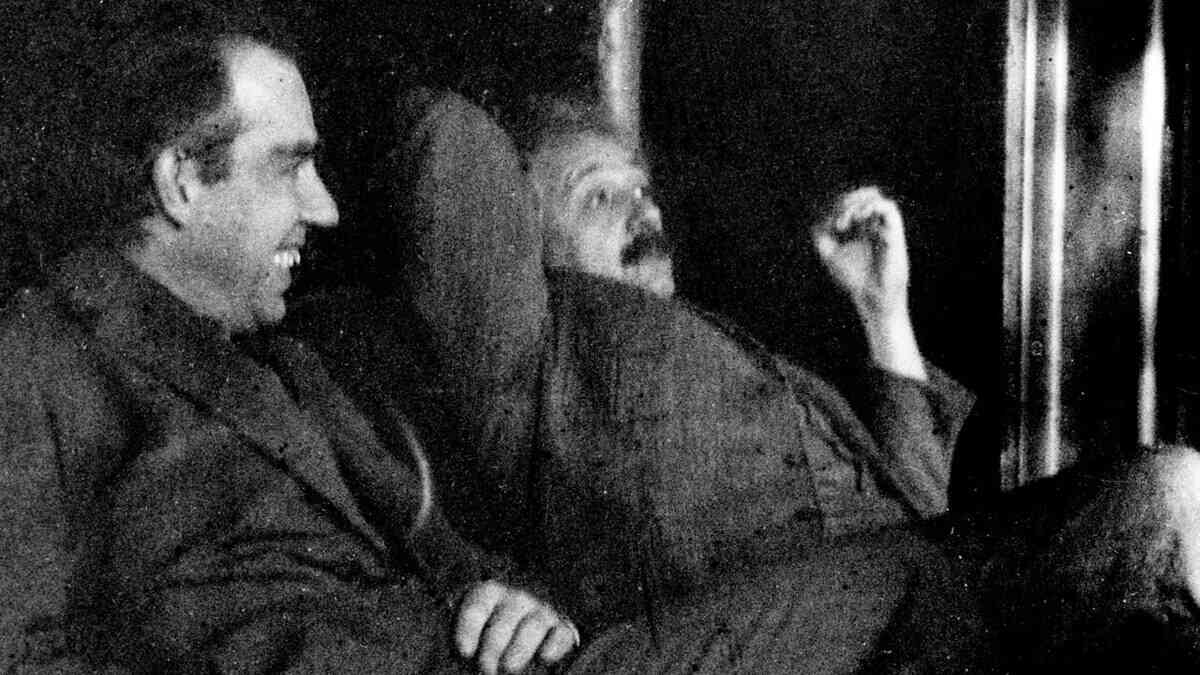
For nearly a hundred years, it was only an intellectual battle between two titans of physics. The Einstein vs. Bohr debate centered on whether quantum mechanics was a complete theory or merely a set of non-intuitive rules. Now, this legendary dispute has finally been settled in a laboratory.
In 1927, Albert Einstein, hoping to challenge the foundations of quantum theory, designed a thought experiment involving two slits and springs. He believed it would expose a contradiction in Niels Bohr’s principle of complementarity. Nearly a century later, Chinese physicists have finally brought this experiment to life. The result is definitive: Bohr was right.
Researchers from the University of Science and Technology of China, led by Jian-Wei Pan, executed an incredibly precise experiment that resolves one of the most famous conflicts in the history of science. Their work, published in Physical Review Letters, confirms the standard interpretation of quantum mechanics and highlights the boundaries of knowledge that so frustrated Einstein, according to Phys.org.
During a conference in Brussels in 1927, Einstein, unsettled by the probabilistic nature of the new theory, challenged Bohr and the entire Copenhagen school. “God does not play dice with the Universe,” he famously remarked, criticizing quantum uncertainty. This principle states that certain pairs of properties, such as position and momentum, cannot be known simultaneously with perfect precision—the more accurately we measure one, the more uncertain the other becomes.
To demonstrate an internal inconsistency in the theory, Einstein proposed an elegant thought experiment. He imagined a particle passing through a single slit mounted on sensitive springs, followed by a standard double-slit arrangement.
His idea was that by measuring the recoil of the first slit (revealing the “particle” aspect) while simultaneously observing an interference pattern on the screen (revealing the “wave” aspect), one could measure two complementary attributes at once. Einstein argued this would violate Bohr’s complementarity principle, the very idea at the heart of the Einstein vs. Bohr rivalry, which maintains that such properties cannot be precisely known at the same time.
The team from China recreated this setup by replacing mechanical parts with cutting-edge quantum technology. Instead of a physical slit on springs, the researchers used a single rubidium atom immobilized in an optical trap (often called “optical tweezers”). This atom, cooled to near absolute zero, acted as an incredibly light and sensitive “slit.” Its momentum became entangled with that of an incoming photon.
The breakthrough involved dynamically controlling the measurement uncertainty of the atom’s momentum by adjusting the depth of the optical trap. As predicted by Bohr and Heisenberg’s uncertainty principle, the more precisely the researchers tried to measure the momentum of the atom (and thus the particle), the more the interference pattern on the screen blurred. This effect was observed and measured with unprecedented accuracy.
The experiment does more than just settle the Einstein vs. Bohr rivalry in Bohr’s favor; it confirms profound quantum relationships in modern terms. The researchers found that the visibility of the interference pattern depends entirely on the degree of quantum entanglement in the momentum between the photon and the “slit” (the atom).
As the authors conclude, from today’s perspective, “the visibility of interference in the Einstein-Bohr experiment is determined by the degree of quantum entanglement in the momentum degree of freedom between the photon and the slit.”
While the principle of complementarity has been supported many times before, physically realizing this specific thought experiment carries immense weight. It also opens new avenues for research. The team now plans to use quantum state tomography to directly study entanglement and how increasing the mass of the “slit” affects the relationship between decoherence (the loss of quantum connection) and entanglement.
Nearly a century after the heated debates in Brussels, a state-of-the-art laboratory has provided the final proof. In this quantum duel, despite Einstein’s unparalleled genius, it is Bohr’s vision and the Copenhagen school that describe the rules of the game. A game that, as it turns out, the Universe does indeed play.
Read this article in Polish: Einstein jednak nie miał racji. Spór fizyków rozstrzygnięty


A graduate of Journalism and Social Communication at the University of Warsaw (UW), specializing in culture, literature, and education. Professionally, they work with words: reading, writing, translating, and editing. Occasionally, they also speak publicly. Personally, they are a family man/woman (head of the family). They have professional experience working in media, public administration, PR, and communication, where their focus included educational and cultural projects. In their free time, they enjoy good literature and loud music (strong sounds).



Zmień tryb na ciemny