Humanism
In the Mountains of Madness: Science Confronts the Legend of the Halny
28 March 2026





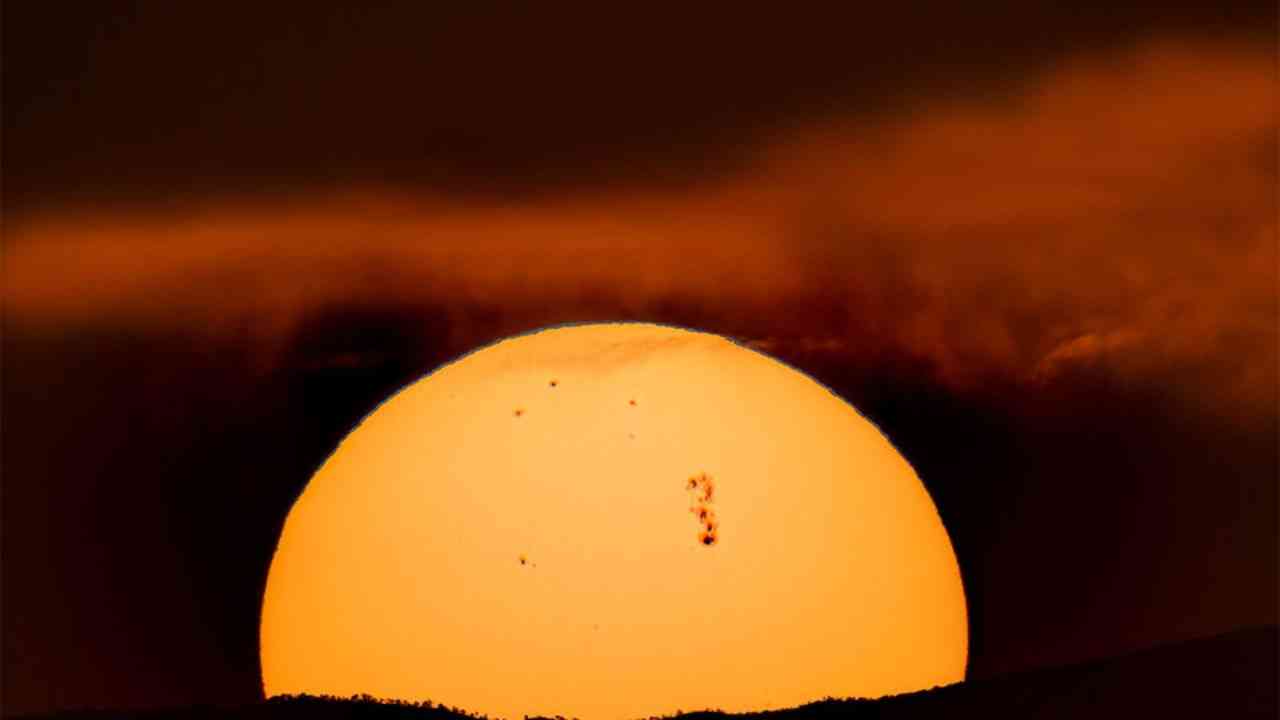
In February, one only needs to look up to witness a true cosmic spectacle. We await a rare annular solar eclipse, close encounters between the Moon and the planets, and a grand finale: six planets appearing at once alongside the return of the Milky Way. These February astronomical events promise to turn the night sky into a world-class theater.
February opens with a classic seasonal marker: the Full “Snow Moon” arrives on Feb 1. But the biggest headline lands in the second half of the month, when an annular solar eclipse lights up the southern hemisphere on Feb 17.
On Feb 17, the Moon sits slightly too far from Earth to cover the Sun completely. Instead, it blocks the center and leaves a bright “ring of fire” around the Moon’s silhouette. The annular phase lasts a little over 2 minutes at its peak.
Viewers in Antarctica and over parts of the Southern Ocean and southern Indian Ocean get the best show, while parts of South America and southern Africa see a partial eclipse. Most of Europe will miss it entirely.
Right after the eclipse, the inner planets start to steal the spotlight. Around Feb 18–19, the Moon and Mercury appear close together in the evening sky, low in the west about 30 minutes after sunset (local conditions matter a lot here).
Feb 19 also brings Mercury’s greatest eastern elongation, which gives you one of the best evening viewing chances of the year—especially if you have a flat, unobstructed horizon.
Feb 19 stacks the schedule: Mercury reaches its best evening placement, and the crescent Moon pairs up with Saturn after sunset. The Moon then keeps moving—on Feb 23, it meets the Pleiades, a crowd-pleaser even with modest binoculars.
February wraps with a true “planet parade.” The peak night is Feb 28, when 6 planets line up along the ecliptic: Mercury, Venus, Jupiter, Saturn, Uranus, and Neptune.
Plan to look about 30 minutes after sunset, low toward the western sky (Mercury can still be tricky). Mercury, Venus, Jupiter, and Saturn can show up to the naked eye under clear skies, while Uranus and Neptune usually require binoculars or a telescope. Your best local viewing date may fall anywhere from Feb 25 to Mar 2, depending on where you live.
Milky Way season starts to wake up again, too. In February, the Milky Way’s core rises just above the southeastern horizon in the pre-dawn hours for a short window, and visibility improves steadily in March and beyond as it climbs higher and stays up longer.
These February astronomical events pack the calendar with real highlights. Bring binoculars, dress warmly, and pick a spot with a clear horizon—some of the best skies show up on the coldest nights.
Read this article in Polish: Ognisty pierścień Słońca i parada planet. Fascynujący pokaz na niebie


A graduate of journalism and social communication at the University of Rzeszów. She has been working in the media since 2019. She has collaborated with newsrooms and copywriting agencies. She has a strong background in psychology, especially cognitive psychology. She is also interested in social issues. She specializes in scientific discoveries and research that have a direct impact on human life.



Zmień tryb na ciemny