Truth & Goodness
From Apollo to Artemis: Why Humans Are Returning to the Moon
04 April 2026





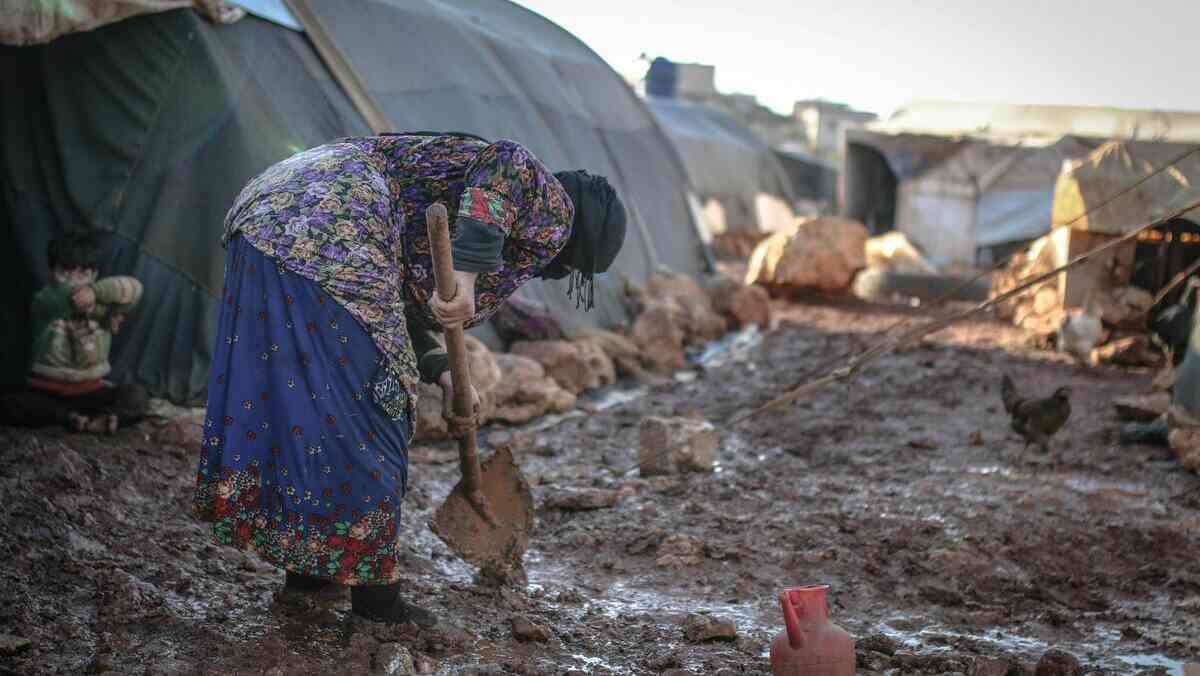
Why do some nations remain weak despite receiving international aid for years? The answer lies not only in their internal problems but also in the interests of stronger global players. The Fragile States Index highlights these systemic failures and the complex motivations behind global intervention.
Twenty years ago, analysts from the American think tank Fund for Peace and Foreign Policy magazine compiled a unique ranking for the first time: the so-called Failed States Index. It included over 70 positions. By 2014, the authors had taken 100 more countries into account, but they also changed the name of the list to the Fragile States Index. The change was intended to better reflect the specific nature of development and situational shifts in individual countries.
The FSI ranking measures the vulnerability of states to conflict and examines their stability during such conflicts. It also determines their situation in the aftermath of crises.
Currently, the list is compiled based on an assessment of 12 criteria divided into four groups. The first group examines the level of security within the state, the unity of the ruling elites, and social cohesion—meaning the level of mutual resentment and grievances among various social groups.
Economic indicators, on the other hand, deal with the risk of economic crisis, uneven development, labor migration, and brain drain.
The political assessment focuses, among other things, on the government’s relationship with society and the threat of corruption. This category also evaluates basic areas of life provided by the state, such as healthcare, education, access to water, transport, electricity, and connectivity. Political obligations also include respect for human rights and the rule of law.
Finally, the last group of categories consists of demographic indicators. These include population growth, infant mortality, the number of orphans, and refugee migration. This set also includes an assessment of the risk of any external interference that could affect the state’s stability. The higher the index value, the more fragile the country is considered.
In 2024, Somalia topped the global ranking, ahead of Sudan and South Sudan. Out of the top twenty, as many as 14 countries are from Africa. The Top 20 is completed by Syria, Yemen, Afghanistan, Haiti, Myanmar, and Palestine.
If one tracks the rankings over two decades, the rotation among the leading states in the index has not been dynamic at all. For example, Somalia has remained continuously on the “podium” of the list since 2007, holding the ignominious top spot nine times.
Sudan has never left the top eight, and for 12 years, Yemen has faced the same fate. In the Caribbean, over the last two decades, Haiti has managed to drop only as far as 14th place at best (it is currently back in the top ten).
What, then, causes dozens of countries in Africa, Asia, the Caribbean, or Central America to regularly end up in the upper reaches of the index? One reason is the marginalization of states sinking into chaos.
During the Cold War, as political scientist Dr. Radosław Rybkowski wrote, the situation of a state that could be considered “failed” “became important only when it affected the mutual relations between the USA and the USSR. The weakness of such states was not perceived as a threat and, in itself, was not a subject of much interest.”
Interestingly, for many years, emergency aid worth a fortune has been constantly flowing to the countries at the top of the FSI rankings. However, many experts, while remembering the positive effects of such financing, believe that it actually hinders state development. It prevents the formation of the state’s own institutions. As early as the mid-2000s, Foreign Policy noted that permanent changes cannot be brought about in failing states without stable power and the development of local elites. This, in turn, cannot be achieved through emergency aid without programs calculated for decades.
NGOs also played a role here, gradually taking over the role of donor from state governments. In 2008, Foreign Policy even published an article titled The New Colonialists. Its authors used this term to describe non-governmental organizations whose aid saved situations in many regions but simultaneously made their authorities dependent—authorities who found it unprofitable to create proper institutions.
The lack of such institutions was the basis for receiving aid from these organizations. It was also the reason why these non-governmental entities operated with enormous sums of money. Hence the FP conclusion that “no matter how well-intentioned they are, these new colonialists need weak states just as much as weak states need them.”
The governments of great powers do remember fragile and weak states, however. They usually do so when their mutual interests intersect. Russia is increasingly eager to return to its former influence in African countries, which was temporarily lost after the collapse of the USSR. Meanwhile, the United States provides military aid—for example, to Somalia—when it is necessary to bomb the positions of a common enemy, such as the Islamic State operating in the country’s mountain ranges.
Somalia also returned to the headlines following a proposal by Donald Trump, who wants to resettle Palestinians from the Gaza Strip to Africa. The indicated areas are Somali regions that want to become independent from the government in Mogadishu. The US President, in exchange for accepting Palestinians, promises to support their ambitious plans. The only question remains: how would this improve Somalia’s position on the Fragile States Index?
Somalia is constantly plagued by terrorist attacks by what the Americans admit is the largest terrorist network linked to Al-Qaeda: the Al-Shabaab organization, which wants to force Mogadishu to recognize Sharia as the only law.
Furthermore, the country struggles with droughts and floods, which leave millions of Somalis facing starvation. A similar situation is occurring in Sudan, where a civil war has been going on for two years. The World Health Organization warns of a “critical humanitarian situation” in the country, where 25 million people are at risk of hunger, and 600,000 are already experiencing it on a catastrophic scale. International aid is being blocked or seized by the parties to the conflict.
However, everyone’s attention is focused on equally terrible wars in Ukraine—which currently holds the 22nd position on the Fragile States Index—and Palestine, in 13th place. The interests of great powers and the international world order depend largely on them. The fighting in Sudan, Somalia, or Haiti, although widely recognized as a humanitarian disaster, only holds the status of regional conflicts.
Read the original article in Polish: Pomoc dla słabych państw? Tylko gdy to się opłaca


Journalist, columnist, publisher, and commentator. He was, among other things, the editor and chief of news and journalism at Wirtualna Polska and the publisher of the i.pl portal. Additionally, he collaborated with TVP, the weekly "Do Rzeczy", and the websites www.superhistoria.pl and www.wprost.pl.

Zmień tryb na ciemny