Education
What Singapore and Estonia Teach About Education Reform
21 March 2026





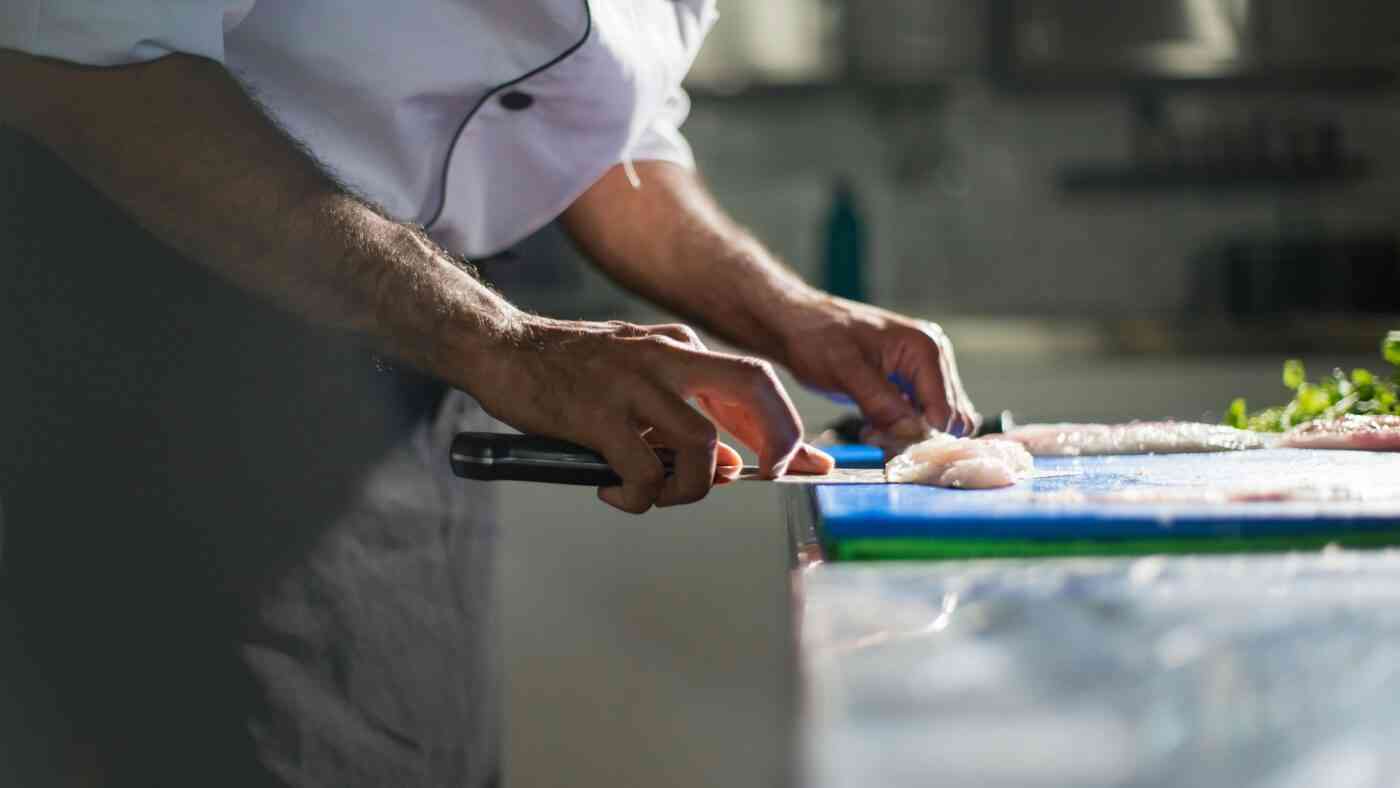
Fugu Kimo: The Forbidden Delicacy of Japan The pufferfish, or fugu, is one of the most paradoxical icons of Japanese cuisine. On one hand, it is revered as a refined luxury; on the other, it harbors one of the most potent toxins known to science, requiring almost surgical precision to prepare. Why is Pufferfish Considered […]
The pufferfish, or fugu, is one of the most paradoxical icons of Japanese cuisine. On one hand, it is revered as a refined luxury; on the other, it harbors one of the most potent toxins known to science, requiring almost surgical precision to prepare.
The meat of the fugu is exceptionally lean, resilient, and subtle in flavor. However, in Japanese tradition, it is valued less for its taste and more for its unique texture. Characteristic translucent slices of sashimi are arranged on a plate to resemble a chrysanthemum—the flower of death and the Imperial seal. This is “experiential” cuisine. What matters is the presentation, the subtlety of the sensation, and the conscious knowledge that one is consuming something accessible only to a few.
Seasonality and exclusivity further heighten the allure. Fugu is traditionally eaten in winter at specialized restaurants, often requiring advance reservations. The high price, limited availability, and reputation for “dangerous luxury” turn a fugu meal into a culinary ritual—an event to be recounted for years, rather than just another dinner.
Pufferfish contain tetrodotoxin—a natural poison hundreds of times more lethal than cyanide. This neurotoxin blocks sodium channels in neurons, halting the transmission of nerve impulses. Poisoning begins with a tingling sensation around the lips and fingers, progressing to numbness and muscle weakness. In the most severe cases, it leads to total respiratory failure.
The most haunting aspect of fatal fugu poisoning is that the victim remains fully conscious. The person suffocates, unable to move or speak, yet understands everything happening around them. There is no known antidote. Treatment consists primarily of respiratory support until the body can naturally flush the toxin.
The highest concentrations of the poison are found in the internal organs: the liver, ovaries, and intestines, as well as the blood and the skin spines of certain species. This is precisely why the liver (fugu kimo) is such a perilous “treat”—even a minute amount can contain a lethal dose. Furthermore, toxicity levels vary by species, environment, season, and the fish’s diet, making it nearly impossible to predict the danger of a specific catch.
In practice, the threat extends beyond the liver to theoretically edible parts like the fillets, skin, and fins. If a chef accidentally punctures a toxic organ during cleaning, the poison can contaminate the safe meat. Consequently, edible parts are only permitted for sale if processed by a highly trained, licensed chef under strict regulations.
It was fugu kimo that triggered one of Japan’s most famous culinary tragedies. In January 1975, the esteemed Kabuki actor and “Living National Treasure” Bandō Mitsugorō VIII ordered four servings of fugu kimo at a restaurant in Kyoto. The legendary actor claimed he was immune to the toxin, having consumed pufferfish liver many times before without ill effect. He was tragically mistaken. He died after eight hours of progressive paralysis and respiratory distress.
At the time of his death, the sale of pufferfish liver was already restricted by local ordinances, but it took his high-profile demise to trigger a nationwide ban in the early 1980s.
Despite the formal ban, fugu kimo has not vanished from Japanese tables. An underground circuit persists through unofficial tastings for “insiders,” private homes, and small, discreet establishments. Media reports of illegal fugu kimo trade surface periodically. In 2018, authorities discovered a supermarket selling pufferfish liver fillets, and in 2019, Osaka police raided an exclusive “members only” restaurant serving fugu liver to clients willing to pay for the risk.
The danger of serving fugu kimo lies in the fact that chefs must trust specific suppliers. Because toxin levels fluctuate wildly between individuals and seasons, a “safe” liver from one fish provides no guarantee for the next. Unfortunately, there is no visual way to distinguish a safe liver from a lethal one.
Fugu kimo is merely the most famous example of “thrill-eating.” The list of dishes that blend risk with prestige is long. Consider sannakji—live octopus served in Korea. While eating the moving tentacles, the suckers can grip the throat, leading to choking. In South Korea, deaths by asphyxiation are reported periodically from this dish.
Europe has its own perils. In Sardinia, one can find casu marzu—a sheep’s milk cheese containing live fly larvae. The risk of intestinal larval infestation has led to a formal ban, yet it thrives in the shadow economy.
While Iceland’s famous “fermented shark,” hákarl, is not illegal, its fresh meat contains high concentrations of neurotoxins. If not fermented long enough or stored improperly, it can cause severe gastrointestinal and neurological distress.
Meanwhile, the Philippine balut—a boiled duck egg with a developed embryo—poses little toxicological risk but fits the model of a dish where consumption is a test of cultural endurance.
In these cases, eating ceases to be about hunger. It becomes a challenge, a rite of passage, and a test of courage. Psychologists identify several mechanisms behind the fascination with “lethal cuisine.”
Individuals with a “sensation-seeking” personality are more likely to pursue risky activities—from extreme sports to culinary experiments. Research indicates these individuals gravitate toward experiences that combine uncertainty with intense emotional stimuli. Eating something that could potentially end your life fits this profile perfectly.
Those who have tasted fugu often emphasize the drama of the experience. For many, it is an “adrenaline-charged” event. The subtle tingling on the tongue caused by trace amounts of the toxin provides a literal thrill, a “flirtation with death.” In this context, the meal becomes a performance where the primary emotion is a conscious balancing act on the edge of existence.
The world of culinary travel has its own trophy system: spiciness, perceived “grossness,” rarity, and finally, risk. These elements build a narrative to share with others. Globetrotters often treat dishes like durian or balut as badges of honor. Fugu—and especially the fugu kimo: the forbidden delicacy—is the absolute “peak of the pyramid.” It is exotic, expensive, and shrouded in an aura of mortal danger.
Participating in such a tasting is a symbolic crossing of a boundary. It serves as an image-builder—proof of being brave, worldly, and “different” from the masses.
The psychology of risk shows that a prohibition can increase the attractiveness of a behavior. This is known as “reactance”: when an individual’s autonomy is restricted, some respond by wanting to do exactly what is forbidden. Fugu kimo evolved from a prized delicacy into a forbidden fruit, its flavor now mingled with the intoxicating sense of rebellion and exclusivity.
Ultimately, the decision to eat something potentially lethal is a cocktail of personality traits, social influence, and culture. It is an individual calculation: “Is the risk worth the story I’ll be able to tell?”
Read this article in Polish: Przysmak z trucizną. Kogo pociągają ekstremalne potrawy?


A Journalism and Social Communication graduate with 15 years of experience in the media industry. He has worked for titles such as "Dziennik Łódzki," "Super Express," and "Eska" radio. In parallel, he has collaborated with advertising agencies and worked as a film translator. A passionate fan of good cinema, fantasy literature, and sports. He credits his physical and mental well-being to his Samoyed, Jaskier.


Zmień tryb na ciemny