Truth & Goodness
The Most Deceptive Word in the World. So Many Fall for It
06 April 2026





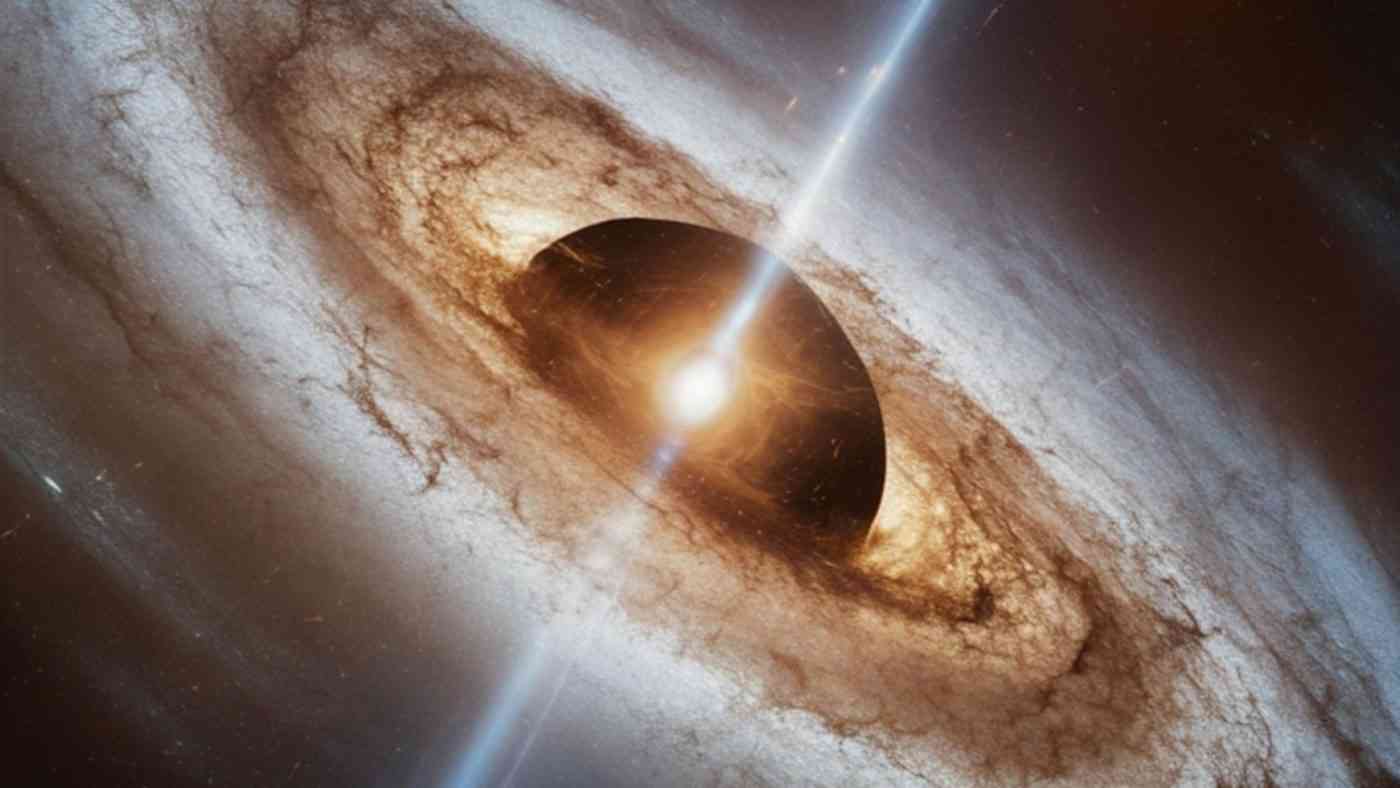
Scientists have identified a potential Galactic Center pulsar near Sagittarius A*, the mysterious object at the heart of the Milky Way. If confirmed, it could become one of the most valuable tools ever found for testing Einstein’s theory of relativity. It may also help reveal whether our galaxy’s core truly hides a black hole.
Did astronomers just find a pulsar near the Galactic Center? Pulsars are the remnants of massive stars that exploded as supernovae, leaving behind dense neutron cores spinning at incredible speeds. They possess a radius of only about a dozen kilometers, yet hold a mass comparable to the Sun, making them some of the most compact objects in the universe.
Pulsars emit regular radio pulses, much like cosmic lighthouses. The fastest ones, known as millisecond pulsars, rotate hundreds of times per second. The regularity of their signals can even surpass the precision of the best atomic clocks.
Astronomers may have discovered such a pulsar near Sagittarius A*, the supermassive black hole at the heart of our galaxy. Data from the Breakthrough Listen Galactic Center Survey revealed a candidate with a rotation period of just 8.19 milliseconds. The survey was one of the most sensitive radio searches ever conducted in this region, using the 100-meter Green Bank Telescope in West Virginia.
Researchers identified this pulsar candidate among nearly 6,000 signals. Unfortunately, later observations failed to confirm the pulse, meaning the object remains an intriguing suspect rather than a verified discovery. Still, the stakes are so high that the team released the raw data to the public, hoping other researchers around the world can help confirm what they found.
If confirmed, the discovery could have major consequences for astrophysics. Its location alone would make it extraordinary. Simulations of stellar evolution and matter density suggest that thousands of neutron stars should exist near Sagittarius A*. Yet despite decades of searching, astronomers have detected only a handful of such objects in the very center of the Milky Way.
A pulsar orbiting close to a supermassive black hole would give scientists a rare opportunity to test Einstein’s general theory of relativity. Because pulsars are so predictable, they are ideal tools for measuring subtle gravitational effects.
Any external influence on the pulsar, such as the gravitational pull of a massive object, would introduce anomalies in this steady stream of pulses that we can measure and model. Furthermore, as pulses travel near a very massive object, they may deflect and experience time delays due to the curvature of spacetime, as predicted by Einstein’s general theory of relativity,
– explains Dr. Slavko Bogdanov of the Columbia Astrophysics Laboratory.
Theoretical work suggests that precise tracking of pulse arrival times could reveal time dilation in strong gravitational fields, the bending of radio waves, and the phenomenon of frame-dragging caused by a rotating mass.
Sagittarius A* lies in the constellation Sagittarius, around 26,000 light-years from Earth. For decades, astronomers have treated it as a supermassive black hole with a mass roughly 4 million times greater than that of the Sun. That conclusion comes from indirect evidence, especially the motions of nearby stars. In 2022, the Event Horizon Telescope also revealed its famous shadow, surrounded by a bright ring.
But some recent analyses challenge that picture. A study published in the Monthly Notices of the Royal Astronomical Society suggests that Sagittarius A* may not be a black hole at all, but instead a compact concentration of ultra-dense fermionic dark matter.
The authors propose that the center of the Milky Way contains a dense dark matter core surrounded by a more diffuse halo. According to their model, such an object could imitate many of the signals previously attributed to a supermassive black hole.
Our model not only explains stellar orbits and galactic rotation but also remains consistent with the famous ‘black hole shadow’ image. A dense core of dark matter can imitate a shadow because it strongly curves light, creating a central darkness surrounded by a bright ring,
– explains Valentina Crespi from the Institute of Astrophysics of La Plata in Argentina.
For now, this remains only a hypothesis. Existing data cannot yet rule out the black hole interpretation. As the researchers stress, more precise measurements will be needed. This is where a Galactic Center pulsar could become crucial. Tiny deviations in the timing of its pulses might show whether the gravity at the heart of the Milky Way comes from a classic black hole or from an ultra-dense ball of dark matter.
Read this article in Polish: Sygnał z serca galaktyki. To może być klucz do teorii Einsteina


A Journalism and Social Communication graduate with 15 years of experience in the media industry. He has worked for titles such as "Dziennik Łódzki," "Super Express," and "Eska" radio. In parallel, he has collaborated with advertising agencies and worked as a film translator. A passionate fan of good cinema, fantasy literature, and sports. He credits his physical and mental well-being to his Samoyed, Jaskier.


Truth & Goodness
05 April 2026

Zmień tryb na ciemny