Truth & Goodness
More Than a Moral Virtue: The Hidden Power of Letting Go
29 March 2026





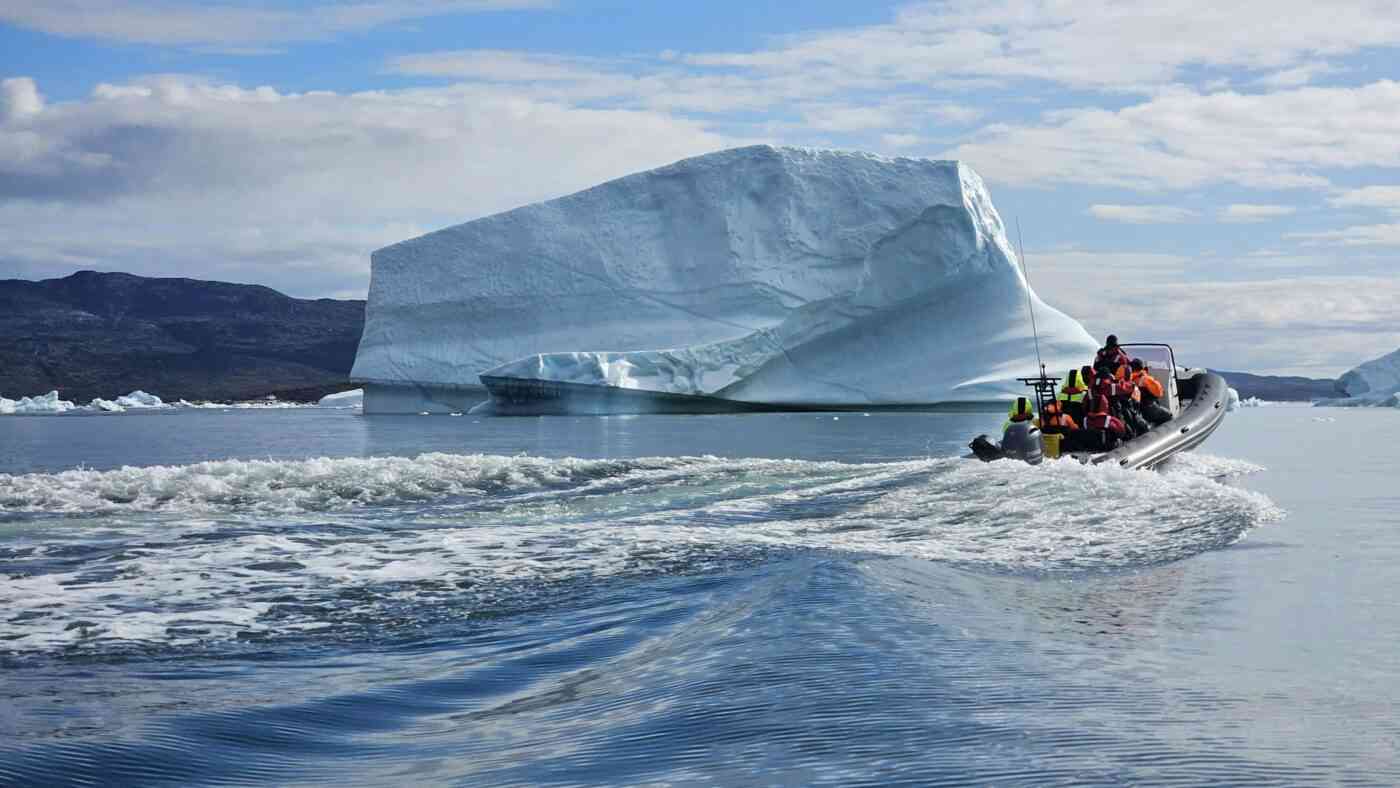
Greenland has not always remained a land of ice. New studies of Greenland’s ice-free past reveal that the island fully thawed long ago—even during periods of relative climatic stability. For some, this serves as a dire warning; for others, it provides evidence that Earth operates in natural, unstoppable cycles.
The latest findings from the GreenDrill project, led by scientists at the University at Buffalo and Columbia University, shed new light on the island’s history. After drilling through the 500-meter-thick Prudhoe Dome glacier, the team reached bedrock sediments. Their analysis proved that this glacier, roughly the size of Luxembourg, melted away entirely about 7,000 years ago. This occurred during the Early Holocene, when summer temperatures were approximately 3–6°C higher than today.
Sediment analysis confirmed that the ice vanished long enough to allow a functioning ecosystem to develop. Furthermore, chemical signatures within the ice column indicate that no part of the current glacier dates back to the last Ice Age. This means the Prudhoe Dome only reformed much later in history.
This isn’t the first study to shatter the myth of a perpetually frozen Greenland. In 2023, a scientific team used advanced luminescence dating techniques to examine an ice core originally extracted by the U.S. Army in the 1960s.
Alongside the ice core, they recovered sediment containing remains of ancient leaves and moss. These modern dating methods provided further evidence of a Greenland ice-free past, showing that a significant portion of the island melted around 400,000 years ago, transforming into an ice-free tundra.
These discoveries suggest that the Greenland ice sheet possesses a much higher sensitivity to climate shifts than previously assumed. Dr. Jason Briner from the University at Buffalo points out that the Prudhoe Dome melted during a time of relative climatic stability.
This period is known for its climate stability—the era when humans first began developing agriculture and taking steps toward civilization. If natural, mild climate changes from that epoch caused the Prudhoe Dome to melt and kept the ice cover retracted for potentially thousands of years, it may only be a matter of time before it starts retreating again due to today’s man-made climate changes,
– says Dr. Briner.
Climatologists emphasize that the Prudhoe Dome vanished when temperatures reached 3–6°C above current levels.
Some projections indicate we could reach those level of warming at Prudhoe Dome by the year 2100,
– says Caleb Walcott-George, Ph.D., a geologist at the University of Kentucky, as quoted by Discover magazine.
Researchers warn that if temperatures hit Holocene-level warming, the Prudhoe Dome could vanish again, accelerating ice loss across Greenland. Experts estimate that a total melt of the Prudhoe Dome could raise average sea levels by anywhere from 20 to 73 cm. Consequently, the world would face a heightened risk of flooding, mass human migration, and severe economic losses.
Scientific insights into the Greenland ice-free past lead many experts to believe these results serve as a definitive warning: if natural warming of 3–6°C could melt the Prudhoe Dome in the Holocene, human-driven warming could trigger identical processes in the future. They argue these findings highlight the urgency of climate action, suggesting that limiting greenhouse gas emissions could slow this transition.
While voices emphasizing human-caused warming dominate the climate debate, not all scientists share this perspective. Skeptics such as Steven E. Koonin, Richard Lindzen, and Judith Curry argue that climate changes remain largely cyclical and natural, suggesting that the role of CO2 emissions is exaggerated.
Steven E. Koonin—a theoretical physicist and former Chief Scientist at the U.S. Department of Energy—and Richard Lindzen, Professor Emeritus at MIT, do not deny the greenhouse effect, but argue that human influence on the climate is relatively limited compared to natural variability and that its impact is smaller than what is suggested by dominant climate models.
Scientific research into the Greenland ice-free past has yet to definitively settle which of these narratives is “correct.” Instead, these studies show how Greenland has become a mirror reflecting the global struggle over our planet’s climate future.
Read this article in Polish: Kiedy Grenlandia była zielona? Historia, która dzieli klimatologów


A Journalism and Social Communication graduate with 15 years of experience in the media industry. He has worked for titles such as "Dziennik Łódzki," "Super Express," and "Eska" radio. In parallel, he has collaborated with advertising agencies and worked as a film translator. A passionate fan of good cinema, fantasy literature, and sports. He credits his physical and mental well-being to his Samoyed, Jaskier.


Zmień tryb na ciemny