Humanism
Solitude Is Not a Curse: The Danger of Pathologizing Being Alone
29 March 2026





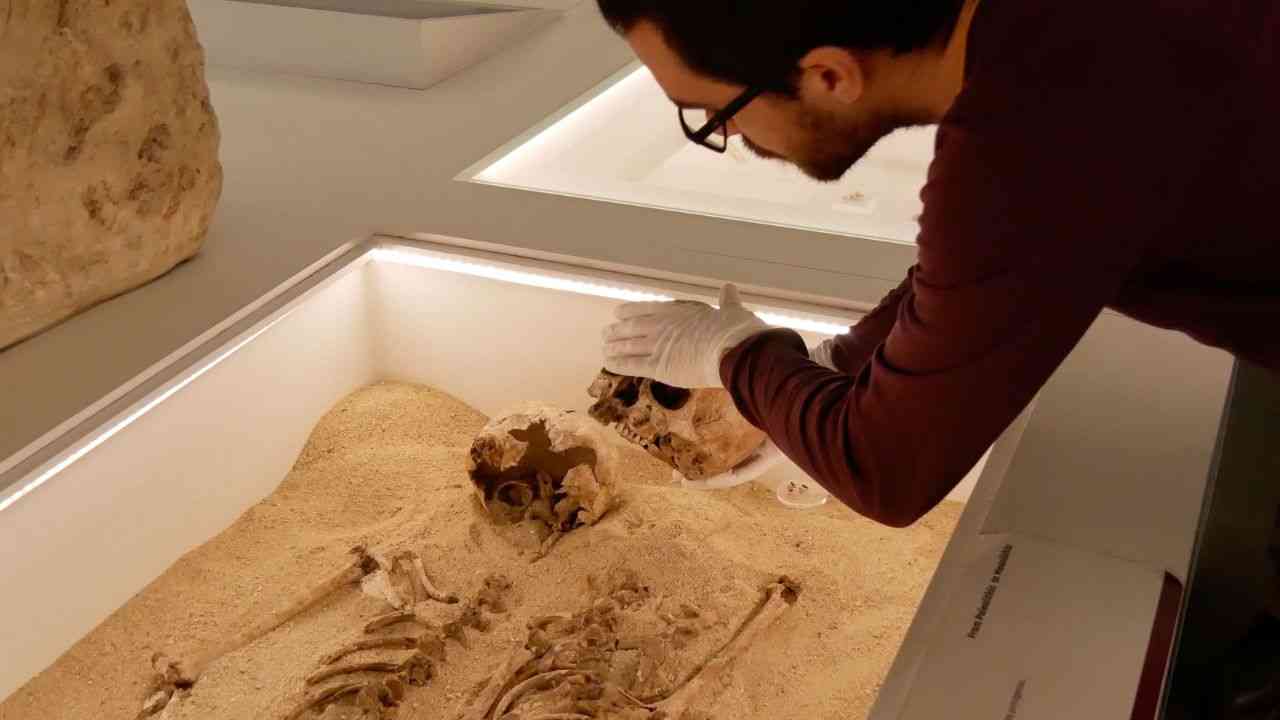
For more than half a century, scientists were unable to identify 2 individuals buried in a cave in southern Italy. Modern DNA analysis has now revealed an extraordinary story: a mother and daughter linked by the same rare genetic condition. Their grave tells more than a story of ancient tragedy. It also transforms what we know about health in prehistory, showing that compassion could outweigh even the harshest realities of survival.
In the Grotta del Romito cave of southern Italy, paleogenomicists came across a grave that immediately drew their attention. This burial seemed extraordinary from the very beginning. It contained the remains of 2 individuals of unusually short stature, lying close together as if locked in an eternal embrace.
For decades, these 2 anonymous figures remained one of archaeology’s greatest enigmas. Researchers struggled to determine who they were and what story lay behind their unusual burial. Only now, thanks to advanced research methods, have experts reconstructed their identities and lives.
Grotta del Romito lies hidden within a limestone massif in Calabria. Its oldest layers date back to the Paleolithic period, between 23000 and 10000 years ago. Evidence suggests that humans inhabited the site for millennia. Archaeologists discovered bone and stone tools there, as well as striking rock art engraved into the cave walls.
The cave also yielded the remains of plants, animals, and several human burials. For centuries, it served as a centre of intense human activity, something confirmed by ceramic fragments that point to an ancient trade network extending to the Ionian Islands. Although archaeological work began in 1961, researchers had to wait 2 years before uncovering this particular, haunting double burial.
Recently, an international team from the University of Vienna and the Liège University Hospital Centre reopened this cold case. The researchers used some of the most advanced tools in modern science, combining 3 sophisticated fields: paleogenomics, clinical genetics, and physical anthropology. Their aim was to finally solve the mystery of these skeletons.
This time, science delivered the answer.
As reported by The New England Journal of Medicine, the 2 individuals shared a close genetic relationship. Tests confirmed that the grave contained a mother and her daughter. The teenager lay cradled in the arms of the adult woman. Experts found no signs of trauma on the bones, suggesting that neither an accident nor an attack had caused their deaths. Their physical stature, however, immediately caught the researchers’ attention.
Both skeletons were exceptionally short. The teenager measured about 110 centimetres in height, while her mother was only slightly taller, at around 145 centimetres. Even by the standards of ancient societies, these heights were significantly below the norm for their age and sex. The girl also showed signs of a rare bone growth disorder, which paleogenomic analysis later identified as Maroteaux-type acromesomelic dysplasia.
This disease shaped the lives of the mother and daughter 12 000 years ago. Maroteaux-type acromesomelic dysplasia is an extremely rare genetic condition passed down through generations. It causes severe shortening of the limbs and a marked reduction in overall height. Recent analyses suggest that the mother carried 1 altered copy of the same gene found in her daughter. That would explain why the adult woman experienced a much milder form of the condition.
The discovery in the Italian cave is a reminder that severe genetic diseases are not limited to the modern world. Archaeological evidence shows that serious health challenges accompanied human beings even in the deepest reaches of the past.
Rare genetic diseases are not a modern phenomenon; they have accompanied humanity since the beginning of its history. Understanding their past can help us recognize them today,
– said Adrian Daly, 1 of the study’s authors, as quoted by the University of Vienna portal.
This discovery fundamentally changes our view of life during the Ice Age. The girl survived into her teenage years despite suffering from a severe form of the disorder. Experts believe she could only have done so because the community around her provided constant and dedicated care. That likely included daily assistance, help moving through difficult prehistoric terrain, and support in obtaining food.
This is not the first finding to challenge the popular belief that ancient societies abandoned the sick. Research published in 2025 showed that, in ancient Bulgaria, a community cared for a man with Apert syndrome who had serious mobility problems. Despite his disability, he managed to flee during an earthquake, an act preserved in tracks later discovered by scientists.
The evidence makes one thing clear: health in prehistory was shaped not only by disease and physical hardship, but also by care, solidarity, and social support. Ancient communities did not necessarily abandon their weakest members. Instead, they often helped them survive, challenging the image of a world ruled solely by the law of the strongest. The mother and daughter of Grotta del Romito remain a silent, 12000-year-old testament to the enduring power of human empathy.
Read this article in Polish: Przytulone w grobie przez 12 tys. lat. Niezwykłe odkrycie z epoki lodowcowej


A graduate of journalism and social communication at the University of Rzeszów. She has been working in the media since 2019. She has collaborated with newsrooms and copywriting agencies. She has a strong background in psychology, especially cognitive psychology. She is also interested in social issues. She specializes in scientific discoveries and research that have a direct impact on human life.


Zmień tryb na ciemny